Key Points
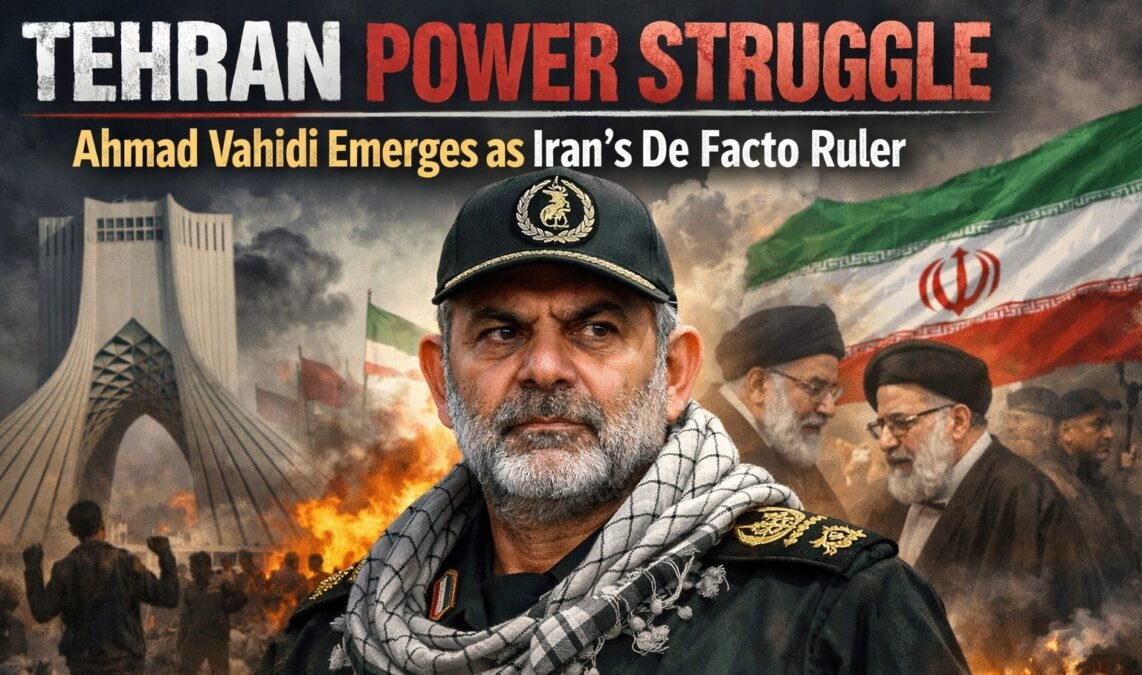
- Military Takeover: IRGC Commander Ahmad Vahidi has emerged as the de facto leader, overshadowing the Pezeshkian administration.
- Diplomacy Sidelined: Foreign Minister Abbas Araghchi was reportedly recalled from Islamabad after hardline oversight deemed his stance too flexible.
- Strait of Hormuz Blockade: The IRGC has re-closed the strategic waterway, leaving hundreds of commercial vessels stranded in the Persian Gulf.
- Leadership Crisis: Supreme Leader Mojtaba Khamenei remains out of public view, reportedly recovering from injuries sustained during recent hostilities.
Recent intelligence reports from the Institute for the Study of War (ISW) and details emerging from the New York Post indicate a decisive shift in Iran’s power structure. The Islamic Revolutionary Guard Corps (IRGC) has successfully consolidated its grip over both the military machinery and the nation’s diplomatic apparatus. This internal “silent coup” has effectively neutered civilian officials’ influence, pushing the region to a critical breaking point.
The Rise of Ahmad Vahidi and the New ‘Military Council’
Major General Ahmad Vahidi, the current commander of the IRGC, has emerged as the most formidable figure in Tehran. Following the deaths of previous commanders in the ongoing conflict, Vahidi has leveraged the state of emergency to centralize authority. Sources suggest he now leads a “military council” that bypasses traditional cabinet oversight.
This shift has the tactical backing of Supreme Leader Mojtaba Khamenei, who assumed the position following the assassination of his father, Ali Khamenei, earlier this year. However, Mojtaba’s own status remains a point of intense speculation, as he has not made a public appearance since being wounded in a series of targeted airstrikes. The IRGC has maintained a strict security cordon around the leader, further insulating the military from political accountability.
Collapse of the Islamabad Talks
The most visible casualty of this power shift is Foreign Minister Abbas Araghchi. Once the primary face of Iran’s diplomatic efforts, Araghchi has been systematically sidelined. During the high-stakes negotiations held with U.S. representatives in Islamabad, the IRGC insisted on the inclusion of Mohammad Baqer Zolghadr, a hardline veteran, to monitor the proceedings.
Zolghadr reportedly accused Araghchi of adopting a “soft” stance regarding Iran’s support for its regional proxies, leading to a sudden and complete recall of the negotiating team to Tehran. This breakdown has effectively ended the prospect of a negotiated settlement before the fast-approaching ceasefire deadline on Tuesday.
Maritime Hostilities and Global Economic Impact
The friction between the IRGC and the civilian government has manifested most dangerously in the Strait of Hormuz. While the Foreign Ministry had tentatively agreed to keep the waterway open during the truce, IRGC “fast attack” ships, acting on direct orders from Vahidi, have completely blocked the passage.
Over the past 48 hours, at least three commercial vessels have been targeted, resulting in a total maritime standstill. Currently, hundreds of ships are stranded in the Persian Gulf, unable to navigate the chokepoint as the IRGC deploys sea mines and naval blockades in response to the U.S. Navy’s own restrictive measures.
A Looming Regional Escalation
As the Islamabad talks fade into a diplomatic failure, the risk of a new, more intensive phase of the war has surged. The U.S. has maintained its naval blockade on Iranian ports, a move Tehran views as a breach of the temporary truce. With the IRGC now firmly in the driver’s seat of Iranian policy, experts warn that the window for de-escalation has nearly closed, placing the global energy market and regional stability on a direct collision course with total war.