































Key Updates
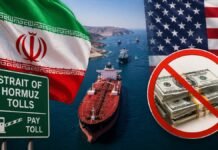
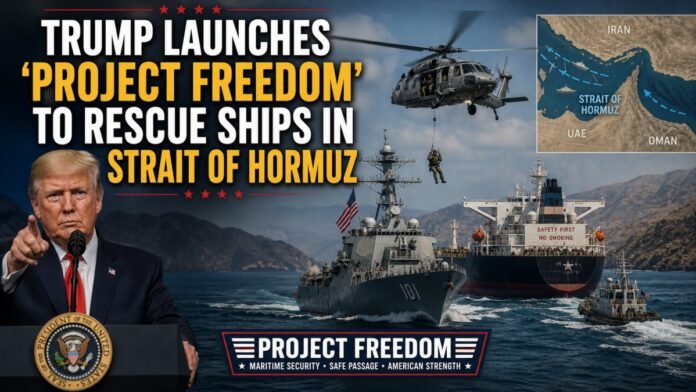
- Mission Launch: ‘Project Freedom’ officially commenced Monday morning, aimed at guiding stranded foreign ships safely out of the Strait of Hormuz.
- Humanitarian Focus: The operation targets neutral vessels facing critical shortages of food, medicine, and essential supplies after weeks of entrapment.
- Diplomatic Standoff: Trump has rejected Iran’s 14-point peace counterproposal, citing dissatisfaction with the terms and the need for a higher “price” for Tehran’s actions.
- New Leadership: Middle East policy expert Nick Stewart has joined the U.S. negotiating team under Special Envoy Steve Witkoff to break the deadlock.
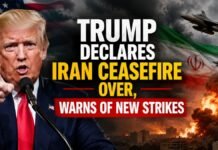
- Military Warning: The White House warned that any interference with the rescue mission will be met with the “full force” of the U.S. military.
Amidst the severe tensions persisting in the Gulf region and the continued encirclement of vessels in the Strait of Hormuz, US President Donald Trump has taken a significant step. On Monday morning, May 4, 2026, Trump announced the launch of a special rescue operation codenamed ‘Project Freedom.’ The primary objective of this mission is to safely evacuate commercial vessels currently stranded in the waterway, which has become a focal point of the ongoing 2026 Iran war.
Defining ‘Project Freedom’
Sharing details on his social media platform, ‘Truth Social,’ President Trump revealed that several nations across the globe had appealed to the United States for assistance in extracting their stranded vessels. Trump clarified that this constitutes a ‘humanitarian mission’ intended to protect innocent bystanders of the conflict. He emphasized that these vessels have no connection to the ongoing hostilities in the Middle East; rather, they have merely become caught in the crossfire as a result of the naval blockade.
The situation on board these ships has become increasingly dire. Reports indicate a severe shortage of food and essential supplies on vessels that have been immobile for several weeks. Trump noted that the primary goal of the operation is to ensure the health and well-being of crew members who are currently trapped in a high-risk environment. Once these ships are guided to safe waters, they are expected to remain outside the region until safe navigation is fully restored.
Rejection of the 14-Point Proposal
While the United States prepares for this rescue operation on one front, a diplomatic stalemate persists on the other. Trump has officially rejected a 14-point peace proposal submitted by Iran through the mediation of Pakistan. Speaking to Israeli media, the President stated that he had thoroughly reviewed the document but remained unsatisfied, declaring that Tehran has not yet paid a “big enough price” for its regional actions.
Iran’s proposal was formulated in response to the United States’ own 9-point peace plan. Key demands from Tehran included:
- An immediate cessation of hostilities and a resolution of all issues within 30 days.
- The lifting of all economic sanctions and the cessation of the current naval blockade.
- A guarantee from the United States against future military aggression.
- The establishment of a new Iranian-led mechanism for managing traffic in the Strait of Hormuz.
Iran’s leadership has clarified that the nuclear issue is not part of this specific proposal, as the immediate priority is de-escalating the 2026 conflict. However, the U.S. administration continues to push for a longer 60, day cooling, off period and broader concessions.
Firm Warnings and Future Talks
Despite the diplomatic friction, Trump has issued a stern warning, stating in unequivocal terms that if any party attempts to obstruct this humanitarian rescue operation, the response will be delivered with the full force of military power. This warning comes as the U.S. military recently demonstrated its capabilities by utilizing 5,000-pound bunker busters against coastal missile sites.
However, the President also indicated that discussions between his representatives and Iran have been “very positive,” raising hopes for a concrete outcome in the future. To bolster these efforts, the administration has appointed Nick Stewart, a seasoned Iran policy expert and former State Department official, to the negotiating team led by Special Envoy Steve Witkoff. As ‘Project Freedom’ moves forward, the international community remains watchful of whether this humanitarian gesture will open a door for a broader peace agreement or lead to further escalation.