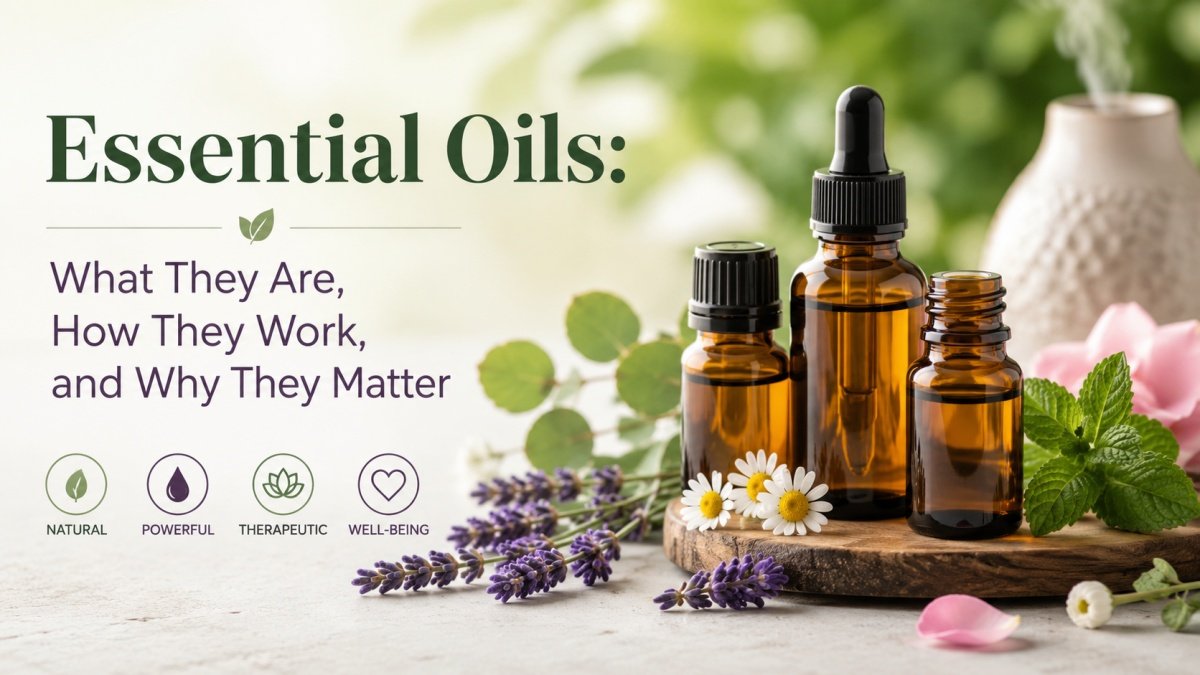
Have you ever walked past a bush of lavender or crushed a fresh mint leaf in your hand and noticed the sudden, powerful burst of aroma? That scent comes from essential oils.
Think of essential oils as a plant’s immune system and personality packed into a bottle. They are highly concentrated liquids extracted from roots, bark, leaves, flowers, or fruit. They don’t just smell good; they contain the active, liquid ingredients that protect the plant in nature, and they can offer some incredible benefits for us, too.
How Are Essential Oils Made?
You can’t just squeeze a plant and get an essential oil. It takes a specialized process to separate these powerful compounds from the plant material. The two most common methods are:
- Steam Distillation: Steam is passed through the plant material. The heat breaks open the plant’s tiny oil sacs, and the oil turns into a vapor. This vapor is then cooled down, condensing back into a liquid where the oil floats to the top and is collected.
- Cold Pressing: Think of this like juicing an orange. This mechanical process is mostly used for citrus fruits (like lemon, lime, and bergamot), where the peel is physically squeezed or pressed to release its flavorful, fragrant oils.
Important Note: Pure essential oils are incredibly strong. Because they are so concentrated, they are usually mixed with a carrier oil (like jojoba, coconut, or almond oil) before you apply them to your skin. This dilutes the oil so it doesn’t irritate, while still letting it do its job.
The Mind-Body Connection: How Do They Work?
When you inhale an essential oil, you aren’t just smelling a pleasant scent; you are actually triggering a chemical reaction in your brain.
As you breathe in, the scent molecules travel up your nose and stimulate your olfactory system (your sense of smell). This system is directly wired to your limbic system. The limbic system is an ancient part of the brain that controls your emotions, behaviors, long-term memory, and even basic survival instincts.
This direct connection explains why a single sniff of a familiar scent can instantly make you feel calm, energized, or even nostalgic.
Science-Backed Health Benefits
While essential oils shouldn’t replace a trip to the doctor, research shows they can be a fantastic, natural tool to support your daily well-being. Here is how they help with common ailments:
1. Stress and Anxiety Relief
In our fast-paced world, managing stress is a top priority. In fact, nearly half of all people dealing with chronic stress look for alternative therapies.
- How it helps: Inhaling oils like lavender, chamomile, or ylang-ylang signals your brain to lower your heart rate and reduce cortisol (the stress hormone) levels.
- Pro-Tip: Getting a massage with essential oils diluted in lotion combines the physical benefits of muscle relaxation with the mental benefits of aromatherapy.
2. Soothing Headaches and Migraines
If you suffer from tension headaches, a natural remedy might be sitting right on your shelf.
- How it helps: Studies have shown that applying a diluted mixture of peppermint oil to the forehead and temples can block pain signals and improve blood flow. The cooling sensation acts as a natural distraction from the throbbing pain.
3. Better Sleep and Insomnia Management
If you find yourself tossing and turning, essential oils can help transition your body into “rest mode.”
- How it helps: Research indicates that inhaling lavender oil significantly improves sleep quality. It has been shown to help new mothers rest better after childbirth and even assist heart disease patients in getting deep, restorative sleep.
4. Fighting Inflammation
Inflammation is the root cause of many chronic health issues.
- How it helps: Laboratory test-tube studies suggest that certain oils, like thyme, rosemary, and ginger, have natural anti-inflammatory properties that may help calm the body’s inflammatory responses when used correctly.
5. Natural Antibiotic & Antimicrobial Power
With the rise of drug-resistant “superbugs,” scientists are looking at plants for answers.
- How it helps: Oils like tea tree, oregano, and eucalyptus have powerful, built-in defenses against bacteria, fungi, and viruses. Tea tree oil, for example, is famous for its ability to clear up acne-causing bacteria on the skin.
Versatile Uses Beyond Aromatherapy
Essential oils aren’t just for diffusing while you meditate; they are incredibly versatile and can be used all around your house:
| Category | Everyday Uses | Best Oils to Use |
|---|---|---|
| Home Freshness | Add a few drops to your laundry detergent or wool dryer balls for fresh-smelling clothes. | Lemon, Lavender, Sweet Orange |
| Natural Cleaning | Mix with water and white vinegar to create a non-toxic, antibacterial counter spray. | Tea Tree, Eucalyptus, Lemongrass |
| DIY Cosmetics | Upgrade your skincare routine by adding them to homemade soaps, lotions, and bath salts. | Frankincense, Rose, Jojoba mix |
| Pest Control | Keep bugs away without harsh chemicals. Certain oils act as excellent natural bug repellents. | Citronella, Peppermint, Cedarwood |
A Quick Word on Safety
Because essential oils are completely natural, people often assume they are completely harmless. However, because they are so potent, you should always treat them with respect:
- Never swallow them: Essential oils are meant to be inhaled or applied topically, not ingested.
- Always dilute: Mix them with a carrier oil before putting them on your skin.
- Keep away from pets: Some oils (like tea tree and eucalyptus) can be toxic to dogs and cats.