Key Points
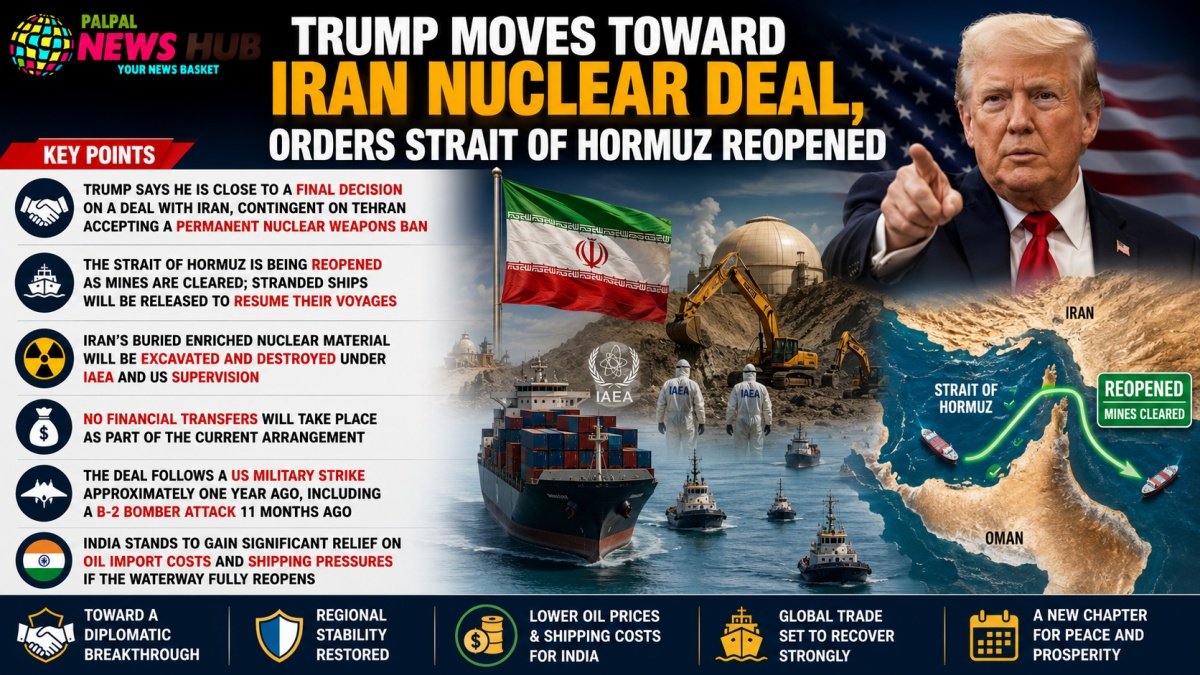
- Trump says he is close to a final decision on a deal with Iran, contingent on Tehran accepting a permanent nuclear weapons ban
- The Strait of Hormuz is being reopened as mines are cleared; stranded ships will be released to resume their voyages
- Iran’s buried enriched nuclear material will be excavated and destroyed under IAEA and US supervision
- No financial transfers will take place as part of the current arrangement
- The deal follows a US military strike approximately one year ago, including a B-2 bomber attack 11 months ago
- India stands to gain significant relief on oil import costs and shipping pressures if the waterway fully reopens
US President Donald Trump has signaled that a landmark agreement with Iran may be within reach, but only on one non-negotiable condition: that Tehran permanently and formally renounce any ambition to acquire nuclear weapons. Trump made the announcement on Friday, stating that he is preparing to make a final call from the White House Situation Room in the coming days.
In a social media post, Trump was unambiguous: Iran must accept a permanent ban on nuclear weapons and explicitly acknowledge that it will never possess a nuclear bomb. He framed the demand as a vital prerequisite not only for a bilateral agreement but for global security and peace more broadly.
The Strait of Hormuz Reopens
Alongside the nuclear conditions, Trump announced a major development for global energy markets. The Strait of Hormuz, one of the world’s most critical maritime chokepoints through which vast volumes of oil and natural gas flow daily, is being reopened. Mine-clearing operations are already underway in the waterway, with US forces having already removed several explosive devices from the shipping lanes.
Trump confirmed on social media that ships stranded by what he described as an unprecedented US naval blockade will now be free to resume their journeys. Iran has been tasked with completing the removal or safe detonation of any remaining mines. Shipping companies worldwide have welcomed the announcement, and the development is expected to provide swift relief to global energy markets that have been under severe strain.
Iran’s Nuclear Material to Be Destroyed
Trump’s statement also addressed the physical dismantlement of Iran’s nuclear program in considerable detail. He referenced a significant US military strike carried out approximately one year ago, which included a B-2 bomber attack that buried Iran’s enriched nuclear material deep underground 11 months ago.
Under the emerging framework, that material will now be excavated and destroyed. The operation will be conducted jointly by the United States, Iran, and the International Atomic Energy Agency, ensuring international oversight throughout the process. Trump explicitly stated that no financial transfers of any kind will take place under the current arrangement, at least for the time being. He added that consensus has been reached between the two sides on several other secondary issues as well.
What This Means for India
For India, the developments in the Gulf carry substantial and immediate economic significance. A considerable share of India’s annual crude oil imports passes through the Strait of Hormuz, making any disruption to the waterway a direct threat to the country’s energy security.
The blockade and associated tensions had already driven up shipping costs significantly and added to inflationary pressures on the domestic economy, creating considerable concern for policymakers in New Delhi. The full reopening of the strait is now expected to ease those pressures meaningfully, reducing import costs and bringing greater stability to India’s energy supply chains. Energy markets and governments across the world, India among them, will be watching closely as Trump prepares to announce his final decision.