
































Key Highlights
- Date: Sunday, April 19, 2026.
- Auspicious Nature: A “Swayamsiddha Muhurta” where the entire day is favorable for major life events.
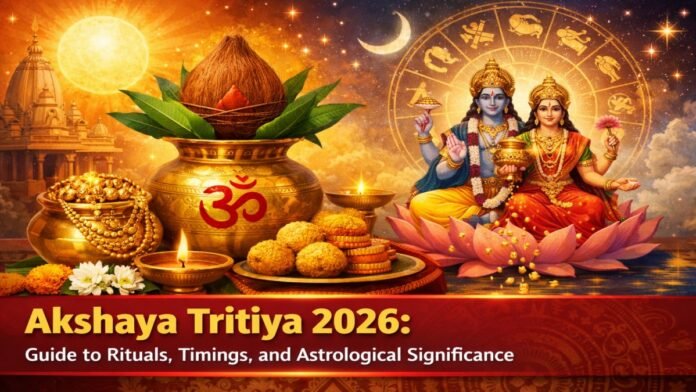
- Astrological Peak: Simultaneous exaltation of the Sun (Aries) and Moon (Taurus).
- Core Traditions: Buying gold, performing Jal Daan (water donation), and initiating new ventures.
- 2026 Timing: Primary worship window opens at 10:49 AM on Sunday.
In the Vedic calendar, a few moments carry the weight of Akshaya Tritiya. The term Akshaya is derived from the Sanskrit roots a (negation) and kshaya (erosion), denoting that which is eternal and perpetually increasing. While an annual event, 2026 offers a particularly potent configuration of planetary yogas and lunar mansions.
The primary engine driving this day is the “Royal Alignment.” In Vedic astrology, the Sun reaches its peak in Aries, a cardinal fire sign, while the Moon is simultaneously exalted in Taurus, a fixed earth sign. This synergy creates a state of “maximum light,” where the activating fire of the soul is anchored by the stability of the mind. This balance reduces inner resistance, making it an ideal time to launch career or family initiatives with absolute clarity.
The “Self-Proven” Window: Abujh Muhurta
Akshaya Tritiya is celebrated as an Abujh Muhurta, one of only three and a half days in the year considered “self-proven” and naturally auspicious. Unlike other dates that require grueling calculations to find a suitable time, this day provides a cosmic green light for marriages, housewarmings, or business launches. It is a day when the universe effectively signs off on human initiative, provided the intent is rooted in integrity.
Mythology and the Akshaya Patra
The sanctity of this day is anchored in several mythological milestones:
- The Treta Yuga: It marks the beginning of the second great age of righteousness.
- Parashurama Jayanti: The birth anniversary of the sixth avatar of Vishnu.
- The Akshaya Patra: In the Mahabharata, the Pandavas received a divine vessel from Lord Surya that provided an endless supply of food. This vessel serves as the primary metaphor for the festival, suggesting that those who live with integrity can tap into a “vessel” of resources that never empties.
Behavioral Ethics and the Multiplier Effect
The core principle of the day is Akshaya Phala, or the “never-diminishing fruit.” Traditional scriptures suggest that merit earned through worship and donation is multiplied into eternity. However, experts warn that this multiplier is ethically neutral; negative thoughts or unethical speech also take on a quality of permanence during this window.
To maintain the “completeness” of the day, observers are encouraged to follow specific guidelines:
- Diet: Consume Sattvic foods such as fruits, dairy, and items prepared with rock salt.
- Conduct: Focus on internal gratitude and avoid conflict or excessive showmanship.
- Philanthropy: The tradition of Jal Daan, providing water-filled earthen pots and cooling foods to the needy, is considered a high act of merit.
Strategic Timings for April 19, 2026
For those planning significant acquisitions, such as gold or property, timing remains critical. To maximize prosperity, practitioners should look to the Choghadiya categories of Amrita, Labha, or Shubha:
- Morning Puja Window: 10:49 AM to 12:21 PM (Ideal for primary worship).
- Afternoon Window: 01:58 PM to 03:35 PM.
- Pre-Dawn Peak (April 20): A rare three-hour window of Sarvartha Siddhi Yoga occurs between 04:35 AM and 07:27 AM on Monday, making it the most potent time for meditation.
- Caution: Observers should strictly avoid Rahu Kaal, which occurs from 05:12 PM to 06:49 PM on Sunday.
The Jain Perspective: Endurance and Spirit
In the Jain tradition, Akshaya Tritiya commemorates the end of Lord Rishabhdev’s 400-day fast, which he concluded by accepting sugarcane juice. This observance, known as Varshi Tapa, offers a contrast to the focus on material abundance. While the Hindu path emphasizes the flow of grace, the Jain path highlights the imperishable strength of the soul. Both traditions converge on the same truth: that which is truly indestructible within us is found through either surrender or unyielding internal endurance.