


























Key Points
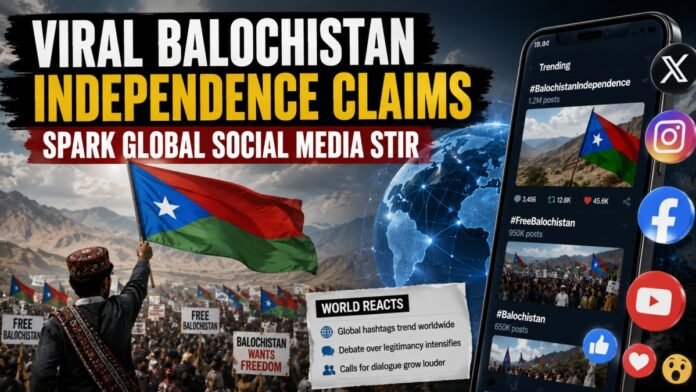
- A viral letter circulating on social media claims the rebel Balochistan forces have seized control of 85 percent of the region, introducing a new flag, national anthem, and independent currency.
- Human rights activist Mir Yar Baloch asserted that the new administration now commands the province’s vast natural wealth, including gold mines, gas fields, and coal mines.
- There is no official diplomatic recognition from the United Nations or any foreign government, and Islamabad has not verified the structural collapse claimed in the letter.
- The online stir coincides with an intense escalation in violence, with Pakistani security forces reporting that 109 insurgents have been killed since July 5, 2026.
A wave of unverified claims declaring the total secession of Balochistan from Pakistan has triggered intense international interest and political speculation across digital spaces. The sudden uproar stems from a viral letter and accompanying statements widely shared on Tuesday, July 14, 2026. According to the viral documents, local Baloch nationalist forces have successfully established administrative control over approximately 85 percent of the province’s total territory. The claims suggest that the newly proclaimed “Republic of Balochistan” has already instituted its own national flag, a unique national anthem, a sovereign currency, and an independent governance system to fully replace Pakistani federal authority.
Adding momentum to the viral reports, prominent Baloch human rights activist Mir Yar Baloch posted a statement on the social media platform X, arguing that the region has earned its right to international recognition. In his statement, he claimed that the new regional administration directly controls the province’s immense wealth, encompassing the republic’s gold and copper mines, more than 150 active natural gas fields, and over 1,200 operational coal mines.
Deep-Seated Resource Grievances and Growing Civil Dissent
Balochistan stands as Pakistan’s largest province by land area and its wealthiest in terms of untapped natural resources. The region is home to massive international extraction operations, including the strategic Reko Diq gold and copper reserves. Despite this immense inherent wealth, local Baloch communities have long alleged that the federal government in Islamabad and the powerful Pakistani military establishment systematically exploit these resources while leaving the local population in severe poverty.
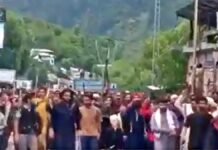
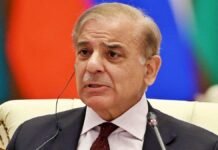
This deep-seated economic and social alienation has fueled decades of low-level insurgency and civil unrest. In recent months, anti-government demonstrations have escalated into massive public protests, featuring widespread mobilization against Pakistani Prime Minister Shehbaz Sharif and Chief of Army Staff General Asim Munir. The viral independence letter highlights these long-standing fractures, claiming that a substantial number of ethnic Baloch personnel have resigned from their positions within Pakistani security agencies to align directly with the nationalist movement.
Fact-Checking the Sovereignty Claims and Global Recognition
Despite the rapid dissemination of the statement across international networks, there remains no official verification of a structural shift in territorial control. The federal government of Pakistan and its military public relations wing have not verified the legitimacy of the letter, and major cities like Quetta remain under federal legislative oversight. Furthermore, no major sovereign country, regional neighbor, or international body, including the United Nations, has extended diplomatic recognition to any self-proclaimed Baloch state.
International relations experts urge extreme caution regarding the claims, noting that while administrative grip in remote parts of the rugged province is heavily contested, the total collapse of federal infrastructure outlined in the viral message cannot be verified. However, the political atmosphere remains highly fragile; former regional leaders, including Balochistan National Party President Akhtar Mengal, have previously warned that Islamabad’s heavy-handed tactics have severely eroded state authority across the province, describing the situation as a severe political crisis.
Intensifying Military Confrontations and Casualties
The viral rumors are circulating during a period of unprecedented kinetic violence across the southwestern province. Armed separatist groups, most notably the Balochistan Liberation Army (BLA), along with factions of the Tehreek-e-Taliban Pakistan (TTP), have intensified coordinated ambushes, roadside bombings, and structural sabotage targeting state infrastructure and security personnel.
In response, Pakistani security forces have dramatically escalated their counter-insurgency offensive, code-named Operation Shaban. Official military reports indicate a significant spike in security operations over the past few weeks. Since July 5, 2026, joint operations conducted by the Frontier Corps and local police units have reportedly resulted in the deaths of at least 109 active insurgents. As both sides lock into an intense stalemate, the dissemination of high-profile political statements online highlights a parallel information warfare campaign designed to pressure Islamabad on the global stage.