
Key Points
- Turnover Threshold: Applies to all registered Micro, Small, and Medium Enterprises with an aggregate annual turnover under ₹5 crore.
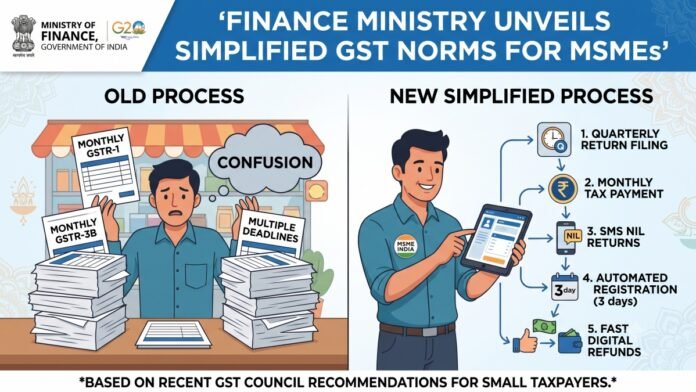
- Streamlined Filing: Replaces three separate monthly filing sheets with a single, consolidated quarterly document to drastically reduce paperwork.
- AI Integration: Implements real-time, automated Input Tax Credit reconciliation via an upgraded digital portal to eliminate tax leakage and manual mismatch errors.
- Official Timeline: The official gazette notification was published online at 09:15 AM IST, with all new portal features scheduled to go live on August 1, 2026.
- Economic Scale: Direct policy relief targets over 40 million registered small businesses and service providers across India, significantly lowering compliance overheads.
NEW DELHI: In a sweeping regulatory shift aimed at boosting the ease of doing business, the Union Ministry of Finance, following direct recommendations from the GST Council, has issued a comprehensive notification detailing simplified Goods and Services Tax compliance procedures for Micro, Small, and Medium Enterprises. The newly authorized directive applies specifically to MSMEs maintaining an aggregate annual turnover of up to ₹5 crore, offering substantial structural relief to small-scale manufacturers and service providers operating nationwide.
The official gazette notification was published online at 09:15 AM IST, outlining an aggressive modernization roadmap. According to authorities, the updated portal features and simplified filing capabilities are officially scheduled to go live on August 1, 2026. The overhaul is intentionally designed to minimize compliance costs, reduce corporate litigation risks, and clear out historical bureaucratic logjams that have traditionally burdened smaller commercial entities.
At the core of this policy architecture is the implementation of a single-page quarterly return framework. This streamlined layout completely replaces multiple complex annexures that previously forced small businesses to navigate three separate monthly filing sheets. By consolidating these requirements into a singular quarterly submission, the government aims to remove layers of red tape. Additionally, the updated system introduces an automated, real-time Input Tax Credit matching protocol. Driven by an upgraded AI-powered database infrastructure, the portal will continuously cross-reference supplier data to prevent tax evasion and resolve discrepancies instantly, a task that once required significant accounting overhead.
This systemic update directly impacts more than 40 million registered small businesses throughout India. For years, smaller commercial operations have voiced concerns over a demanding tax reporting system where administrative costs disproportionately impacted narrow profit margins. By standardizing filings and deploying automated tech solutions, the new directive effectively alters the national tax administration architecture, allowing critical economic engines to shift resources away from manual accounting compliance and toward sustainable growth.