
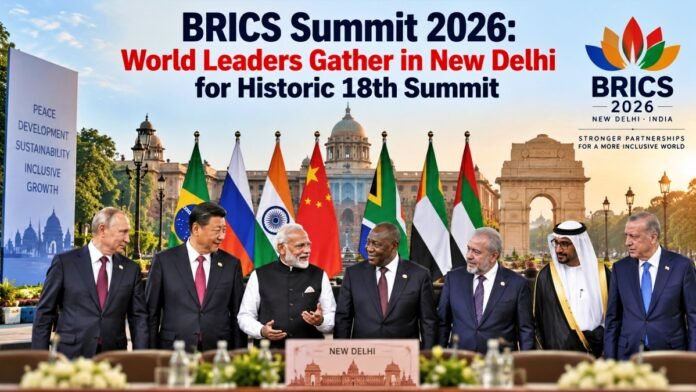
Key Highlights
- Host and Venue: India leads the 18th BRICS Summit at Bharat Mandapam in New Delhi on September 12, 13, 2026, marking its fourth chairship as the bloc reaches its 20th anniversary.
- Global Dignitaries: Heads of state and top representatives, including Vladimir Putin, Xi Jinping, Cyril Ramaphosa, Abdel Fattah El-Sisi, Prabowo Subianto, and Masoud Pezeshkian, are participating.
- Diplomatic Milestone: Chinese President Xi Jinping makes his first official trip to India since 2019, arriving alongside a major business and industrial delegation.
- Core Agenda: Focuses on local currency settlement mechanisms, critical mineral supply chains, energy security, and Global South priorities under the theme “Building for Resilience, Innovation, Cooperation and Sustainability”.
- Capital Measures: Delhi authorities have enacted traffic diversions and administrative closures to accommodate high-security motorcades and foreign delegations.
New Delhi has initiated extensive security measures as it readies to host the two-day 18th BRICS Leaders’ Summit at Bharat Mandapam, located within Pragati Maidan. With heads of state, foreign delegations, and international observers arriving in large numbers, traffic police have instituted managed corridors across central and south Delhi. To facilitate official movements and manage security logistics, administrative authorities have declared public closures across educational institutions and government offices for the summit days.
This event represents India’s first in-person BRICS summit since 2021, an edition New Delhi had hosted virtually due to COVID-19 restrictions. As BRICS completes two decades since its inception, India holds the rotating chair under the theme: “Building for Resilience, Innovation, Cooperation and Sustainability”.
High-Profile Attendance and Diplomatic Optics
Prime Minister Narendra Modi will host discussions across both closed-door strategic sessions and open plenaries. Confirmed and anticipated attendees include Russian President Vladimir Putin, Chinese President Xi Jinping, South African President Cyril Ramaphosa, Egyptian President Abdel Fattah El-Sisi, Ethiopian Prime Minister Abiy Ahmed, Indonesian President Prabowo Subianto, Iranian President Masoud Pezeshkian, and UAE Crown Prince Khaled bin Mohamed Al Nahyan, with Brazilian Foreign Minister Mauro Vieira representing Brazil. Representatives of international bodies, including the United Nations and the World Health Organization, are also engaging in outreach dialogues.
The optics of Prime Minister Modi, President Xi, and President Putin convening in New Delhi send an unmistakable message of multipolar engagement amid prevailing international tensions. President Xi’s attendance is particularly noteworthy, marking his first visit to Indian soil since the 2019 Mamallapuram informal summit. Arriving with a sizable delegation of industrialists, the visit provides a critical platform for bilateral channels and commercial discussions.
Trade Settlements, Currency Systems, and Energy Security
Economic reform remains central to the summit agenda. While several members continue to examine proposals for alternative reserve systems and reduced reliance on the US dollar, New Delhi has directed focus toward bilateral currency swaps, national currency invoicing, and digital payment linkages. These mechanisms seek to reduce foreign exchange volatility and lower transaction costs for cross-border commerce without fragmenting established financial markets.
Concurrently, access to raw materials remains vital. India is utilizing the platform to ensure stable supply chains for critical minerals, rare-earth materials, and defense equipment, while expanding crude oil and energy cooperation with newer Middle Eastern members.
Advancing the Global South Agenda
The summit underscores India’s strategic balancing act, maintaining productive engagement with Western partners while exercising leadership within emerging coalitions. By prioritizing digital public infrastructure, small and medium enterprise integration into global value chains, and sustainable development finance, India is positioning the expanded 11-member bloc as a practical vehicle for developing nations. The New Delhi summit aims to turn strategic autonomy into concrete policy alignments that represent the broader economic interests of the Global South.