Key Highlights
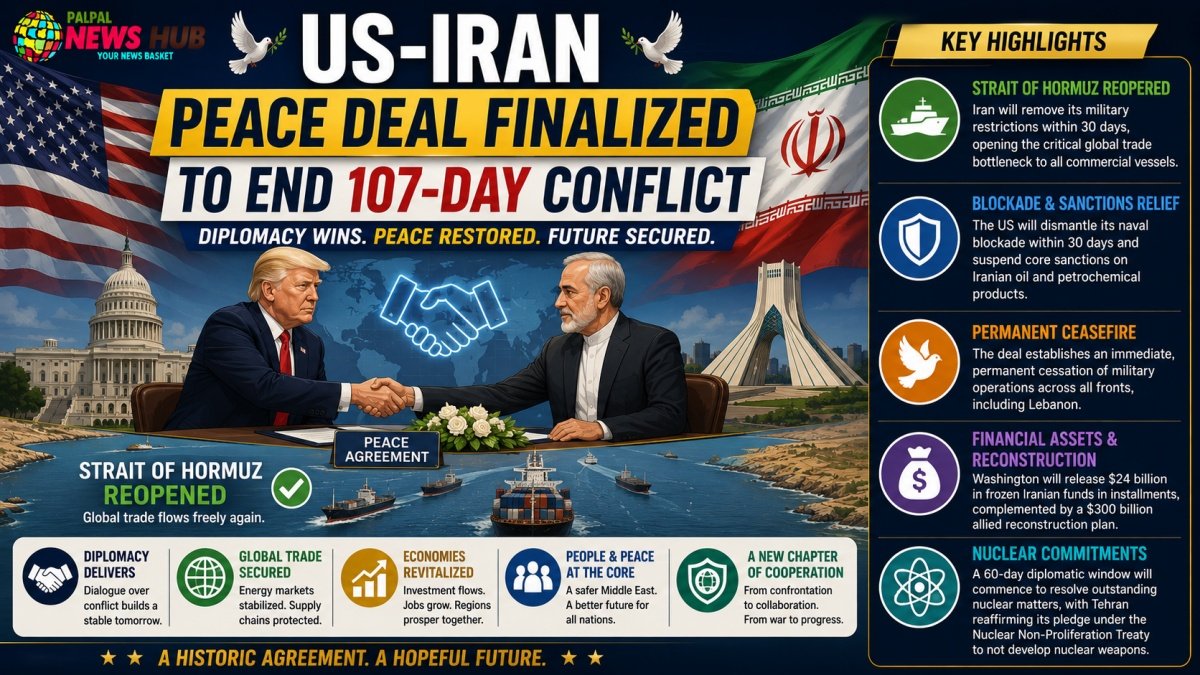
- Strait of Hormuz Reopened: Iran will remove its military restrictions within 30 days, opening the critical global trade bottleneck to all commercial vessels.
- Blockade and Sanctions Relief: The US will dismantle its naval blockade within 30 days and suspend core sanctions on Iranian oil and petrochemical products.
- Permanent Ceasefire: The deal establishes an immediate, permanent cessation of military operations across all fronts, including Lebanon.
- Financial Assets and Reconstruction: Washington will release 24 billion dollars in frozen Iranian funds in installments, complemented by a 300 billion dollar allied reconstruction plan.
- Nuclear Commitments: A 60-day diplomatic window will commence to resolve outstanding nuclear matters, with Tehran reaffirming its pledge under the Nuclear Non-Proliferation Treaty to not develop nuclear weapons.
A monumental shift in global geopolitics occurred on Sunday evening when US President Donald Trump and international mediators announced the finalization of a 14-point Memorandum of Understanding (MOU) between Washington and Tehran. The agreement effectively ends a high-stakes, 107-day war that began in late February, which had severely disrupted international commerce and repeatedly threatened to ignite a wider regional conflict.
The formal in-person signing of the peace accord is slated for Friday, June 19, in Geneva, Switzerland. Following the announcement, global energy markets reacted immediately, with crude oil prices tumbling by nearly 5 percent, dropping Brent crude below 84 dollars a barrel to roughly 83.82 dollars, a welcome development for global fuel and logistics supply chains.
Reopening the Strait of Hormuz and Removing Blockades
The primary economic pillar of the agreement revolves around restoring freedom of navigation through the Strait of Hormuz, a critical maritime choke point responsible for a fifth of the world’s petroleum supply. Under the agreed terms, Iran will fully phase out its military blockades over a 4 to 30-day window. Concurrently, the US military will halt its naval blockade of Iranian ports, allowing commerce to resume.
Full shipping transit will scale up gradually. Immediate mine-clearing operations, assisted by a multi-nation naval coalition, are scheduled to commence directly upon the formal signing this Friday to ensure safe passage for international oil tankers and merchant vessels.
Framework Terms and the 60-Day Nuclear Window
According to briefs released by regional officials and state-affiliated media networks, the 14-point MOU introduces several profound strategic adjustments:
- Non-Interference: The US commits to respecting the sovereignty of the Islamic Republic of Iran and refraining from interfering in its domestic affairs.
- Troop Adjustments: US forces will withdraw from defensive positions immediately adjacent to Iran’s borders, and Washington will freeze further deployment expansions to the region during active talks.
- Asset Release: The US has agreed to release 24 billion dollars in frozen Iranian financial assets through a structured, performance-based schedule over the next two months.
The preliminary pact serves as a vital bridge toward a more permanent diplomatic solution. Upon signature, a rigid 60-day negotiation window will open to address comprehensive resolutions regarding Iran’s nuclear enrichment levels, international inspection protocols, and outstanding UN Security Council resolutions. For its part, Iran has re-verified its commitments under the NPT to keep its program strictly civilian and down-blend its existing highly enriched uranium stockpiles under the supervision of United Nations inspectors.
Regional Scope and Diplomatic Credit
While initial drafts of the text generated intense debate among Western and Middle Eastern diplomats regarding proxy forces, the finalized framework mandates a permanent termination of military actions across all fronts, including Lebanon. This comprehensive wording aims to stabilize the volatile border conflicts involving Hezbollah, though American officials have noted that specific long-term tracking of regional militia funding remains a distinct track from the immediate economic and maritime resolution.
A competitive race to claim diplomatic credit for the historic accord materialized over the weekend. Pakistan, alongside Qatar, worked extensively as a central back-channel peace broker to steer both nations away from military escalation. Pakistani Prime Minister Shehbaz Sharif publicly validated the 14-point text on Monday, extending acknowledgments to regional partners for securing an agreement that promises to restore long-awaited stability to the global economy and the broader Middle East.