Key Highlights
- Diplomatic Standoff: Iran has reportedly agreed to participate in the talks following a period of uncertainty, provided U.S. Vice President J.D. Vance attends.
- Security Lockdown: Islamabad has designated major hotels and the airport as “Red Zones,” effectively turning the capital into a fortress.
- Nuclear Deadline: President Trump has signaled that the current ceasefire is unlikely to be extended unless Iran makes firm commitments to abandon its nuclear weapons ambitions.
- Strategic Blockade: The reopening of the Strait of Hormuz remains a primary point of contention in the negotiations.
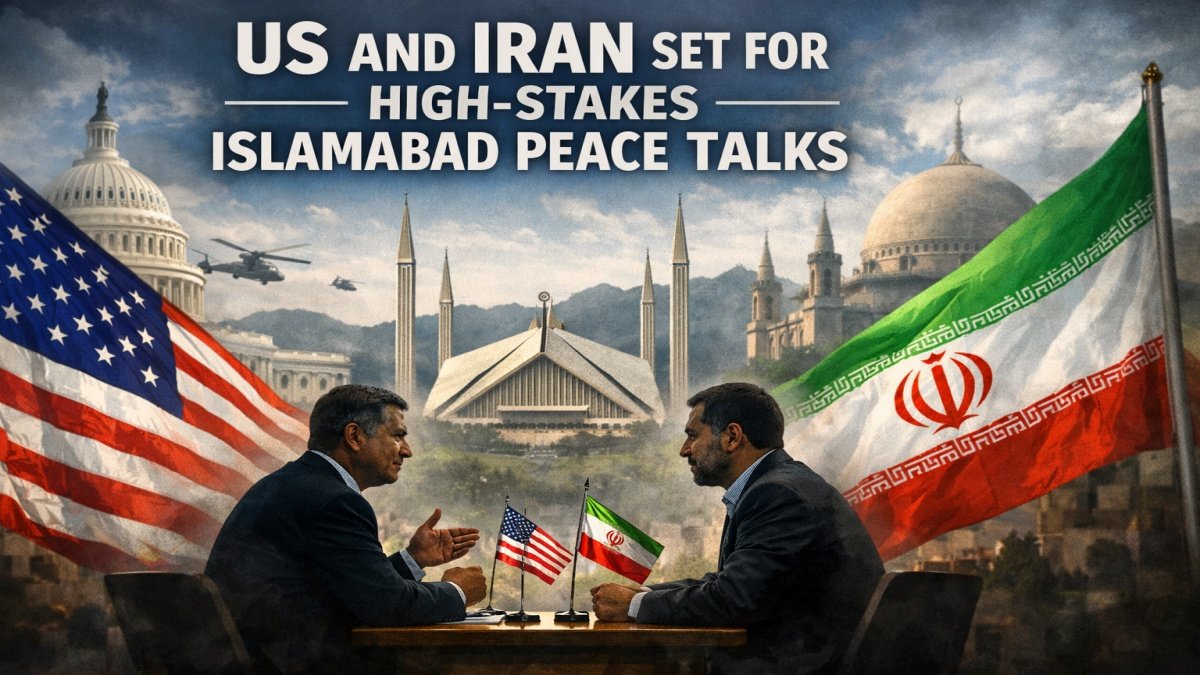
Uncertainty persists regarding the second round of peace talks scheduled to take place in Islamabad between the United States and Iran. While the American delegation is set to arrive in Pakistan today, Iran had previously signaled it might boycott the proceedings. However, a recent report from The New York Times suggests a breakthrough: Tehran has agreed to send a high-level delegation to the negotiating table.
The report indicates that Iranian Parliament Speaker Mohammad Bagher Ghalibaf is prepared to lead the delegation, but with a specific caveat: he will only participate if U.S. Vice President J.D. Vance is personally present. This condition underscores the deep-seated mistrust between the two nations, as both sides seek a high-level demonstration of commitment before engaging in formal dialogue.
A Fortress in the Capital
In anticipation of the arrival of international dignitaries, Islamabad has undergone a massive security transformation. Pakistani authorities have implemented stringent measures, designating areas surrounding the Islamabad Serena Hotel and the Marriott as “Red Zones.”
Reports of multiple official aircraft arriving between Sunday and Monday have fueled speculation that the talks are imminent. Several U.S. officials, including special envoys Jared Kushner and Steve Witkoff, are reportedly already on the ground to finalize preparations. The heavy military presence and road closures across the capital signal the perceived gravity of these potential talks, which many see as the last chance to avoid a full-scale regional escalation.
The Looming Ceasefire Deadline
The urgency of the Islamabad talks is heightened by the fast-approaching expiration of the two-week ceasefire, which is set to end on April 21, 2026. President Donald Trump, in a recent interview, described the situation as critical, stating it is “highly unlikely” the ceasefire will be extended without a concrete agreement.
The primary demands from Washington remain non-negotiable: Iran must completely abandon its nuclear weapons program and agree to the permanent reopening of the Strait of Hormuz. Conversely, Iranian officials, led by Foreign Minister Abbas Araghchi, have expressed a willingness to discuss nuclear limits but continue to demand the lifting of crippling economic sanctions.
Context of the 2026 Conflict
This second round of talks follows a failed session on April 11, which ended after 21 hours of deliberation without a deal. The conflict, which began in late February following joint U.S.-Israeli strikes on Iranian nuclear facilities, has severely disrupted global energy markets and led to a naval blockade in the Persian Gulf.
As the delegations prepare to meet, the world watches to see if the presence of J.D. Vance and Mohammad Bagher Ghalibaf can break the diplomatic deadlock or if the region will slide back into active warfare.