Key Highlights
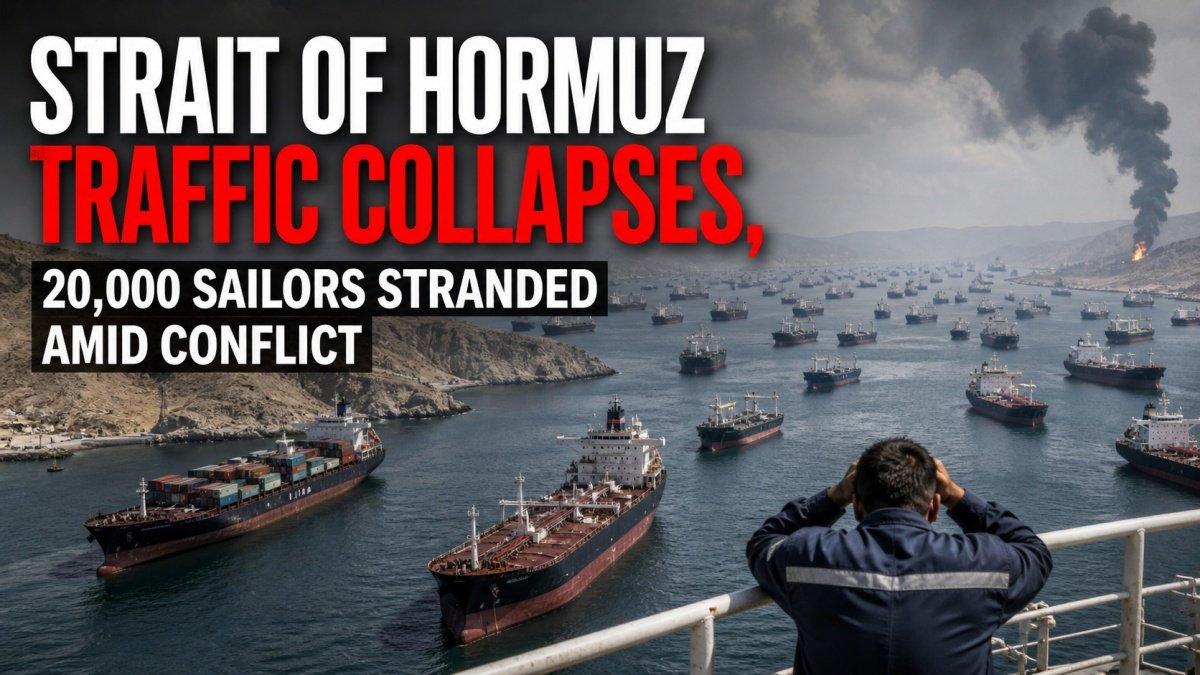
- Traffic Plunge: Daily ship transits have dropped from 130 vessels to fewer than 10.
- Sailors in Limbo: Approximately 20,000 crew members are trapped aboard 850 stranded merchant ships.
- Security Crisis: Over 40 maritime incidents, including drone strikes and harassment, were recorded in 60 days.
- Economic Impact: The near-total closure of the world’s most vital energy chokepoint has sent global oil markets into a tailspin.
- Humanitarian Concern: Officials warn of a burgeoning mental health crisis among crews confined to high-risk waters.
The Strait of Hormuz, often described as the jugular vein of the global energy trade, has reached a state of near-total paralysis. Following two months of intense military and diplomatic friction between Iran, Israel, and the United States, maritime security officials report a staggering decline in commercial activity. According to the United Kingdom Maritime Trade Operations (UKMTO), the waterway that once facilitated the passage of 130 ships daily now sees fewer than 10 vessels attempting the transit.
The crisis was ignited on February 28, 2026, following the death of Iran’s former Supreme Leader, Ali Khamenei, and subsequent retaliatory strikes launched by Tehran against U.S. and Israeli interests. Since that turning point, the Gulf region has become a theater of asymmetric maritime warfare, with more than 40 documented attacks on merchant vessels, ranging from sophisticated drone strikes to aggressive boardings.
The Human Cost, 20,000 Lives at Risk
While the economic data is startling, the humanitarian crisis unfolding within the Strait is even more dire. Currently, an estimated 850 to 870 large merchant vessels are stuck in a “kinetic stalemate,” anchored in high-risk zones because they are either blockaded or too fearful of targeted strikes to move.
Commander Joe Black, Head of Operations at UKMTO, confirmed today that approximately 20,000 sailors are currently stranded aboard these vessels. “Our primary priority is the safety of the sailors,” Black stated, noting that many have been at sea far longer than their original contracts intended. He warned that the prolonged confinement, coupled with the constant threat of aerial or naval attack, is causing a severe decline in the mental well-being of crew members.
Global Energy and the Return of Piracy
The closure of the Strait has effectively halted the flow of nearly 20% of the world’s petroleum and liquefied natural gas (LNG). While nations like India have sought sanctions exemptions to purchase oil from Russia and Iran, the physical inability to move tankers safely through the Gulf has rendered many of these trade agreements logistically impossible.
Security experts also warn that the vacuum created by the focus on the U.S., Iran conflict is emboldening other maritime threats. There are growing concerns that piracy off the coast of Somalia, which has been largely suppressed for a decade, could reignite as international naval task forces are diverted to the Gulf. As of May 1, 2026, the UKMTO remains on its highest state of alert, characterizing the current period as the most volatile and dangerous era for global shipping in modern history.