

































Key Highlights
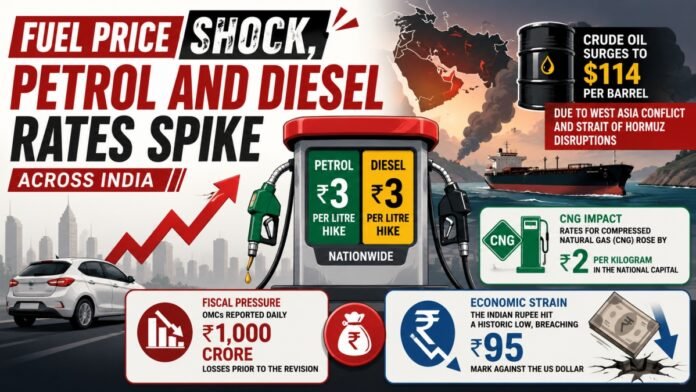
- Fuel Price Hike: Petrol and diesel prices increased by approximately ₹3 per litre nationwide.
- CNG Impact: Rates for Compressed Natural Gas (CNG) rose by ₹2 per kilogram in the national capital.
- Global Drivers: Surge in crude oil to $114 per barrel due to West Asia conflict and Strait of Hormuz disruptions.
- Fiscal Pressure: OMCs reported daily losses of ₹1,000 crore before the revision.
- Economic Strain: The Indian Rupee hit a historic low, breaching the ₹95 mark against the US Dollar.
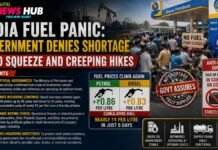
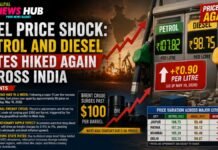
On Friday, Indian consumers woke up to a sharp surge in fuel costs as state-owned retailers, including Indian Oil (IOC), Bharat Petroleum (BPCL), and Hindustan Petroleum (HPCL), revised retail rates for the first time in nearly four years. In the national capital, Delhi, the price of petrol rose by ₹3.14 per litre to reach ₹97.77, while diesel increased by ₹3.11, bringing the new rate to ₹90.67 per litre.
The hike was not limited to liquid fuels. CNG prices in Delhi were also adjusted upward by ₹2 per kilogram, resulting in a new retail price of ₹79.09. This move follows a prolonged hiatus in price revisions that had remained largely unchanged since April 2022, barring a minor reduction in early 2024.
Revised Rates in Major Metros:
| City | Petrol (per litre) | Diesel (per litre) |
|---|---|---|
| Delhi | ₹97.77 | ₹90.67 |
| Mumbai | ₹106.68 | ₹93.14 |
| Kolkata | ₹108.74 | ₹95.13 |
| Chennai | ₹103.67 | ₹95.25 |
Geopolitical Conflict and Crude Volatility
The primary catalyst for the price adjustment is the intensifying conflict in West Asia, specifically the escalating tensions involving the US, Israel, and Iran. These hostilities have caused severe disruptions in the Strait of Hormuz, a critical maritime corridor for global energy supplies.
Global crude oil prices spiked past $120 per barrel before stabilising at an average of $114 per barrel in April 2026. Union Petroleum Minister Hardeep Singh Puri recently highlighted the unsustainable financial pressure on OMCs, noting that the companies were incurring daily losses of ₹1,000 crore. Without this price correction, quarterly losses were projected to exceed ₹1 lakh crore, a figure capable of erasing the sector’s entire annual profit margin.
Rupee Depreciation and Government Response
Compounding the fuel crisis is the steady decline of the Indian Rupee, which has now breached the ₹95 mark against the US Dollar. This depreciation has significantly increased the cost of oil imports, which account for over 80% of India’s domestic consumption.
In response to these mounting economic pressures, Prime Minister Narendra Modi issued a nationwide appeal urging citizens to adopt “energy-conscious” behaviours. The Prime Minister’s recommendations include:
- Judicious Fuel Use: Reducing non-essential travel to conserve foreign exchange.
- Curbing Gold Purchases: Limiting imports of non-essential luxury goods.
- Travel Deferment: Postponing non-urgent foreign trips to stabilise the currency.
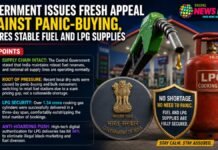
While the government maintains that fuel supplies remain robust, with 60 days of crude reserves and improved domestic LPG production, the hike is expected to exert immediate inflationary pressure on transport and essential commodities, further squeezing the household budgets of the common public.