
































Key Points
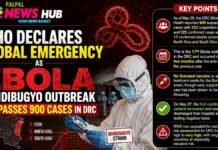
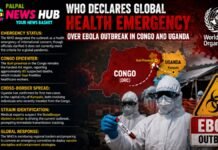
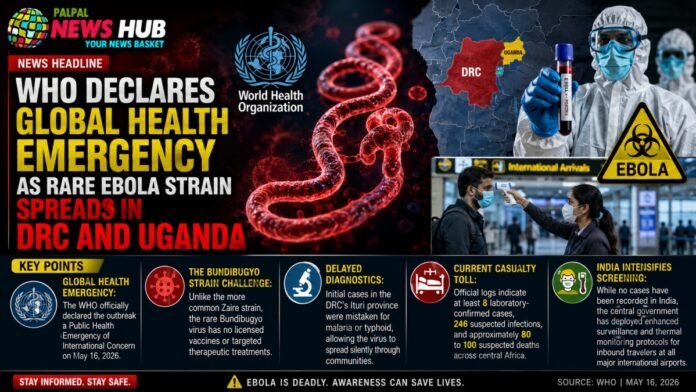
- Global Health Emergency: The WHO officially declared the outbreak a Public Health Emergency of International Concern on May 16, 2026, due to the high regional risk and cross-border spread.
- The Bundibugyo Strain Challenge: Unlike the more common Zaire strain, the rare Bundibugyo virus has no licensed vaccines or targeted therapeutic treatments, leaving health workers dependent entirely on supportive care.
- Delayed Diagnostics: Initial cases in the DRC’s Ituri province were mistaken for malaria or typhoid, allowing the virus to spread silently through communities, funeral rituals, and medical facilities.
- Current Casualty Toll: Official logs indicate at least 8 laboratory-confirmed cases, 246 suspected infections, and approximately 80 to 100 suspected deaths across central Africa, including frontline healthcare workers.
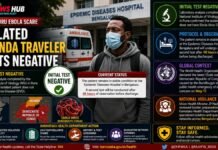
- India Intensifies Screening: While no cases have been recorded in India, the central government has deployed enhanced surveillance and thermal monitoring protocols for inbound travelers at all major international airports.
An escalating epidemiological crisis in central Africa has prompted swift intervention from global medical authorities. The World Health Organization, WHO, officially designated the current Ebola outbreak a Public Health Emergency of International Concern (PHEIC), placing it in the highest category of international health warnings. The emergency declaration followed reports that the lethal pathogen has rapidly breached containment zones within the Democratic Republic of the Congo (DRC) and successfully migrated into neighboring Uganda, including an imported casualty recorded in the capital city of Kampala.
The outbreak initially materialized in the remote, conflict-laden Ituri province of northeastern DRC, specifically within the Mongbwalu and Rwampara health zones. Because the early symptoms of the infection, such as sudden fever, generalized body pain, fatigue, and severe vomiting, closely mimic endemic regional illnesses like malaria and typhoid, standard field teams failed to register the virus immediately. This critical diagnostic delay allowed the pathogen to disperse widely via traditional local funeral practices, community interactions, and direct exposure to the bodily fluids of infected individuals.
Why the Bundibugyo Variant Alarms Scientists
While the DRC has successfully managed multiple Ebola surges over the last five decades, the current 2026 crisis presents an extraordinary challenge. Laboratory analysis conducted by the National Institute of Biomedical Research, INRB, in Kinshasa confirmed that the active agent is the Bundibugyo virus, one of the rarer species of the Orthoebolavirus genus.
“The virus is a rare species called Ebola Bundibugyo, which standard field tests often miss and for which no vaccines or therapeutics exist,” explained Dr. Diksha Goyal, an internal medicine consultant.
The logistical bottleneck centers on pharmaceutical limitations. The highly effective, globally stockpiled vaccines, such as Ervebo, along with existing monoclonal antibody treatments, were engineered exclusively to combat the Zaire strain of Ebola. Animal trials indicate these therapies offer zero cross-protection against the Bundibugyo variant. Consequently, the strain carries a devastating case fatality rate fluctuating between 30% and 50%.
The situation has caused severe alarm among local medical staff. Gaps in institutional infection control have resulted in several hospital-acquired transmissions, leading to the confirmed deaths of multiple frontline nurses and physicians.
Regional Complexities and Environmental Reservoirs
Containing the spread is heavily complicated by local socioeconomic factors. The Ituri region is currently navigating severe geopolitical insecurity, massive population displacements, and highly fluid, mining-related migration. These overlapping variables mean the true scale of the footprint could be substantially larger than what is currently captured by underfunded testing grids.
Historically, fruit bats are acknowledged as the primary natural reservoir for Ebola viruses, with spillover events occurring through infected bushmeat or direct environmental contact. Once inside human populations, the virus is highly contagious but relies strictly on direct contact with blood, saliva, feces, or vomit, rather than airborne pathways.
Domestic Precautions Safeguard Indian Air Corridors
For India, health ministries report a stable landscape with zero suspected or confirmed instances of the Bundibugyo virus registered nationwide. However, given the rapid connectivity of modern global aviation, the central government has proactively initiated a defensive screening apparatus across all primary international entry hubs.
The Ministry of Health has mandated strict, mandatory health screenings and thermal tracking for all arriving travelers who have recently transitioned through or departed from affected African territories. Isolation wards have been pre-staged near major metropolitan airports, and state laboratory networks are on high alert to ensure that any potential imported case is identified, isolated, and managed immediately without threatening domestic biosecurity.