Key Points
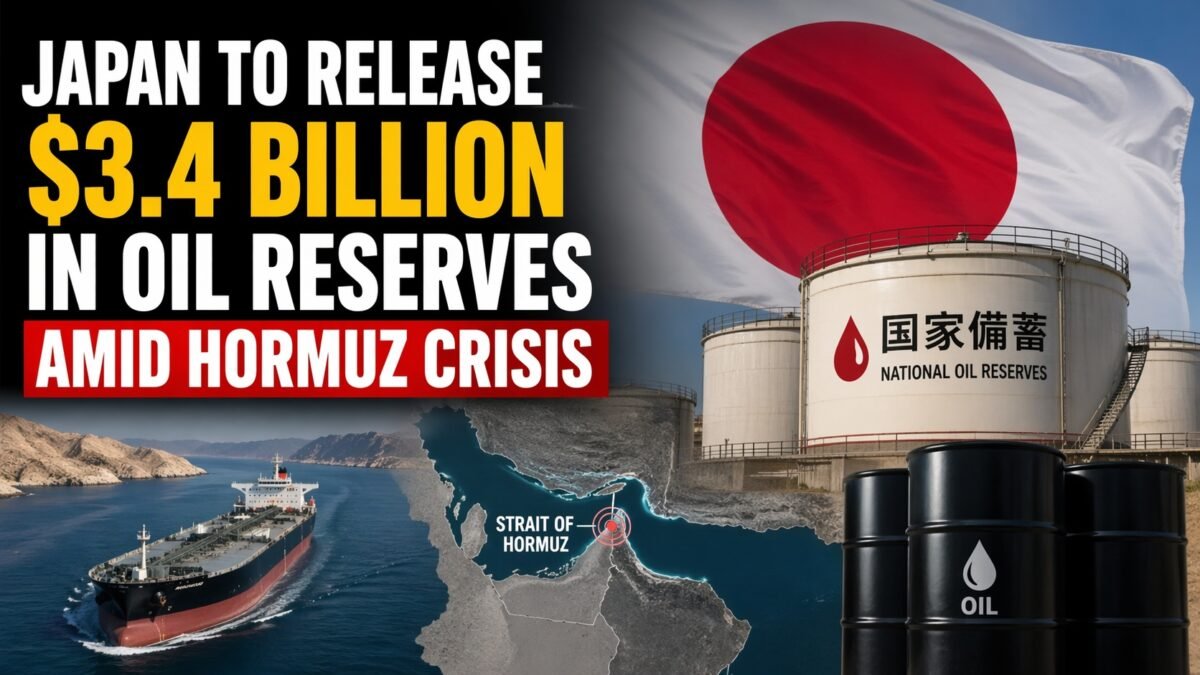
- Emergency Supply: Japan will release 20 days of additional reserves to mitigate a potential energy shortfall.
- Economic Scale: The release involves 5.8 million kiloliters, valued at approximately 540 billion yen ($3.4 billion).
- High Vulnerability: Over 90 percent of Japan’s crude oil imports transit through the now restricted Strait of Hormuz.
- Diplomatic Strategy: Prime Minister Sanae Takaichi is coordinating with Saudi Arabia to utilize Red Sea routes like Yanbu Port.
As the geopolitical standoff between the United States and Iran shows no signs of immediate resolution, Japan has taken decisive action to protect its industrial core. On Friday, April 24, 2026, the Ministry of Economy, Trade, and Industry (METI) announced that the government would begin releasing additional oil reserves for 20 days starting May 1st. This intervention follows an earlier, historic release of a 50-day supply, illustrating the severity of the current supply chain disruption.
The decision comes as Brent crude prices have surged past $106 per barrel, driven by the de facto closure of the Strait of Hormuz. For an island nation like Japan, which lacks significant domestic energy resources, the blockade of this narrow maritime corridor represents an existential threat to its economic stability.
The Geopolitical Toll on Energy Security
The Strait of Hormuz remains the world’s most vital energy chokepoint, facilitating the passage of one-fifth of the global oil trade. Tensions reached a boiling point following a series of military strikes on February 28, and the subsequent implementation of U.S. and Iranian maritime restrictions.
Japan is uniquely exposed to this volatility. According to government data, more than 90 percent of the nation’s crude oil is sourced from West Asia, with the vast majority of tankers required to navigate the Strait. By releasing 5.8 million kiloliters, valued at 540 billion yen ($3.4 billion), Tokyo aims to prevent a domestic price shock that could derail its post-pandemic recovery and fuel rampant inflation.
Strategic Diplomacy: The Takaichi, MBS Dialogue
Parallel to the reserve release, Prime Minister Sanae Takaichi is leading a robust diplomatic offensive to find alternative supply routes. On April 23, the Prime Minister held a high-level telephonic summit with Saudi Arabian Crown Prince Mohammed bin Salman (MBS). During the call, Takaichi expressed Japan’s deep concern over the recent strikes involving Iran and the resulting maritime insecurity.
A focal point of the discussion was the utilization of Saudi Arabia’s Yanbu Port on the Red Sea. Unlike ports within the Persian Gulf, Yanbu allows for oil exports that bypass the Strait of Hormuz entirely. Prime Minister Takaichi commended the Kingdom for its efforts to maintain global supply levels through this alternative channel and sought assurances for increased cooperation should the crisis in the Gulf persist.
Outlook and International Coordination
While the release of reserves provides a temporary buffer, the Japanese administration is under no illusions that this is a permanent fix. The Prime Minister’s Office has signaled its full support for the ongoing mediation efforts led by Pakistan and the United States in Islamabad.
As of late April, Japan remains in close consultation with other G7 nations to coordinate a unified response to the energy crisis. With the “Islamabad Talks” scheduled to begin tonight, Tokyo is hopeful that a diplomatic breakthrough will restore safe navigation, though the May 1st reserve release ensures the nation is prepared for a scenario where the Strait remains contested for the foreseeable future.