






























Key Points
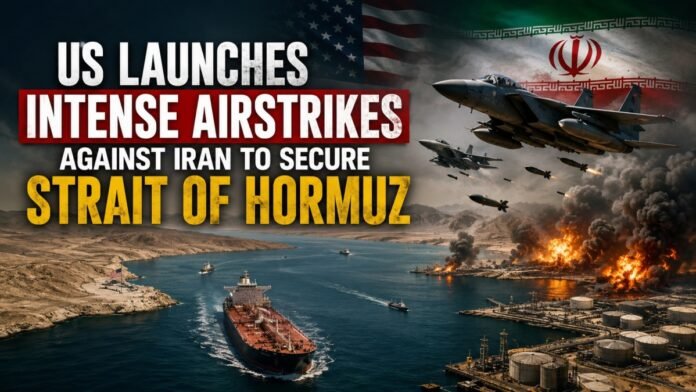
- Seven-Hour Bombardment: US Central Command executed precision strikes targeting Iranian missile sites, naval assets, and coastal defense systems.
- Blockade Reinstated: The offensive coincided with a strict US naval blockade on all Iranian ports, which took effect at 4:00 PM to protect international trade routes.
- Response to Aggression: The strikes follow a series of lethal Iranian attacks on seven commercial vessels over the past week, leaving approximately a dozen crew members dead, missing, or injured.
- Massive Force Deployment: More than 20 US Navy warships and hundreds of military aircraft are fully deployed and combat-ready in the Middle East.
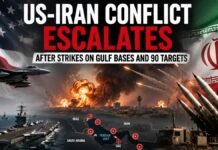
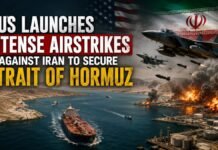
In a significant intensification of regional hostilities, US Central Command (CENTCOM) has carried out a heavy, seven-hour bombardment against multiple Iranian military installations in the vicinity of the Strait of Hormuz. The major offensive, which officially concluded at 10:00 PM US time, utilized a coordinated force of US fighter jets, unmanned drones, and numerous naval vessels. According to official statements, the precision strikes specifically targeted Iran’s coastal defense systems, missile launch sites, and naval capabilities, with the primary objective of severely degrading Tehran’s ability to threaten international waters.
Reinstatement of the Naval Blockade
The timing of these airstrikes aligns with the reimposition of a strict US naval blockade targeting all Iranian ports and coastal waters, which went into effect at 4:00 PM. The strategic move comes amid the wider Strait of Hormuz crisis, effectively reviving a maritime chokehold meant to isolate Iran’s shipping economy. CENTCOM emphasized that the blockade is a necessary measure to guarantee the safety of international shipping lines and protect innocent civilian crews. The Strait of Hormuz remains a critical artery for global trade, and the renewed fighting has already rattled international markets, driving global energy prices sharply upward as Brent crude surges past $84 a barrel.
Countering Regional Aggression
Commander Admiral Brad Cooper stated that the heavy military response was directly triggered by a week of severe and unprovoked Iranian aggression. Over the past seven days, the Iranian military deliberately launched lethal assaults against seven major commercial vessels transiting the region. These brutal attacks, which included the recent targeting of tankers with cruise missiles, resulted in approximately a dozen civilian crew members being killed, critically injured, or reported missing.
Furthermore, US officials highlighted that the Iranian military has launched dozens of missiles and drones at neighboring Gulf nations, provoking defensive interceptions from regional allies like Bahrain. Admiral Cooper affirmed that the US military is responding firmly, holding Tehran fully accountable for actions that present a constant threat to the lives of innocent people, a situation the US aims to completely halt.
Operational Posture and Future Outlook
While the strategic objectives have been made clear, CENTCOM has kept precise tactical details confidential. No official assessment of the structural damage or specific casualty figures within Iran has been disclosed, and the identities of the targeted commercial vessels and impacted Gulf nations remain classified.
Currently, the US military maintains a massive, highly visible presence in the Middle East, boasting over 20 combat-ready warships and hundreds of fully deployed aircraft. Central Command issued a stark warning that its forces remain highly vigilant, lethal, and prepared for further escalation. The military stands ready to execute even more significant and potent operations upon receiving direct orders from the US Commander-in-Chief, leaving the region on a knife-edge as diplomatic frameworks completely fray.