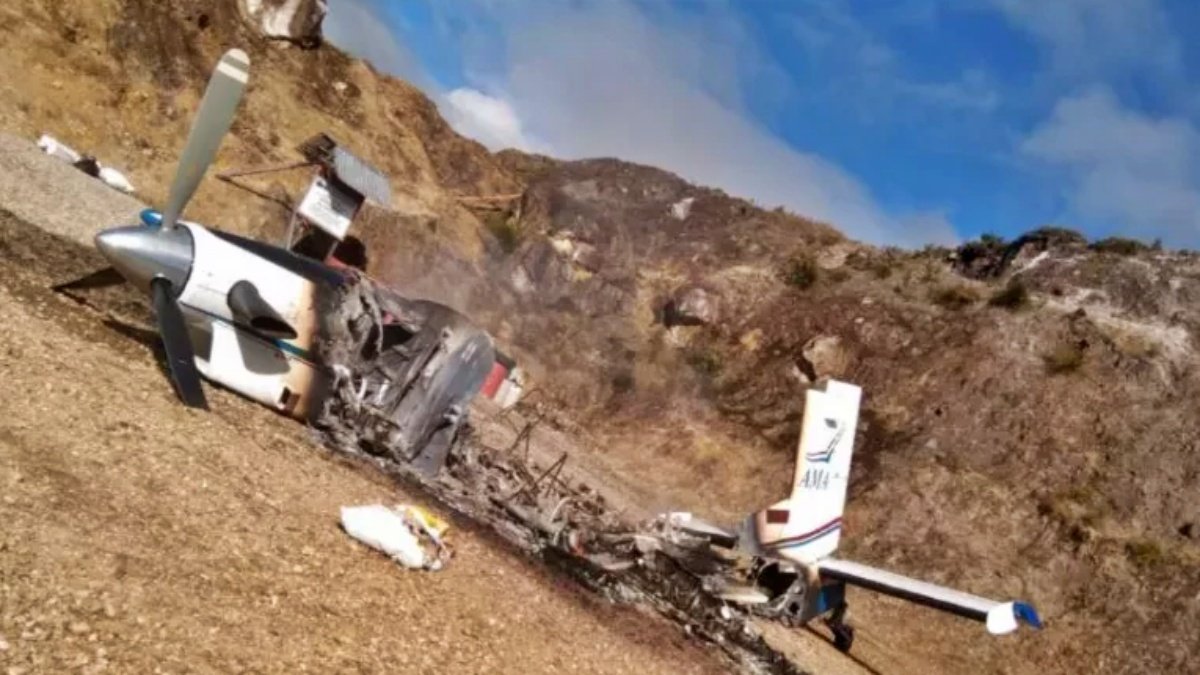
Key Highlights
- Casualty Confirmed: American pilot Nicholas F. Gosselin was shot and killed immediately after landing in a remote district.
- Aircraft Destroyed: The aircraft, belonging to transport company PT AMA, was completely torched by insurgents.
- Rebel Responsibility: The West Papua National Liberation Army (TPNPB) claimed full responsibility for the attack.
- Hostages/Passengers: Seven Papuan civilians were reportedly on board the aircraft during the incident, raising deep safety concerns.
Armed separatist fighters carried out a fatal attack in the volatile Papua region of Indonesia, killing an American pilot in broad daylight before setting his aircraft on fire. The incident took place in the remote Yahukimo district, located within the Highland Papua province.
According to reports from the Indonesian Directorate General of Civil Aviation, contact with the aircraft was lost shortly after it departed from Wamena and touched down in Yahukimo. Indonesian authorities later confirmed that the plane, operated by PT AMA to transport essential cargo and supplies to isolated communities, was found completely burned out. Officials confirmed that the flight was carrying pilot Nicholas F. Gosselin and seven Papuan civilian passengers. Local security forces have flooded the area to secure the site and gather intelligence.
TPNPB Issues Direct Ultimatum
The West Papua National Liberation Army (TPNPB), a prominent armed separatist group in the region, quickly claimed responsibility for the targeted execution and arson.
Sebby Sambom, a spokesperson for the TPNPB, issued a formal statement indicating that the attack serves as a severe warning to both the Indonesian and United States governments. Sambom asserted that the aircraft had repeatedly entered rebel-held territory despite explicit operational warnings issued by the group. He stated that fighters opened fire and destroyed the plane because the flight directly violated their established territorial ultimatums.
Allegations of Military Supply Lines
Beyond territorial violations, the rebel group alleged that civilian aviation networks are being systematically utilized by Indonesian forces. The TPNPB claimed that civilian planes are regularly used to transport military personnel, weapons, and logistical supplies into sensitive, conflict-prone zones under rebel control. Sambom warned that if civilian flights continue to operate within these designated “red zones,” similar deadly actions will follow.
Escalating Regional Conflict
The Papua region has been locked in a low-level, violent separatist insurgency since it was integrated into Indonesia in 1969 following a United Nations-backed vote. In recent years, conflict dynamics have grown increasingly aggressive, with rebel factions progressively targeting foreign nationals to draw international attention to their independence movement.
This fatal attack mirrors previous high-profile insurgent operations in the region. In February 2023, TPNPB rebels abducted New Zealand pilot Philip Mehrtens after landing a small commercial plane in the neighboring Nduga district. Mehrtens was held hostage in the dense Papuan jungle for roughly 19 months, creating a prolonged international diplomatic standoff before his eventual release in late 2024 following extensive negotiations.
The killing of an American citizen marks a significant escalation in the conflict, likely prompting heightened diplomatic pressure on Jakarta to stabilize security infrastructure across Highland Papua’s critical aviation corridors.