Key Updates
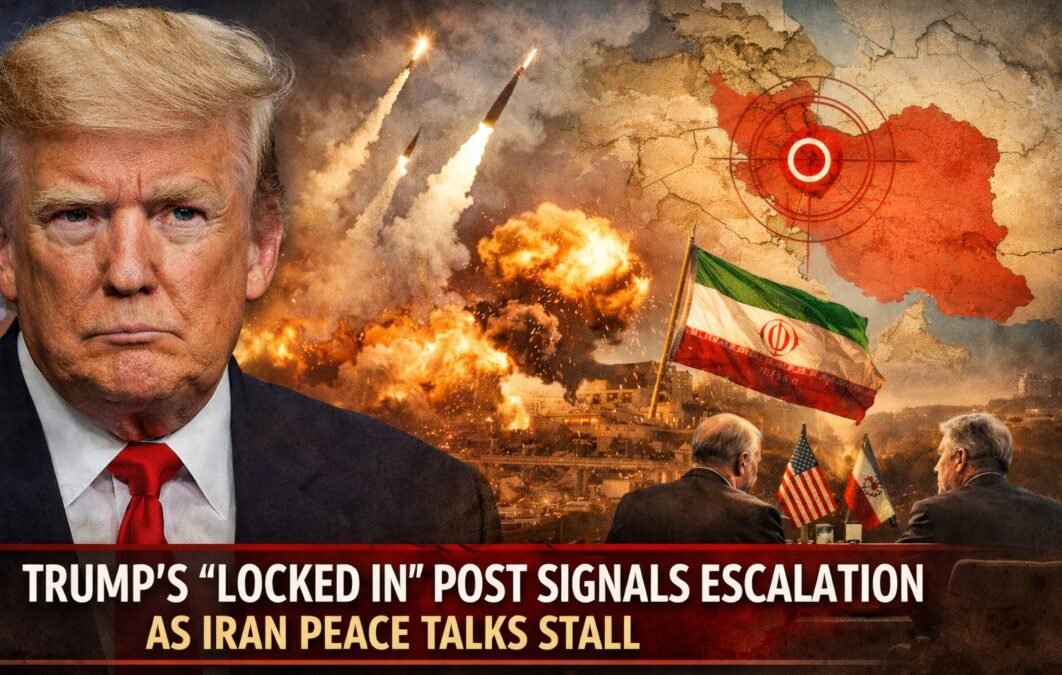
- White House “Locked In”: President Trump’s official handle shared an aggressive “LOCKED IN MODE” post on Monday, signaling a shift toward decisive military action.
- IRGC Diplomatic Takeover: Major General Ahmad Vahidi and the Revolutionary Guard have effectively seized control of Iran’s foreign policy, sidelining moderate negotiators.
- Hormuz Blockade: The strategic Strait of Hormuz remains a primary flashpoint following Iranian attacks on neutral merchant vessels and a retaliatory U.S. naval blockade.
- Ceasefire Expiration: A fragile two-week truce is set to expire on Wednesday, April 22, with Iran indicating it may boycott upcoming peace talks in Islamabad.
On Monday, April 20, 2026, the White House’s official social media accounts released a photograph of President Donald Trump with a caption that has many defense analysts on edge: “LOCKED IN MODE: ACTIVATED… It’s Monday. No excuses. Just wins.” While the imagery appeared to draw inspiration from the president’s ties to the UFC, the timing suggests a far more serious message directed at Tehran.
The post follows a weekend of heightened tension where a U.S. destroyer fired upon and seized an Iranian-flagged cargo ship in the Gulf of Oman. Strategic experts interpret the “No excuses” slogan as a sign that the administration has finalized its military targets, indicating that strikes against Iranian military infrastructure or IRGC strongholds could be imminent if diplomatic avenues remain closed.
The IRGC’s Grip on Iranian Diplomacy
The prospects for a peaceful resolution have dimmed as the Islamic Revolutionary Guard Corps, IRGC, has assumed total authority over Iran’s military and diplomatic apparatus. Following the appointment of hardliner Major General Ahmad Vahidi as Commander-in-Chief in March, the military elite has effectively dismantled the influence of the Ministry of Foreign Affairs.
While Foreign Minister Abbas Araghchi had previously explored de-escalation strategies during talks in Islamabad, reports now indicate that Vahidi and the Secretary of the Supreme National Security Council, Mohammad Bagher Zolghadr, have sidelined Araghchi. This internal power shift signals that Iran’s foreign policy is now dictated entirely by the IRGC’s military objectives, leaving little room for traditional statecraft.
The Strait of Hormuz: A Global Chokepoint
At the heart of the conflict is the ongoing crisis in the Strait of Hormuz, where the IRGC has maintained a blockade since late February. In retaliation for U.S. and Israeli air strikes, Iran has targeted over 20 merchant ships, significantly disrupting the flow of 20% of the world’s oil supply.
In response, the United States has enforced what is described as a “distant blockade,” with Navy vessels intercepting ships bound for Iranian ports. President Trump has remained steadfast, asserting that the U.S. will go to any lengths to reopen the strategic waterway and protect global trade. The recent seizure of the Iranian vessel Touska by U.S. forces has been cited by Tehran as a breach of the current ceasefire, further complicating the potential for renewed negotiations.
A Critical Turning Point
As of Monday evening, the international community is closely watching for signs of a diplomatic miracle. A two-week ceasefire, which has provided a tenuous pause in large-scale hostilities, is scheduled to end on Wednesday at 8:00 p.m. EST.
With the White House signaling it is “locked in” and the IRGC refusing to return to the negotiating table, defense analysts warn that the Middle East is on the precipice of a full-scale war. Unless a breakthrough occurs in the coming 48 hours, the region faces the possibility of a conflict with catastrophic consequences for global energy security and international stability.