Key Points
- Economic Admission: PM Shehbaz Sharif confirms the national economy has “completely crumbled” due to foreign conflict.
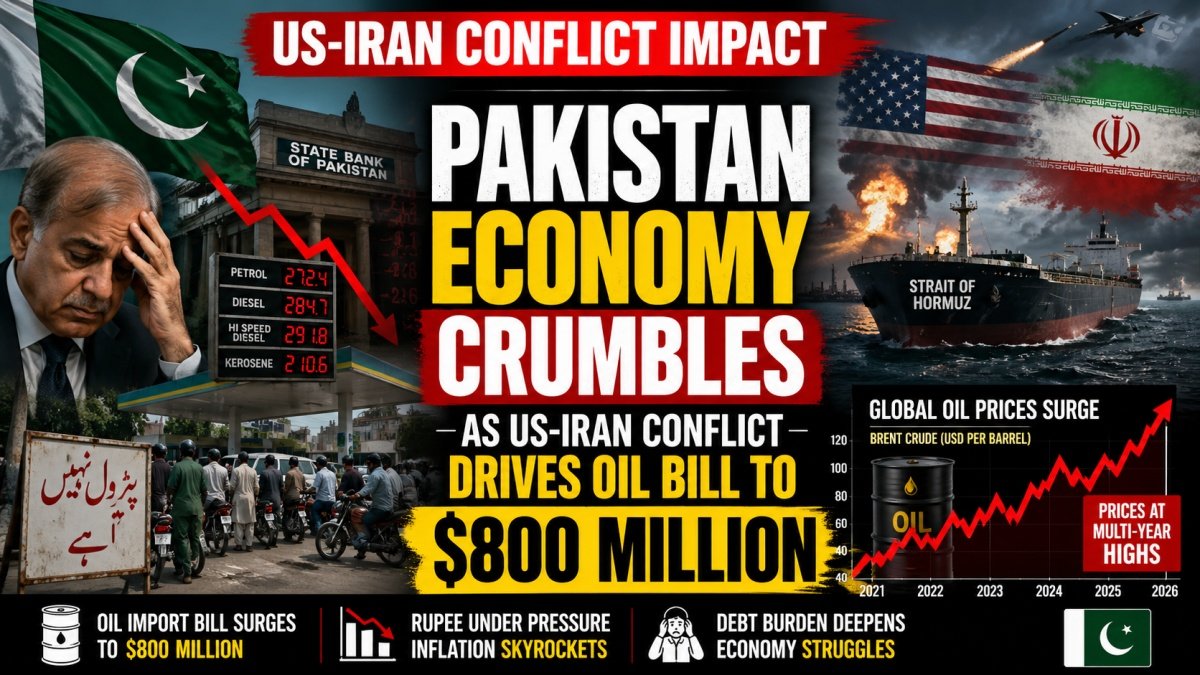
- Oil Price Shock: Monthly oil import expenditures have skyrocketed from $300 million to $800 million.
- Diplomatic Efforts: A marathon 21-hour dialogue between the U.S. and Iran took place in Islamabad on April 11 to seek regional stability.
- Energy Desperation: Residents in Karachi are reportedly storing highly flammable gas in plastic balloons due to severe shortages.
- Government Oversight: A special task force is now monitoring the fuel and gas supply chains on a daily basis.
The ongoing military and diplomatic standoff between Iran and the United States has moved beyond a regional security threat, now dealing a catastrophic blow to Pakistan’s internal stability. Prime Minister Shehbaz Sharif, addressing the nation, acknowledged that the country’s economic progress has been derailed by two years of sustained external pressure. The Prime Minister noted that the conflict has effectively “crumbled” the foundations of the national economy, leaving ordinary citizens to bear the brunt of unprecedented inflation.
This crisis has manifested most sharply in the energy sector. Fuel and gas supplies have reached a breaking point, forcing the government to admit that the foreign conflict has created a “deep and dangerous” obstacle to recovery that domestic policy alone cannot easily fix.
The $500 Million Oil Import Surge
The most quantifiable impact of the regional tension is seen in the nation’s balance of payments. PM Sharif revealed that Pakistan’s oil import bill has undergone a sudden and unsustainable jump, rising from $300 million to $800 million. This $500 million increase is attributed to rising global crude prices, high insurance premiums for shipping, and disrupted supply routes.
While the government recorded a marginal decline in petroleum consumption this week compared to the previous period, officials clarify that this is less a result of efficiency and more a reflection of restricted supply and the inability of the public to afford current prices. A special task force is currently operating under a high-alert status, conducting daily reviews of the situation to prevent a total shutdown of the transport and power sectors.
The Islamabad Dialogue: A 21-Hour Marathon
In a significant diplomatic update, the Prime Minister briefed the cabinet on the April 11 peace talks held in the capital. The “Islamabad Dialogue,” which lasted for a continuous 21 hours between U.S. and Iranian representatives, is being characterized as a significant diplomatic achievement for Pakistan as a mediator.
While the marathon session focused on a potential ceasefire and regional stability, the benefits have yet to trickle down to the local economy. PM Sharif emphasized that while Pakistan is working tirelessly to ensure a regional de-escalation, the domestic “ground reality” remains a different, more painful story.
Desperate Measures: The Gas Balloon Phenomenon
As official dialogues continue in high-security zones, the situation on the streets of Karachi and other major urban centers has turned increasingly grim. Due to the acute shortage of natural gas, reports have emerged of citizens using plastic balloons and makeshift bags to store gas for cooking.
This highly dangerous practice involves filling large plastic bags with gas from low-pressure lines and using a nozzle and hose to fuel domestic stoves. Authorities have warned that these “floating bombs” represent a life-threatening risk of explosion, yet many residents claim they have no other choice as traditional cylinder prices remain out of reach and pipeline pressure remains non-existent.
The government maintains that its primary focus is alleviating these tensions through both international mediation and internal resource management, but for the common citizen, the wait for relief continues amidst a spiraling energy crisis.