

































Key Points
- Diplomatic Breakthrough: Araghchi’s visit follows a high-stakes telephone intervention by Pakistan’s Chief of Defence Forces, Field Marshal Asim Munir.
- Ceasefire Extension: U.S. President Donald Trump recently extended the truce, originally set to expire on April 22, at the request of Pakistani leadership.
- Economic Strain: The U.S. has reportedly spent over ₹2.9 trillion ($35 billion) on “Operation Epic Fury,” leading to significant depletion of key missile stockpiles.
- Security Lockdown: Islamabad’s “Red Zone” and “Blue Area” have been secured under fortress-like conditions as rumors of a top-level U.S. delegation circulate.
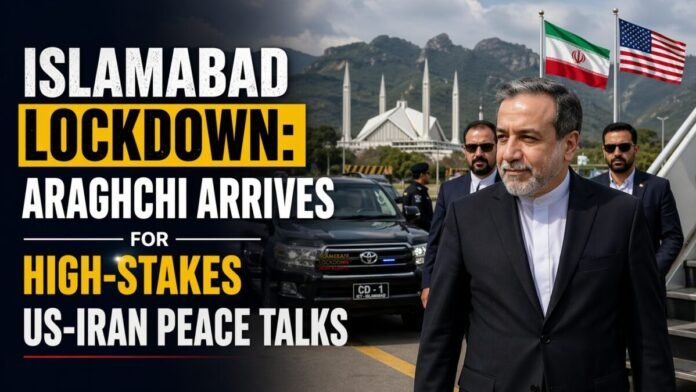
In a major development within the volatile West Asian landscape, Iranian Foreign Minister Abbas Araghchi is scheduled to land in Islamabad late Friday night, April 24, 2026. This visit represents a critical attempt to revive the “Islamabad Talks,” which saw a first round of direct and indirect negotiations fail on April 12.
The momentum for this visit was largely generated by Pakistan’s military leadership. Following the expiration of a 14-day ceasefire on April 22, Iran had initially signaled a refusal to return to the negotiating table. However, a lengthy telephonic discussion between Iran’s top diplomat and Field Marshal Asim Munir proved decisive. Munir, who was elevated to the rank of Field Marshal in 2025 and currently serves as the Chief of Defence Forces, has leveraged his access to both the Oval Office and Tehran to position Pakistan as the indispensable bridge between the warring nations.
The Cost of Conflict and “Operation Epic Fury”
The renewed push for diplomacy comes as internal reports highlight the staggering financial and logistical toll of the conflict on the United States. During the 38-day campaign known as “Operation Epic Fury,” the U.S. military is estimated to have spent approximately ₹2.9 trillion ($35 billion).
The Pentagon, led by Secretary of Defense Pete Hegseth, has faced increasing scrutiny over the depletion of precision munitions. Recent assessments suggest the U.S. has expended over 1,000 Tomahawk cruise missiles and 1,200 Patriot interceptors, a rate of consumption that far exceeds annual production capabilities. Hegseth, while maintaining a firm public stance, has noted that the current diplomatic window offers Iran an “excellent opportunity” to secure a favorable deal before military resources are further committed.
Islamabad Under Lockdown
The Pakistani capital has been transformed into a virtual fortress in anticipation of the high-level arrivals. Stringent security measures have paralyzed the city’s central hubs, with the “Red Zone” and “Blue Area” under complete lockdown.
Administrative speculation has reached a fever pitch regarding the possible arrival of U.S. President Donald Trump. While a 300-member U.S. negotiating team led by Vice President JD Vance participated in the failed April 11,12 talks, the presence of a U.S. logistics and security advance team in the capital suggests a delegation of even higher significance may be imminent. Government offices and major markets remain closed as the city prepares for what could be the most consequential diplomatic summit of the decade.
Looking Toward a Regional Resolution
The stakes for the upcoming discussions involve more than just a cessation of hostilities. Primary sticking points remain the permanent reopening of the Strait of Hormuz and the status of Iran’s nuclear program. Following his stay in Pakistan, Foreign Minister Araghchi is expected to travel to Oman and Russia to brief regional partners on the progress of the negotiations.
With global oil prices hovering near $106 per barrel and the U.S. Dollar Index remaining high, the economic pressure for a resolution is felt worldwide. The “Islamabad Talks” are now viewed by the international community as the final realistic off-ramp before the region descends into a prolonged, high-intensity conflict.