Key Points
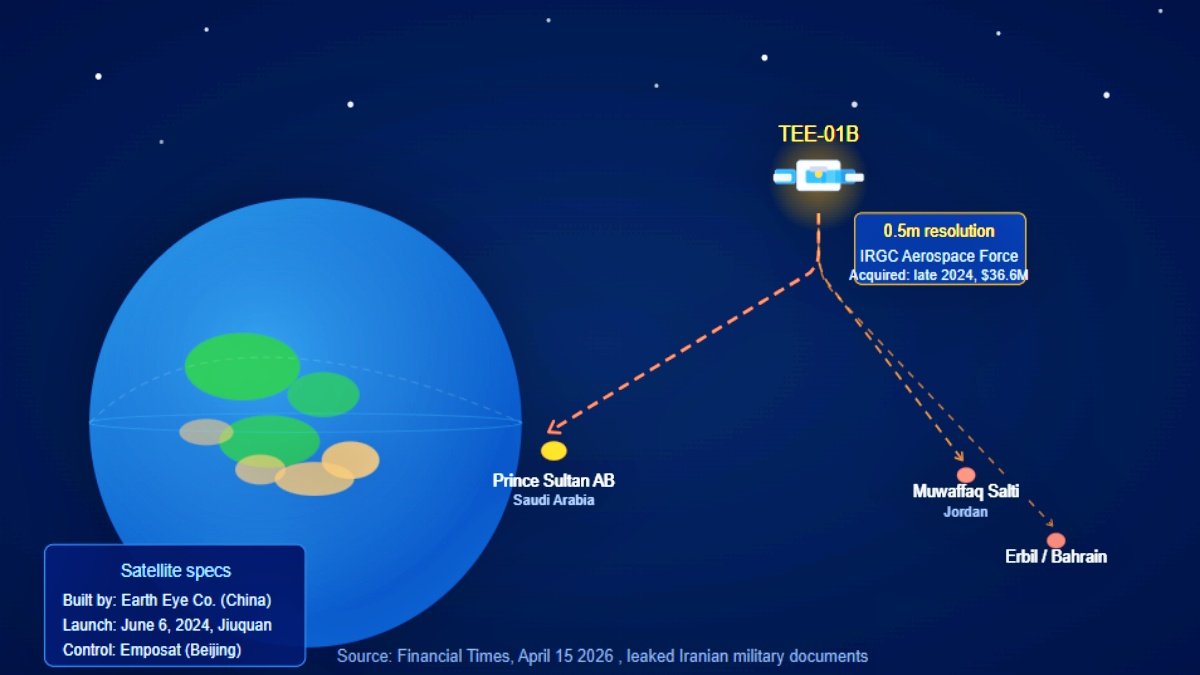
- Iran secretly acquired the Chinese-built TEE-01B satellite in late 2024, which was then used by the IRGC’s Aerospace Force to monitor and target US military bases.
- The satellite was launched on June 6, 2024, from the Jiuquan Satellite Launch Centre in the Gobi Desert, and the IRGC finalised a purchase deal worth around $36.6 million.
- The satellite captured images of Prince Sultan Air Base in Saudi Arabia on March 13, 14 and 15. On March 14, Trump confirmed US planes at the base had been hit.
- The satellite also conducted surveillance on Jordan’s Muwaffaq Salti Air Base, the US Fifth Fleet naval base in Manama, Bahrain, and Erbil airport in Iraq, around the time of IRGC-claimed attacks on those facilities.
- TEE-01B is capable of capturing imagery at roughly half-metre resolution, comparable to high-resolution commercially available western satellite imagery, representing a significant upgrade on Iran’s domestic capabilities.
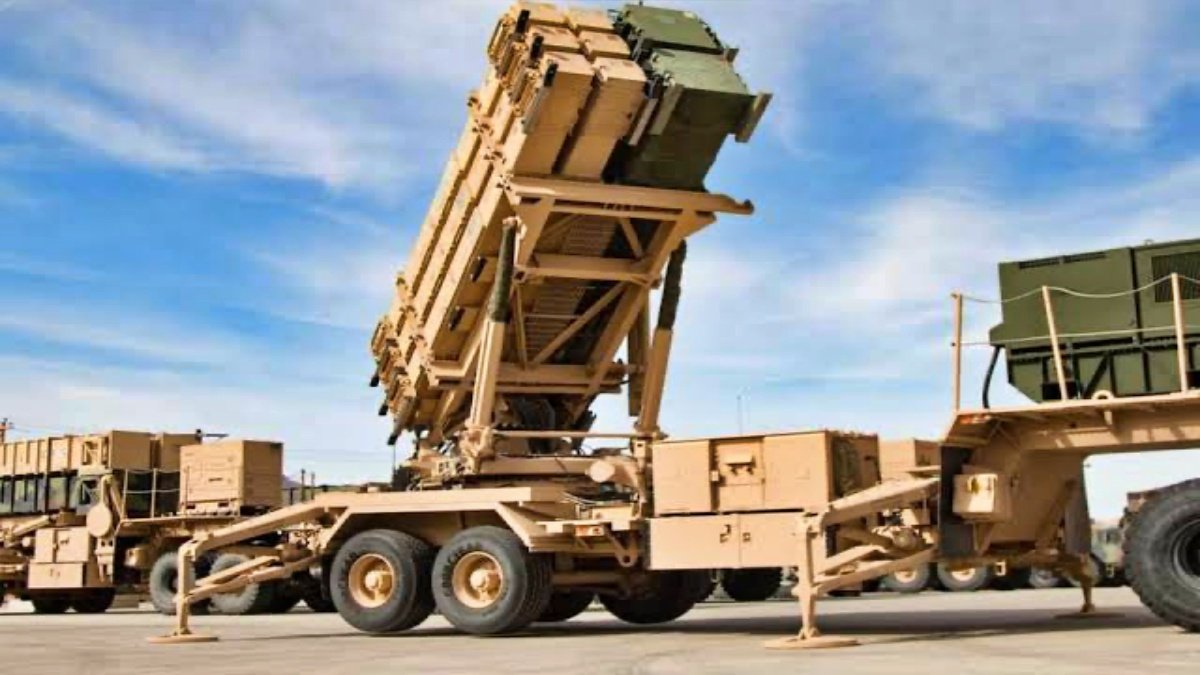
- Trump warned at the weekend that China would face “big problems” if it provided Iran with air defence systems.
The TEE-01B satellite was built and launched by the Chinese company Earth Eye Co, and was acquired by the IRGC’s Aerospace Force after it was launched into space from China, according to leaked Iranian military documents cited by the Financial Times. The deal represents a new and troubling model of arms-adjacent technology transfer: rather than a government-to-government sale, it was a commercial transaction conducted through Earth Eye’s “in-orbit delivery” model, under which spacecraft launched in China are transferred to overseas customers once they reach orbit.
As part of the agreement, the IRGC was granted access to commercial ground stations operated by Emposat, a Beijing-based provider of satellite control and data services with a global network spanning Asia, Latin America, and other regions. This meant Iran could task the satellite with specific imaging coordinates and receive timely intelligence, all routed through Chinese commercial infrastructure, allowing the IRGC to tell the satellite exactly when and where to take a picture, giving real-time intelligence for active military operations.
A Tenfold Leap in Precision
The acquisition fundamentally transformed Iran’s battlefield intelligence. By contrast, the IRGC Aerospace Force’s previously most advanced military satellite, the Noor-3, was estimated to capture imagery at about 5 metres resolution, still about an order of magnitude less precise than the Chinese-built satellite and insufficient to identify aircraft or monitor activity at military bases. With TEE-01B, Iranian military planners could, for the first time, distinguish between different types of fighter jets and track individual support vehicles on a base, enabling far more precise targeting than ever before.
Iranian military commanders directed the satellite to monitor major US military sites. The images were taken in March, before and after drone and missile strikes on those locations. The surveillance extended far beyond the bases that were directly attacked. Other areas monitored included Camp Buehring and Ali Al Salem airbase in Kuwait, Camp Lemonnier in Djibouti, and Duqm International Airport in Oman. Gulf civilian infrastructure under observation included the Khor Fakkan container port, the Qidfa power and desalination plant in the UAE, and the Alba aluminium facility in Bahrain.
Expert Assessment and Geopolitical Fallout
Nicole Grajewski, an expert on Iran, stated that the satellite is clearly being used for military purposes, as it is operated by the IRGC’s Aerospace Force and not Iran’s civilian space programme. She added that Iran really needed this foreign-provided capability during the war, as it allowed the IRGC to identify targets ahead of time and check the success of its strikes.
Analyst Lamson noted that Iran also has human intelligence assets around the region surveilling US military bases, and that combining satellite imagery with that, along with Russian satellite data, represents a powerful intelligence tool.
The revelations place China in an acutely awkward position. The Chinese embassy in Washington dismissed the report, saying Beijing firmly opposes relevant parties spreading speculative and insinuating disinformation against China. Yet this is not the first time China has been linked with Iran during the conflict. CNN previously reported that US intelligence suggested China was preparing to deliver new air defence systems to Iran, including shoulder-fired anti-aircraft MANPADs, which represent an asymmetric threat to low-flying US military aircraft.
The use of a Chinese-built satellite by the IRGC during a war where Tehran has repeatedly targeted its neighbours with missiles and drones is likely to be highly sensitive across the region, as China is the largest trading partner of the Gulf countries and the largest buyer of their oil.