































Key Points
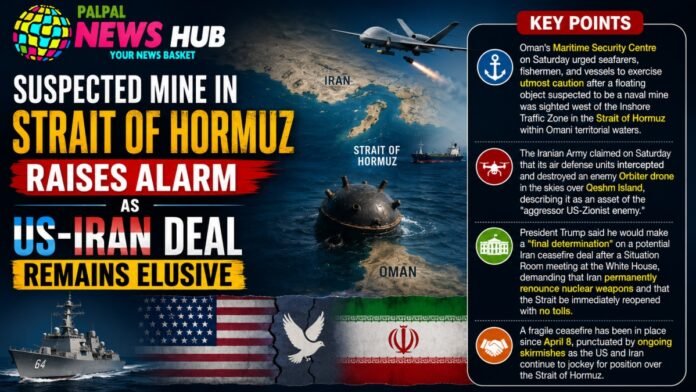
- Oman’s Maritime Security Centre on Saturday urged seafarers, fishermen, and vessels to exercise utmost caution after a floating object suspected to be a naval mine was sighted west of the Inshore Traffic Zone in the Strait of Hormuz within Omani territorial waters.
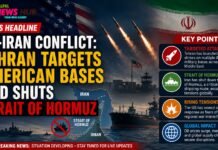
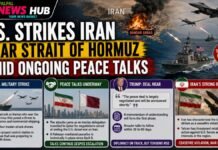
- The Iranian Army claimed on Saturday that its air defense units intercepted and destroyed an enemy Orbiter drone in the skies over Qeshm Island, describing it as an asset of the “aggressor US-Zionist enemy.”
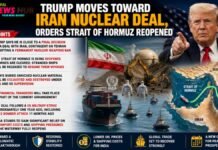
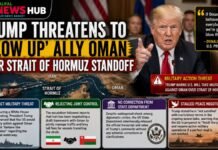
- President Trump said he would make a “final determination” on a potential Iran ceasefire deal after a Situation Room meeting at the White House, demanding that Iran permanently renounce nuclear weapons and that the Strait be immediately reopened with no tolls.
- A fragile ceasefire has been in place since April 8, punctuated by ongoing skirmishes as the US and Iran continue to jockey for position over the Strait of Hormuz.
In a post on X, the Omani Maritime Security Centre stated that, due to the sighting of a floating object suspected to be a floating mine west of the Inshore Traffic Zone in Omani territorial waters, all maritime users are advised to keep a safe distance from any suspicious objects and report them immediately to the relevant authorities.
The broader crisis in the strait has already taken a significant toll, with at least one tugboat sunk, at least 17 merchant ships damaged, two merchant ships captured, and 12 seafarers killed or missing since the current crisis began in late February 2026.
Drone Downed Over Qeshm Island
The Iranian military’s public relations department said air defense units successfully intercepted and destroyed a drone flying over Qeshm Island, identifying it as a small Orbiter-type aircraft. The claim followed an earlier announcement on May 26 by Iran’s Islamic Revolutionary Guard Corps, which said it had also downed a US MQ-9 drone flying over the Persian Gulf. The claims could not be independently verified, and there was no immediate comment from US or Israeli officials.
Background: How the Crisis Began
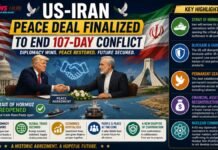
The current conflict began when President Trump threatened military action against Iran and set a deadline for Tehran to reopen the Strait of Hormuz. Just under ninety minutes before that deadline expired, Trump announced a two-week ceasefire, crediting Pakistan’s Prime Minister Shehbaz Sharif and Field Marshal Asim Munir for mediating the pause.
The standoff has set off what Gulf states described as the worst global energy crisis in decades, with higher energy prices feeding rising inflation in the United States and raising expectations that the Federal Reserve may need to increase interest rates.
Talks Stall, Deal Remains Out of Reach
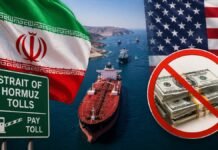
Trump laid out his core demands on social media, insisting Iran must agree to never possessing a nuclear weapon or bomb and that the Strait of Hormuz must be immediately opened with unrestricted shipping and no tolls. He said no money would be exchanged until further notice.
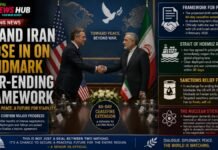
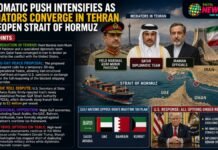
Pakistani and Qatari negotiators held talks with Iranian counterparts on Thursday and Friday while staying in regular contact with US envoy Steve Witkoff. Iran’s top negotiator told a Pakistani counterpart that Iran would not compromise its legitimate rights and expressed deep distrust of the US.
Separately, a US official told reporters that Iran has agreed in principle to a proposal that would include disposing of highly enriched uranium, and the Trump team expressed optimism about the direction of negotiations. However, White House officials said they did not expect a final deal on Sunday, and that Iranian Supreme Leader Mojtaba Khamenei would need several days to approve any agreement.
Adding to the regional volatility, the US Secretary of Defense stated that Washington is prepared to resume attacks on Iran if an agreement cannot be reached. With a suspected mine now floating in the strait and drone intercepts occurring overhead, the window for diplomacy remains narrow, and the stakes for global energy markets could not be higher.