

































Key Updates
- Logistical Bottleneck: Critical supply routes from Bahrain and the UAE are blocked due to regional tensions and mining in the Strait of Hormuz.
- Inventory Depleted: The Riyadh store is reportedly out of white wine, with only limited, high-priced red wine and insufficient beer stocks remaining.
- Expanded Demand: Access recently grew to include wealthy non-Muslim residents and Premium Residency holders, further straining limited supplies.
- Expansion Paused: Plans for additional outlets in Jeddah and the Aramco compound in Dhahran have been indefinitely delayed.
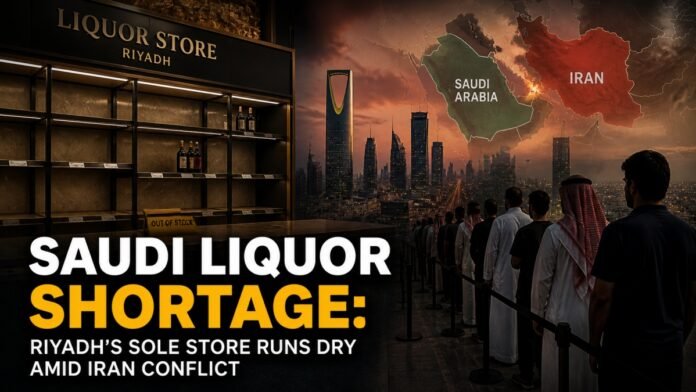
The social and commercial landscape of Riyadh is feeling the ripple effects of the ongoing conflict involving Iran, as the kingdom’s sole licensed alcohol outlet faces a total inventory collapse. Located discreetly within the Diplomatic Quarter, the store, which famously carries no external signage, has seen its supply chains severed by the hostilities.
Logistics experts point to the Strait of Hormuz, where reports of partial mining and heightened naval activity have stalled shipments. Traditionally, the Riyadh outlet has relied on transit routes through Bahrain and the United Arab Emirates, but these regional hubs are currently grappling with significant shipping delays. Staff at the facility confirmed that new shipments of wine, spirits, and beer have been postponed indefinitely, leaving the facility unable to meet the rising demand of the capital’s international residents.
Tensions Rise in the Diplomatic Quarter
The scarcity has triggered a wave of “panic buying” among the foreign community. In recent days, long lines have snaked outside the store as expatriates leave their offices during mid-day breaks to secure whatever remains. According to Western diplomats, white wine has vanished entirely, while the remaining stock consists of a few “super expensive” bottles of niche red wine and a small, random shipment of beer that was exhausted within hours.
The atmosphere on the ground has grown increasingly tense. Reports have surfaced of verbal altercations and minor scuffles breaking out in the queues, fueled by the combination of sweltering heat and the fear that the store may close its doors once the final bottles are sold. The Saudi government has yet to issue a formal statement, but the Government Media Office’s silence has only heightened anxieties within the expatriate workforce.
Evolution of Saudi Alcohol Policy
While a total ban on alcohol has been the law of the land since 1952, the opening of this store in early 2024 marked a revolutionary shift in the kingdom’s social policy. Under the Vision 2030 initiative led by Crown Prince Mohammed bin Salman, the store was initially intended to curb the black market and serve non-Muslim diplomats.
However, in late 2025 and early 2026, the eligibility criteria were quietly expanded. Access was granted to wealthy non-Muslim foreign residents, specifically those holding “Premium Residency” permits, which include high-level investors and specialized professionals. This policy shift was intended to make the kingdom more attractive to global talent, but the timing coincided with the logistical nightmare of the Iran conflict.
Future Expansion on Hold
Before the current crisis, Riyadh had planned to scale its experiment by opening two additional stores, one to serve the consulate-heavy city of Jeddah and another for the expatriate employees at the Saudi Aramco compound in Dhahran.
Sources familiar with the matter suggest those plans have now been shelved. The combination of regional instability and the optical difficulty of managing a shortage in the capital has made the expansion of alcohol sales a secondary priority for the government. For now, the “booze bunker” in Riyadh remains the only official point of sale, though its empty shelves serve as a stark reminder of the kingdom’s vulnerability to regional geopolitical shocks.