


































Key Points
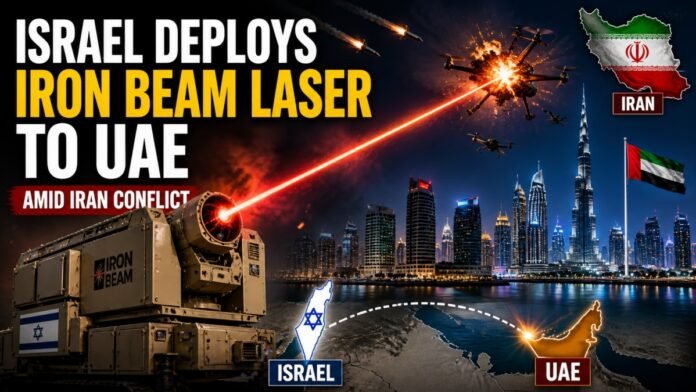
- Strategic Deployment: Israel has transferred the Iron Beam, the world’s first high-energy laser interceptor, alongside the Iron Dome to Emirati soil.
- Boots on the Ground: Dozens of Israeli military personnel are currently stationed in the UAE to provide operational expertise and training.
- Prototype Technology: The systems provided were reportedly advanced prototypes rushed from development stages to meet urgent regional security needs.
- Retaliatory Context: The deployment follows a massive Iranian assault on February 28, 2026, involving over 2,500 projectiles launched at the UAE.
- Surveillance Boost: The transfer includes “Spectro,” a specialized detection platform capable of tracking hostile drones from a distance of 20 kilometers.
A major shift in the geopolitical landscape of West Asia has been revealed as Israel reportedly deployed its most advanced directed-energy weapon, the Iron Beam, to the United Arab Emirates. First exposed by the Financial Times, this move signifies a historic level of military cooperation between the two nations, forged under the enduring framework of the 2020 Abraham Accords.
Advanced Defensive Shield: Iron Beam and Spectro
The centerpieces of this military aid package are the Iron Beam and the Iron Dome systems. While the Iron Dome is famous for its kinetic interceptions, the Iron Beam uses a 100kW-class high-energy laser to “vaporize” incoming threats at the speed of light. Because the cost per intercept is negligible compared to traditional missiles, the system offers a sustainable defense against the high-volume drone swarms favored by Tehran.
Supplementing these weapons is a surveillance platform known as Spectro. This system provides the UAE with a 20-kilometer “early warning” radius specifically tuned to detect low-flying, small-signature drones that often evade conventional radar. Intelligence sharing regarding Iranian ballistic trajectories has also been integrated into the UAE’s defense network, creating a multi-layered shield.
A Desperate Rush to the Frontlines
The deployment was characterized by its urgency. Sources familiar with the matter indicate that the Iron Beam units sent to the UAE were essentially “off the bench” prototypes. These systems had not yet been fully integrated into Israel’s own domestic radar grid, but were expedited to the Gulf as the conflict escalated.
Alongside the hardware, dozens of Israeli troops have been deployed to assist with technical operations and maintenance. This marks one of the first times Israeli “boots on the ground” have been officially, albeit quietly, stationed in an Arab allied nation to counter a shared regional adversary.
Origins of the Escalation
The current crisis peaked on February 28, 2026, following a series of devastating U.S. and Israeli airstrikes on Iranian military infrastructure. In a massive retaliatory wave, Iran targeted the UAE with more than 500 ballistic missiles and approximately 2,000 advanced drones.
Tehran’s decision to single out the UAE as a primary target is widely viewed as a direct response to the “enthusiastic” defense partnership between Abu Dhabi and Jerusalem. Despite the intensity of the February attacks, Emirati officials report that the Israeli-provided systems intercepted the vast majority of threats, preventing catastrophic damage to critical infrastructure.
Latest Updates: May 2026 Status
As of May 2, 2026, a fragile ceasefire has been in place since April 8, though tensions remain high. While the UAE has successfully utilized these systems to thwart recent provocations, President Donald Trump stated Friday that he remains “not satisfied” with Iran’s latest diplomatic proposals. The U.S. naval blockade continues, and Israeli forces in the UAE remain on high alert as the region waits to see if the current lull in fighting will lead to a permanent resolution or a resumption of the “Great War.”