
































Key Highlights
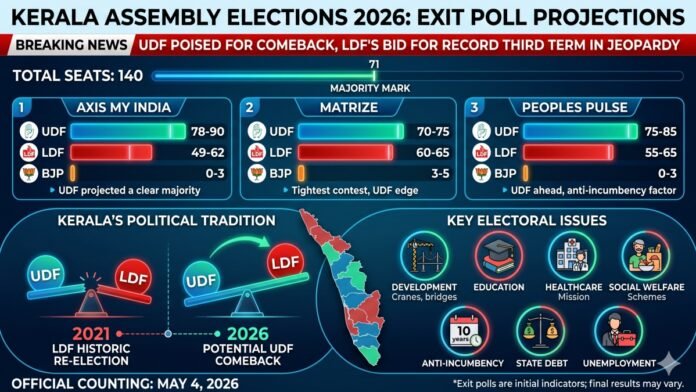
- UDF Surge: Multiple agencies, including Axis My India and Peoples Pulse, project the UDF to cross the 71-seat majority mark comfortably.
- LDF Setback: Chief Minister Pinarayi Vijayan’s bid for an unprecedented third consecutive term faces a significant challenge, with the LDF projected to fall below 65 seats.
- The BJP Factor: The BJP-led NDA is expected to maintain a minimal presence, though some polls suggest a slight increase in its seat tally.
- Core Issues: Rising state debt, graduate unemployment, and anti-incumbency after a decade of LDF governance were pivotal for voters.
- Result Date: Official counting of the votes for all 140 constituencies will commence on May 4, 2026.
As the final phases of the 2026 Indian state elections concluded on April 29, the spotlight has turned to Kerala, where the “alternating government” tradition appears poised for a comeback. After breaking this decades-long trend in 2021, the Left Democratic Front (LDF) now looks set to relinquish power to the United Democratic Front (UDF).
The data released by major pollsters paints a consistent picture of a resurgent Congress-led alliance. Axis My India projects a strong majority for the UDF with 78,90 seats, while Matrize and Peoples Pulse also place the opposition alliance ahead of the incumbent Left Front.
Detailed Exit Poll Projections
The following table summarizes the projections from leading agencies, illustrating a clear edge for the UDF in the 140-member house.
| Agency | UDF (Opposition) | LDF (Ruling) | BJP/NDA | Others |
|---|---|---|---|---|
| Axis My India | 78,90 | 49,62 | 0,3 | 0 |
| Peoples Pulse | 75,85 | 55,65 | 0,3 | 0 |
| Matrize | 70,75 | 60,65 | 3,5 | 0 |
Context: The 2026 Electoral Landscape
The 2026 election was held on April 9, with a robust voter turnout of 78.27 percent. The campaign was marked by high-stakes rhetoric centered on Kerala’s economic health and social welfare. While the LDF campaigned on its “decade of development” and successful crisis management, the UDF, under the leadership of V.D. Satheesan, successfully tapped into public anxiety regarding the state’s mounting debt and the lack of high-quality employment opportunities for graduates.
The Special Intensive Revision (SIR) of the electoral rolls also became a late-stage controversy, with opposition leaders alleging that the process disproportionately affected voter participation in certain demographics. Despite these hurdles, the projected numbers suggest that the demand for “Poriborton” (change), though a term usually associated with Bengal, has found a strong echo in the southern state.
Key Battlegrounds and Leaders
Attention remains fixed on high-profile constituencies such as Dharmadam, where Chief Minister Pinarayi Vijayan seeks to defend his bastion, and Paravur, the stronghold of UDF’s V.D. Satheesan. In the northern districts, the BJP, led by figures like Rajeev Chandrasekhar, has attempted to turn multi-cornered contests in seats like Manjeshwar into a three-way fight, though exit polls suggest their breakthrough may remain limited to a few seats at most.
While the incumbent government’s social welfare schemes and healthcare infrastructure were highly rated in pre-poll surveys, the exit poll trends indicate that ten years of incumbency may have finally taken its toll. As Kerala waits for the official verdict on May 4, the political future of the Left’s last major bastion in India hangs in the balance.