






























Key Points
- Brent crude futures surged to $84.98 per barrel, while US WTI climbed to $79.79 per barrel, following a sudden collapse of the weekend ceasefire agreement.
- President Trump proposed a 20% transit levy on vessels passing through the Strait of Hormuz to offset US military protection costs, declaring the US the “Guardian of the Hormuz Strait.”
- The price surge coincides with US Central Command launching a third consecutive night of targeted airstrikes against Iranian military installations.
- Iranian Foreign Minister Abbas Araghchi rejected Trump’s tariff demand, calling it excessive and asserting that Tehran will maintain full control over the critical waterway.
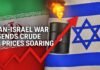
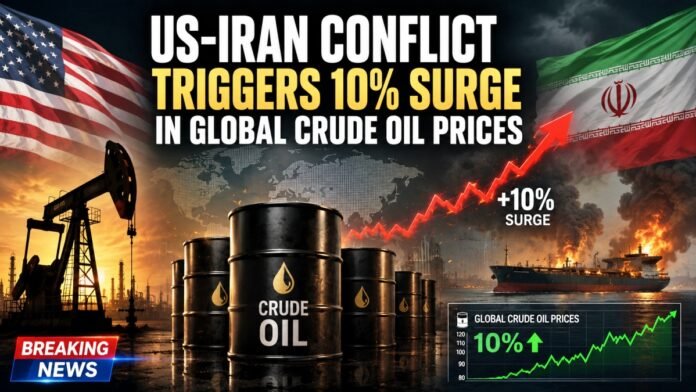
The fallout from intensifying geopolitical hostilities between the United States and Iran has rippled rapidly through global financial markets, driving a sharp and immediate rally in energy commodities. Crude oil benchmarks recorded a massive surge, climbing approximately 10% from recent lows to touch their highest marks in four weeks. The sudden upward trajectory marks a dramatic reversal for energy markets, which had previously experienced a price decline of more than 30% during the second quarter of the year when a temporary diplomatic breakthrough seemed within reach.
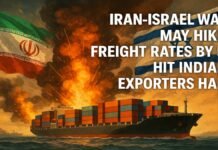
The immediate catalyst for the market panic is the formal reimposition of the US naval blockade targeting Iranian ports, which officially went into effect at 4:00 PM Eastern Time on Tuesday. With both nations actively trading military strikes near the high-stakes maritime corridors, international energy traders are pricing in substantial risk premiums over long-term fuel vulnerabilities.
On Tuesday morning, global benchmark Brent crude futures gained $1.68, or 2.0%, trading at $84.98 per barrel. Simultaneously, US West Texas Intermediate (WTI) crude futures pushed up by $1.65, or 2.1%, to reach $79.79 per barrel. This followed a historic session on Monday, where Brent crude notched a staggering 9.6% spike, registering its sharpest single-day percentage gain since the peak of the pandemic in May 2020.
Trump’s ‘Hormuz Guard’ Plan and Blockade Reinstatement
The dramatic shift in US policy unfolded via a series of statements made by President Donald Trump on the Truth Social platform. In his posts, Trump declared that the United States would now formally operate as the “Guardian of the Hormuz Strait,” arguing that Washington must be fairly compensated by regional allies and wealthy Gulf nations that benefit directly from American protection in the highly volatile waterway.
Under the administration’s new doctrine, the US intends to levy a mandatory 20% transit fee on the value of all cargo, or upwards of $30 million per individual supertanker, traveling through the chokepoint. The strategic waterway handles approximately one-fifth of the world’s total petroleum and natural gas shipments, making any operational disruption an instant threat to global supply chains.
The Blockade Mandate: The newly enforced “Iranian Blockade” is explicitly designed to isolate Tehran economically. According to the White House, the measure selectively halts all ships and commercial clients attempting to enter or exit Iranian ports, while maintaining open, unrestricted passage for other international merchant vessels.
Compounding the maritime measures, US Central Command (CENTCOM) sustained its aggressive kinetic campaign, executing a third consecutive night of precision airstrikes against an array of Iranian military positions and retaliatory launch sites. The White House justified the escalation by citing intelligence that Iran had exploited the brief diplomatic window to rapidly export at least 57 million barrels of crude oil to circumvent international sanctions.
The Collapse of a Fragile Diplomatic Truce
The sudden pivot back to active warfare comes directly on the heels of a failed diplomatic effort over the weekend. The US and Iran had briefly established a fragile ceasefire under a freshly signed Memorandum of Understanding (MoU), which raised hopes of a permanent resolution to the multi-month conflict.
However, Trump laid the blame for the breakdown squarely on Iranian negotiators, claiming the two sides were on the verge of a historic comprehensive agreement before Tehran pulled out at the last moment following external consultations. Trump criticized Iran’s leadership, saying they make agreements only to break them, and asserted that they are not trustworthy at all.
Market analysts are divided on the long-term trajectory of oil prices, noting that the direction depends entirely on the status of the shipping lanes. Jay Hatfield, CEO of Infrastructure Capital Management, pointed out that Iran had been exporting oil at exceptionally high rates before the enforcement of the restrictions. Hatfield noted that prices will likely hover around the $80 mark unless significant maritime disruptions occur directly inside the Strait. He added that while a move to $90 or $100 per barrel remains unlikely under current conditions, a sudden resolution and reopening of the Strait could cause prices to rapidly retreat to the $60 level.
Tehran Rejects Washington’s Tariff Demands
Iran has responded with fierce rhetoric to the proposed transit fees and renewed economic containment. Iranian Foreign Minister Abbas Araghchi used the social media platform X to dismiss the Trump administration’s sweeping demands.
Araghchi ridiculed the proposed 20% protection fee, labeling the concept as entirely excessive and legally baseless under international laws governing international straits. The Foreign Minister reiterated that Tehran maintains strict jurisdiction over the Strait of Hormuz and will continue to protect its territorial interests independently, warning that continued US military interventions will only breed further instability throughout the region.