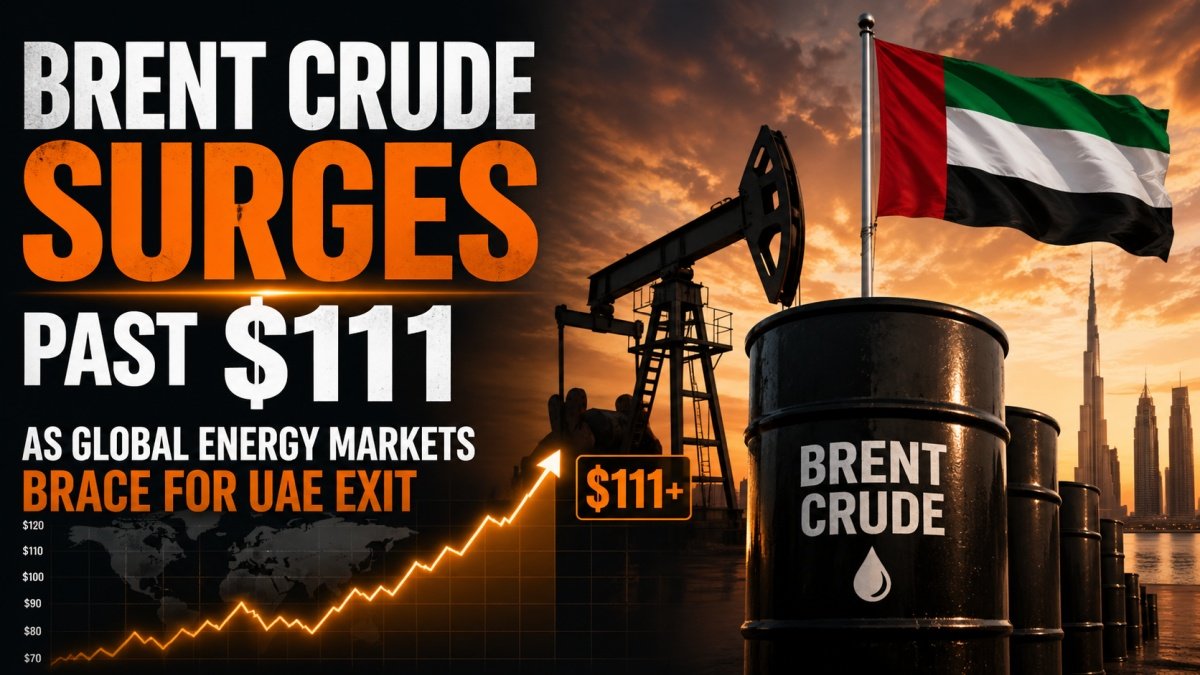
Key Highlights
- Price Surge: Brent Crude rose 2.7% to $111.2, while U.S. West Texas Intermediate (WTI) climbed 2.3% to $98.5 per barrel.
- UAE Exit: The impending May 1 departure of the United Arab Emirates from OPEC and OPEC+ is driving supply concerns.
- Hormuz Blockade: Markets remain on edge as the naval blockade in the Strait of Hormuz continues to restrict 20% of the world’s oil supply.
- Domestic U.S. Impact: Rising gasoline prices are putting increased political pressure on the Trump administration to secure a de-escalation deal.
- Diplomatic Stagnation: Despite a new Iranian peace proposal, traders are reacting to the lack of a definitive ceasefire.
Global energy markets have entered a period of extreme volatility, with no immediate settlement in sight for the regional conflict in West Asia. On Tuesday, crude oil prices surged past the $110 per barrel mark, reflecting deep investor anxiety over supply stability. Brent Crude, the international benchmark, jumped 2.7% to settle at $111.2 per barrel, while the U.S. benchmark, WTI, saw a 2.3% increase to reach $98.5.
The price rally is being fueled by a “perfect storm” of geopolitical factors. While Iranian Deputy Foreign Minister Abbas Araqchi continues his shuttle diplomacy in Pakistan, the physical movement of oil remains severely restricted. The Strait of Hormuz, a critical maritime corridor for global energy, remains a site of high tension, with tolls and security threats deterring commercial shipping and driving up insurance premiums.
The “OPEC Shock” and Supply Uncertainty
A major contributor to the current price spike is the historic announcement by the United Arab Emirates regarding its exit from the OPEC and OPEC+ alliances. With the UAE’s departure set for May 1, 2026, traders are factoring in a period of structural instability within the oil cartel.
Historically, the UAE has been a stabilizing producer, but its move toward an autonomous energy policy suggests a potential shift in production volumes that OPEC may no longer be able to coordinate. While a “price war” could lead to lower prices in the long term, the immediate uncertainty regarding the UAE’s output strategy in a war-torn region is pushing prices upward.
Political Pressure in Washington
In the United States, the Trump administration is facing mounting domestic pressure as the rise in crude oil translates to higher costs at the gas pump. White House Press Secretary Karoline Leavitt confirmed that the National Security Team is prioritizing the review of Iran’s latest proposal, which offers to reopen the Strait of Hormuz in exchange for sanctions relief.
President Trump has expressed a desire for a swift resolution to prevent energy costs from hampering U.S. economic growth. However, until a formal agreement is signed and the naval blockade is lifted, analysts predict that oil prices will remain “sticky” above $100. For now, the market is discounting the possibility of a quick peace, betting instead on a prolonged period of restricted supply and regional fragmentation.