



























Key Highlights
- Total Election Boycott: PTI has officially withdrawn all candidates from the legislative assembly elections scheduled for July 27, 2026.
- Democratic Deficit: The party claims the current regional environment is entirely hostile to holding free, fair, and transparent public voting.
- Solidarity With Protesters: PTI voiced strong support for the ongoing mass movement led by the Jammu Kashmir Joint Awami Action Committee (JAAC).
- Anti-Terror Proscription: The local administration officially banned the JAAC rights group on June 5, escalating regional friction through activist arrests and security crackdowns.
In a major development that has fundamentally disrupted the regional landscape, Pakistan Tehreek-e-Insaf (PTI) has officially decided to completely boycott the upcoming general elections in Azad Jammu and Kashmir (AJK), alternatively known as Pakistan-Occupied Kashmir (PoK). The opposition party confirmed that its candidates will refuse to participate in the electoral process or the voting scheduled for July 27, 2026.
This sweeping withdrawal has sent shockwaves across the political spectrum, effectively clearing the field for a highly asymmetric contest. Political analysts note that the complete absence of a primary opposition force severely undermines the democratic credibility of the upcoming elections, signaling deepening instability within internal border politics.
Allegations of Political Repression and Unfair Conditions
According to an official statement issued by the PTI leadership, the prevailing conditions in the region are hostile to the execution of transparent voting. The party alleged that democratic norms are being systemically dismantled by the current administration, depriving local citizens of the fundamental right to freely express their political views without fear of retaliation.
PTI spokespersons emphasized that the boycott is not motivated by a fear of electoral defeat, but rather stands as a principled commitment to democratic values and the protection of civil liberties. The party clarified that participating in the current framework would only serve to validate a deeply compromised system, offering zero functional purpose until legitimate protections for citizens are fully guaranteed.
The Impact of the Banned JAAC Movement
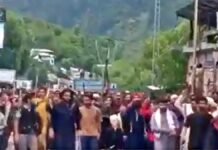
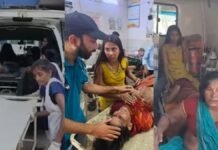
A central catalyst for the PTI’s boycott is the severe political instability driven by the ongoing mass mobilization of the Jammu Kashmir Joint Awami Action Committee (JAAC). The civil rights alliance has spearheaded widespread, intense demonstrations over the past year, protesting spiraling energy prices, inflation, systemic governance issues, and unfair regional resource allocation.
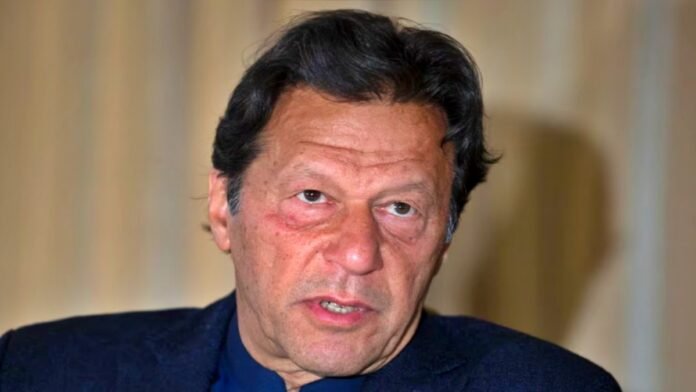
Extending formal solidarity to the movement, Imran Khan’s party stated that contesting elections is impossible while the state actively suppresses popular public sentiment through force rather than addressing long-standing economic grievances.
The crisis reached a tipping point on June 5, 2026, when the local administration enforced a total ban on the JAAC, classifying it as a proscribed organization under the nation’s Anti-Terrorism Act. This severe legal crackdown, accompanied by the preemptive detention of activists and localized communication disruptions, has dramatically amplified hostility between state authorities and civil society. The PTI argues that holding an election in such a repressive atmosphere strips the process of any legal, moral, or democratic legitimacy.
An Uncontested Path for the Ruling Coalition
With the elections set for July 27, the sudden withdrawal of the PTI leaves a glaring vacuum in the legislative race. The regional government, led by Prime Minister Faisal Mumtaz Rathore of the Pakistan Peoples Party (PPP), who assumed power following a turbulent political shift in late 2025, now faces an electorate devoid of robust opposition engagement.
Political analysts warn that an uncontested or heavily one-sided election will do little to quell the underlying socio-economic unrest gripping the territory. Instead, holding elections under heavily militarized conditions and a total ban on popular rights groups risks deepening public alienation, casting a long shadow over the future of institutional legitimacy in the region.