

































Key Highlights
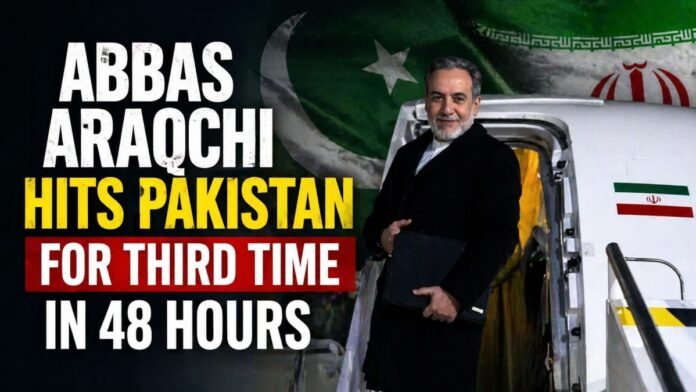
- Shuttle Diplomacy: Abbas Araqchi makes his third visit to Islamabad in 48 hours to coordinate mediation.
- U.S. Review: Press Secretary Karoline Leavitt confirms President Trump is reviewing a formal de-escalation framework.
- Energy Security: The proposal includes a commitment to reopen the Strait of Hormuz, a vital global oil artery.
- Russian Support: Following a 90-minute meeting in St. Petersburg, Vladimir Putin pledged support for West Asian stability.
- Direct Contact: President Trump suggests “telephone diplomacy” as a faster alternative to traditional diplomatic delegations.
Iranian Deputy Foreign Minister Abbas Araqchi arrived in Pakistan on Tuesday, marking his third high-level visit to the capital within a 48-hour window. This unprecedented frequency of travel follows a strategic stop in Russia, signaling a concentrated effort by Tehran to utilize Pakistan as a primary mediator in its escalating friction with the United States.
Islamabad’s role has become increasingly pivotal, acting as a neutral ground for indirect dialogue. As regional tensions reach a critical threshold, Pakistani officials are reportedly working to bridge the communication gap between Tehran and Washington, providing a channel for a potential breakthrough in peace negotiations.
The St. Petersburg Summit
Before he arrived in Pakistan, Araqchi held an extensive 90-minute session with President Vladimir Putin in St. Petersburg. The discussions centered on the “strategic partnership” between the two nations, a relationship that has deepened amidst ongoing regional conflicts.
Araqchi emphasized that the talks addressed the geopolitical influence of the United States and Israel, seeking a unified stance on regional stability. President Putin reaffirmed Russia’s commitment to restoring peace in West Asia, expressing a desire for a swift return to normalcy to protect shared economic and security interests.
White House Evaluates Iranian Framework
In Washington, D.C., the Trump administration has officially acknowledged receipt of a new proposal from Tehran. White House Press Secretary Karoline Leavitt stated that President Trump has spent the early part of the week consulting with his national security team to weigh the merits of the offer.
The proposal is multi-faceted, focusing primarily on a cessation of active hostilities and the immediate reopening of the Strait of Hormuz, the world’s most important oil transit point. Furthermore, the document reportedly outlines a roadmap for future nuclear negotiations, suggesting a willingness from Iran to return to the bargaining table under new terms.
Trump’s Preference for “Telephone Diplomacy”
Adding a unique layer to the diplomatic atmosphere, President Trump recently indicated a preference for direct communication over traditional state visits. Speaking with Fox News, the President suggested that Iranian officials could simply “pick up the phone” to resolve the conflict, rather than requiring officials to endure 17-hour flights for face-to-face meetings.
While Trump maintained that “all options remain open,” his invitation for direct telephone contact suggests a shift toward a more transactional and immediate form of diplomacy. As the world watches these high-stakes maneuvers, the success of this initiative rests on whether the White House views the current proposal as a viable foundation for a long-term settlement.