

































Key Highlights
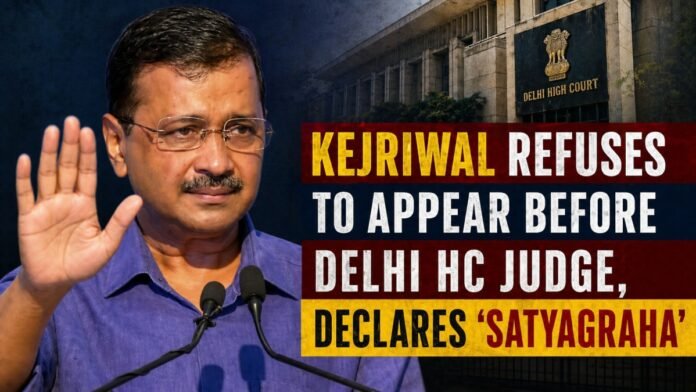
- Boycott of Proceedings: Kejriwal will neither appear personally nor through legal counsel in the excise policy case before this specific bench.
- Satyagraha Strategy: The AAP leader has invoked Mahatma Gandhi’s philosophy, stating his “conscience” forbids him from participating in a process he deems biased.
- Conflict of Interest Claims: The dispute centers on allegations that the judge’s children are empanelled as central government lawyers, alongside her participation in RSS-affiliated legal events.
- Judicial Rebuttal: Justice Sharma previously rejected the recusal plea, characterizing it as an attempt to turn the courtroom into a “theatre of perception.”
- Supreme Court Appeal: While boycotting the High Court, Kejriwal has reserved the right to challenge the recusal dismissal in the Supreme Court of India.
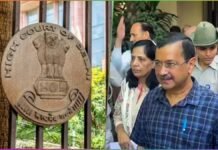
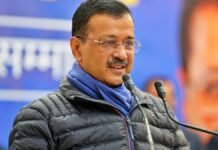
The legal proceedings surrounding the Delhi Excise Policy case have reached a dramatic impasse. In a letter addressed to the High Court, Arvind Kejriwal has made the unprecedented decision to withdraw from the ongoing trial before Justice Swarana Kanta Sharma. Citing a “shattered hope” for a fair hearing, Kejriwal stated that his decision to follow the path of Satyagraha was a matter of principle, even if it potentially prejudices his own legal standing.
This move follows weeks of escalating tension between the AAP leadership and the presiding judge. Kejriwal’s letter clarifies that his refusal to participate is limited strictly to this matter, as he believes the appearance of conflict has become too grave to ignore.
The Grounds of the Recusal Dispute
The controversy stems from a recusal application filed by Kejriwal and co-accused Manish Sisodia. They argued that Justice Sharma should step away from the Central Bureau of Investigation (CBI) appeal against their discharge, citing several points of concern:
- Family Ties: The defense highlighted that the judge’s children are empanelled as lawyers for the Central Government, which is the prosecuting authority in this case.
- Institutional Ties: Allegations were raised regarding the judge’s participation in events organized by the Akhil Bharatiya Adhivakta Parishad, the legal wing of the RSS.
- Perception of Bias: Kejriwal argued that even a “reasonable apprehension of bias” is legally sufficient for a judge to step aside to maintain public confidence in the judiciary.
The High Court’s 115-Page Rebuff
On April 20, 2026, Justice Swarana Kanta Sharma delivered an exhaustive 115-page judgment rejecting the recusal petition in unequivocal terms. She described the application as a “win-win” for the litigant, noting that if Kejriwal received a favorable order, he could claim the court was under pressure, and if he did not, he would claim his predictions of bias were correct.
The judge strongly defended the rights of judicial family members to practice law, stating that bar membership does not equate to a conflict of interest. She further warned that “the courtroom cannot become a theatre of perception” and argued that recusing without a demonstrable cause would be an act of surrender to pressure tactics, effectively allowing litigants to choose their preferred judges.
Satyagraha and Legal Consequences
By choosing Satyagraha, Kejriwal is positioning himself in a historical tradition of peaceful protest against what he perceives as systemic unfairness. However, legal experts warn that this strategy is fraught with risk. By not presenting arguments or cross-examining witnesses through counsel, Kejriwal risks the court making a decision based solely on the CBI’s submissions.
Despite the boycott, the legal battle is far from over. Kejriwal has made it clear that he intends to take the matter to the Supreme Court, challenging the High Court’s refusal to recuse. This high-stakes gamble once again places the Delhi Excise Policy case at the heart of the national political discourse, testing the boundaries between political protest and judicial protocol.