Key Highlights
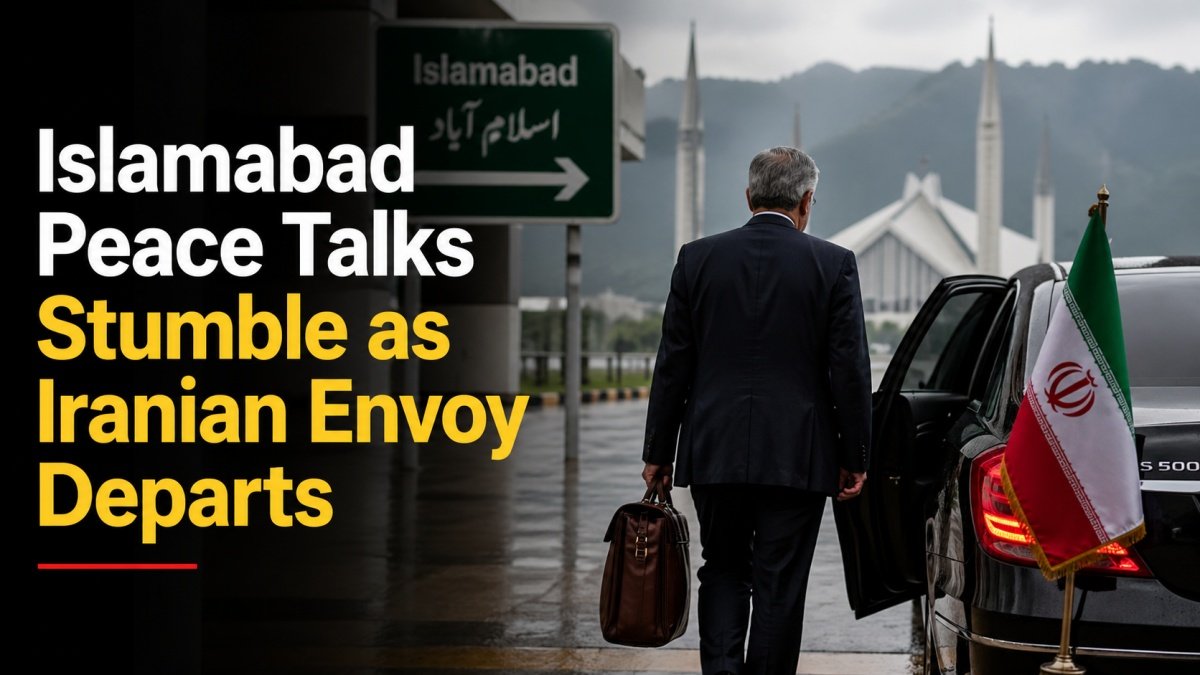
- Araqchi Departs: Iranian Foreign Minister Abbas Araqchi left Islamabad after meeting with Pakistani leaders, avoiding a direct encounter with U.S. envoys.
- U.S. Envoys Arrive: A high-level U.S. team, including Steve Witkoff and Jared Kushner, is reaching Pakistan to follow up on President Trump’s indefinite ceasefire extension.
- No Direct Dialogue: Tehran continues to reject direct talks with Washington, utilizing Pakistan as a diplomatic conduit for its 10-point peace proposal.
- Strait of Hormuz Deadlock: Reopening the vital waterway remains the primary sticking point as the U.S. maintains its naval blockade of Iranian ports.
The intense diplomatic flurry in Islamabad, the capital of Pakistan, which began on Saturday, April 25, 2026, appears to be concluding without the “breakthrough” many in the international community had anticipated. Iranian Foreign Minister Abbas Araqchi departed for Muscat and Moscow following a series of meetings with top Pakistani officials, notably exiting the city before the scheduled arrival of a senior delegation from the United States. This sequence of events has dampened global expectations for an immediate resolution to the ongoing conflict in the Middle East.
During his visit, Araqchi held “candid and positive” discussions with Pakistani Prime Minister Shehbaz Sharif and Army Chief Field Marshal Asim Munir. While the Prime Minister’s Office characterized the interaction as a constructive exchange regarding regional dynamics and bilateral ties, the lack of an overlapping presence between the Iranian and U.S. teams underscores the deep-seated mistrust that continues to plague the negotiation process.
Mediation Through Indirect Channels
A central challenge in the current peace process is Iran’s steadfast refusal to engage in direct dialogue with the United States. In a strategy aimed at asserting its diplomatic autonomy, Tehran has instead relied on Pakistan to convey its stance and concerns to the Trump administration. Prime Minister Shehbaz Sharif has positioned Pakistan as an “honest facilitator,” attempting to bridge the gap between Iran’s 10-point peace plan and Washington’s demands for maritime security and nuclear constraints.
The U.S. delegation, led by Special Envoy on the Middle East Steve Witkoff and presidential adviser Jared Kushner, is arriving in Islamabad with a mandate to stabilize the current ceasefire. However, the Iranian leadership has signaled that until the U.S. naval blockade of its ports is lifted, no unified agreement on the Strait of Hormuz can be reached.
The Shadow of the 2026 Iran War
The conflict, which erupted in late February 2026 and quickly engulfed the region, has entered a period of fragile calm. On April 21, President Donald Trump extended a two-week ceasefire indefinitely, a move requested by Pakistan to allow time for a comprehensive Iranian proposal. Despite this extension, the U.S. Navy has been ordered to maintain a strict blockade of Iranian maritime assets, a condition that Iran views as a violation of the spirit of any truce.
The “Islamabad Talks” are viewed as the most significant diplomatic effort to date to end the hostilities. However, with Araqchi now headed to Oman and Russia, the focus shifts to whether these regional partners can provide the leverage that Islamabad has thus far struggled to secure. For now, the Strait of Hormuz remains a flashpoint, with global oil markets and security establishments remaining on high alert as the blockade persists.