
































Key Developments
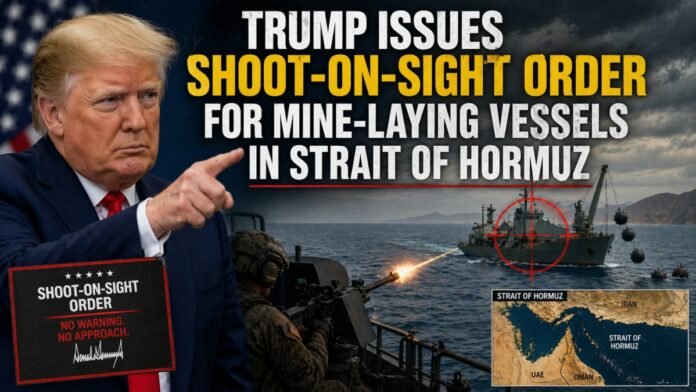
- Lethal Authorization: The U.S. Navy is now directed to destroy any vessel suspected of mine-laying without prior warning or deliberation.
- Escalated Mine-Sweeping: Trump has ordered a 300% increase in active mine-clearing missions to keep the strategic waterway “sealed up tight.”
- Seizures as Catalyst: The directive follows the Iranian Revolutionary Guard’s capture of the Epaminondas, a vessel destined for Gujarat’s Mundra Port, and the MSC Francesca.
- Fragile Ceasefire: Despite an indefinite ceasefire extension announced by Washington, the U.S. maintains a naval blockade of Iranian ports, which Tehran cites as an act of war.
- Diplomatic Fallout: New Delhi has summoned the Iranian Ambassador as 14 Indian vessels remain stranded in the Persian Gulf.
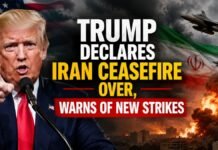
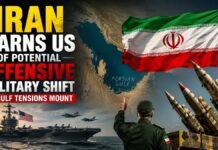
In a significant escalation of the ongoing conflict dubbed “Operation Epic Fury,” President Donald Trump has issued what international observers are calling a “death warrant” for maritime disruptors. Posting to social media on Thursday, April 23, 2026, the President stated that he has instructed the U.S. Navy to engage and destroy any boat, regardless of size, found placing explosives in the Strait of Hormuz.
“There is to be no hesitation,” the President declared, asserting that the U.S. Navy now maintains total control over the waterway. Trump also claimed that the Iranian Navy has been effectively neutralized, stating that their major ships are “at the bottom of the sea,” and characterized the current Iranian leadership as “fractured” and unable to form a unified response.
Impact on Global Trade and the Mundra Port Shipment
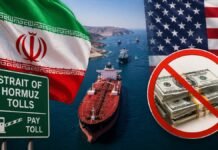
The directive comes just hours after the Islamic Revolutionary Guard Corps Navy (IRGC-N) seized the Liberia-flagged Epaminondas. The ship was en route from Jebel Ali to the Mundra Port in India when it was boarded by armed commandos. This incident, combined with the seizure of the MSC Francesca, has paralyzed traffic through a corridor that typically handles 20 to 25 percent of the world’s oil supply.
While Iran claims the seizures were due to “navigation violations” and a lack of permits, the international community views them as retaliation for the continued U.S. blockade. The immediate result has been a collapse in maritime traffic, with daily transits falling from 130 vessels to a mere handful.
India’s Strategic and Diplomatic Dilemma
The Government of India has been forced into a high-stakes diplomatic intervention. The Ministry of External Affairs has officially protested with Iranian Ambassador Mohammad Fathali, demanding the release of the Epaminondas and the safety of its crew. Foreign Secretary Vikram Misri highlighted that 14 Indian ships are currently trapped in the Persian Gulf, unable to navigate the strait due to the risk of gunfire or seizure.
India remains in a precarious position, attempting to balance its strategic partnership with the U.S. against its critical energy dependencies on Middle Eastern exports. The MEA has reiterated that safe passage through the 33-kilometer-wide chokepoint is essential for global economic stability.
The Risks of “Shoot First” Policy
Defense analysts warn that the new “shoot first, ask questions later” policy exponentially increases the risk of a miscalculation that could ignite a broader global conflict. With U.S. mine-sweepers now operating at “triple speed,” the proximity of American and Iranian forces in the narrow strait creates a volatile environment where a single mistaken identity could lead to disaster. As global oil prices react to the uncertainty, the “Sealed up Tight” status of the Strait of Hormuz remains the single greatest threat to the 2026 global GDP.