
































Key Points
- Naval Ultimatum: The Iranian Navy threatened to destroy the destroyer USS Michael Murphy near Fujairah if it did not withdraw within 30 minutes.
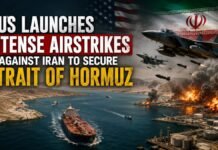
- “Route Clearance”: President Donald Trump announced a U.S. operation to clear Iranian mines from the waterway, labeling Iran a “Failed Nation.”
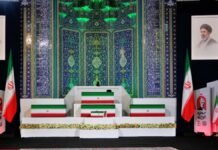
- High-Stakes Diplomacy: U.S. Vice President JD Vance and Iranian Parliament Speaker Mohammed Bagher Qalibaf are leading separate delegations in Pakistan.
- Competing Agendas: Negotiations are centered on a 10-point Iranian plan versus a 15-point U.S. framework to end the six-week war.
- Global Impact: The standoff has frozen maritime traffic in a corridor responsible for 20% of the world’s oil supply, keeping global markets on edge.
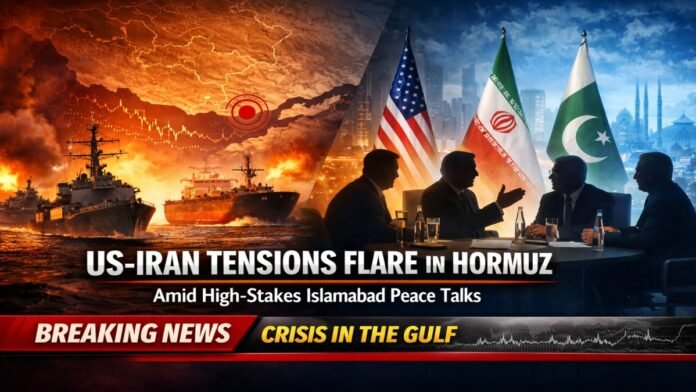
The world is currently witnessing a stark paradox. In Pakistan, diplomatic delegations are seated at a negotiating table in search of a truce, while beneath the waves of the Persian Gulf, the scent of gunpowder has intensified. On Saturday, April 11, 2026, reports emerged of a confrontation between the U.S. Navy and Iranian forces in the Strait of Hormuz.
Adopting an extremely firm stance, the Iranian Navy issued an open warning to U.S. warships attempting to traverse the strait. Specifically, an ultimatum was directed at the USS Michael Murphy, an Arleigh Burke-class destroyer positioned near the port of Fujairah. Iranian officials declared that if the vessel did not halt its advance and withdraw within 30 minutes, it would be targeted by anti-ship missiles.
Trump’s “Route Clearance” Operation
Just before the Iranian ultimatum, U.S. President Donald Trump escalated the rhetoric via social media, announcing the initiation of a “Route Clearance” operation. Trump clarified that the United States is moving to dismantle the minefields and blockades Iran has established over the last six weeks of hostilities.
He characterized this move as a “major assistance” to nations such as China, Japan, South Korea, France, and Germany, which rely heavily on the route for energy security. In a series of pointed remarks, Trump asserted that these nations lacked the courage to secure the route themselves and further inflamed tensions by labeling the current Iranian administration a “Failed Nation.”
The Islamabad Peace Process
While the naval situation nears a breaking point, a fragile round of diplomacy continues in the high-security corridors of Islamabad. This marks the first time since the 2015 nuclear deal that the two arch-rivals have engaged in face-to-face discussions.
The negotiations involve two distinct roadmaps:
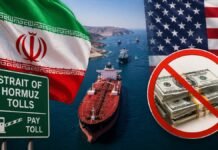
- Iran’s 10-Point Plan: Tehran is demanding the complete lifting of sanctions, recognition of its right to uranium enrichment, and the right to collect tolls from ships passing through the Strait of Hormuz.
- The U.S. 15-Point Agenda: Led by Vice President JD Vance, the U.S. delegation is pushing for total nuclear dismantlement, a permanently open Hormuz waterway, and an end to Iran’s support for regional proxy groups.
Pakistan is serving as the primary mediator, with Prime Minister Shehbaz Sharif hosting the two delegations. Following an initial two-hour session, a recess was called, but officials worry that any miscalculation in the Gulf could instantly derail the talks.
Context of the Six-Week War
The current crisis follows a conflict that began on February 28, 2026, which saw unprecedented airstrikes and the disruption of global trade. U.S. defense officials maintain that their vessels have the right to transit the Strait of Hormuz without Iranian coordination, citing international maritime law.
However, with Iran’s Revolutionary Guard threatening to “set ships ablaze” and the U.S. Navy attempting to break a blockade that has sent oil prices past $100 per barrel, the peace table in Islamabad represents the final hurdle to preventing a full-scale global conflict. All eyes remain on the 30-minute window in Fujairah, which may determine the fate of the 2026 peace process.