Key Points
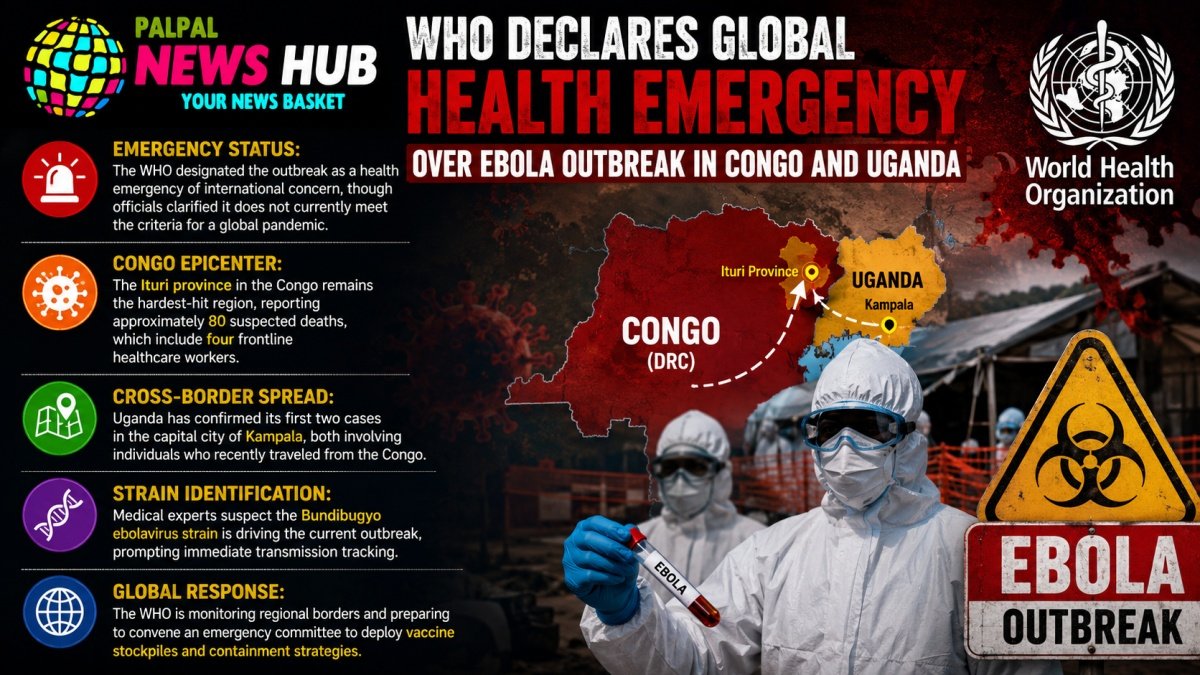
- Emergency Status: The WHO designated the outbreak as a health emergency of international concern, though officials clarified it does not currently meet the criteria for a global pandemic.
- Congo Epicenter: The Ituri province in the Congo remains the hardest-hit region, reporting approximately 80 suspected deaths, which include four frontline healthcare workers.
- Cross-Border Spread: Uganda has confirmed its first two cases in the capital city of Kampala, both involving individuals who recently traveled from the Congo.
- Strain Identification: Medical experts suspect the Bundibugyo ebolavirus strain is driving the current outbreak, prompting immediate transmission tracking.
- Global Response: The WHO is monitoring regional borders and preparing to convene an emergency committee to deploy vaccine stockpiles and containment strategies.
The World Health Organization has officially designated the escalating Ebola outbreak in the Democratic Republic of Congo (DRC) and neighboring Uganda as a Public Health Emergency of International Concern. The decision follows a rigorous assessment of mounting infection rates and fatalities in both nations. While global health officials emphasized that the situation does not currently warrant classification as a pandemic, the rapid cross-border transmission has triggered international alarm, prompting a coordinated global intervention.
Crisis Deepens in the Congo Epicenter
Epidemiological reports indicate that the situation is most critical in the northeastern Ituri province of the DRC. Heavily populated zones, including Bunia, Rwampara, and Mongbwalu, have collectively recorded approximately 80 suspected deaths. Multiple cases have been officially confirmed through laboratory testing as local clinics face an influx of symptomatic patients.
A major cause for concern among international observers is the high infection rate among frontline medical professionals. To date, four healthcare workers have lost their lives to the virus, highlighting the severe lack of personal protective equipment and adequate isolation facilities in remote regional clinics.
Detection in Uganda Signals Regional Threat
The geographical footprint of the virus expanded significantly after health authorities in Uganda confirmed two positive cases within the capital city of Kampala. Preliminary tracking reports indicate that both patients had recently arrived from the DRC. However, medical investigators have found no evidence of direct contact between the two individuals, raising fears of undetected community transmission or a shared, unidentified exposure source along major transit corridors.
Medical experts and epidemiologists express concern that the Bundibugyo ebolavirus species is responsible for the current crisis. Ebola is a severe, often fatal illness that targets human and non-human primates. The virus spreads rapidly through direct contact with the blood, sweat, vomit, or other bodily fluids of an infected individual, as well as through contact with contaminated surfaces and materials. This high transmissibility makes containment an extreme logistical challenge in densely populated urban centers like Kampala.
International Containment and Vaccine Deployment
The WHO is closely monitoring the situation on an international level, tracking air travel and land border crossings across East and Central Africa. An emergency committee meeting is expected to convene shortly to formulate a collaborative strategy with multiple nations, focusing on border screening protocols, public awareness campaigns, and resource allocation.
Currently, the primary mechanism for containment relies on the strategic deployment of existing Ebola vaccines. International health agencies are working to establish a secure supply chain to deliver medical assistance and fast-track ring vaccination campaigns in affected communities, aiming to halt the transmission chain before the virus spreads to neighboring territories.