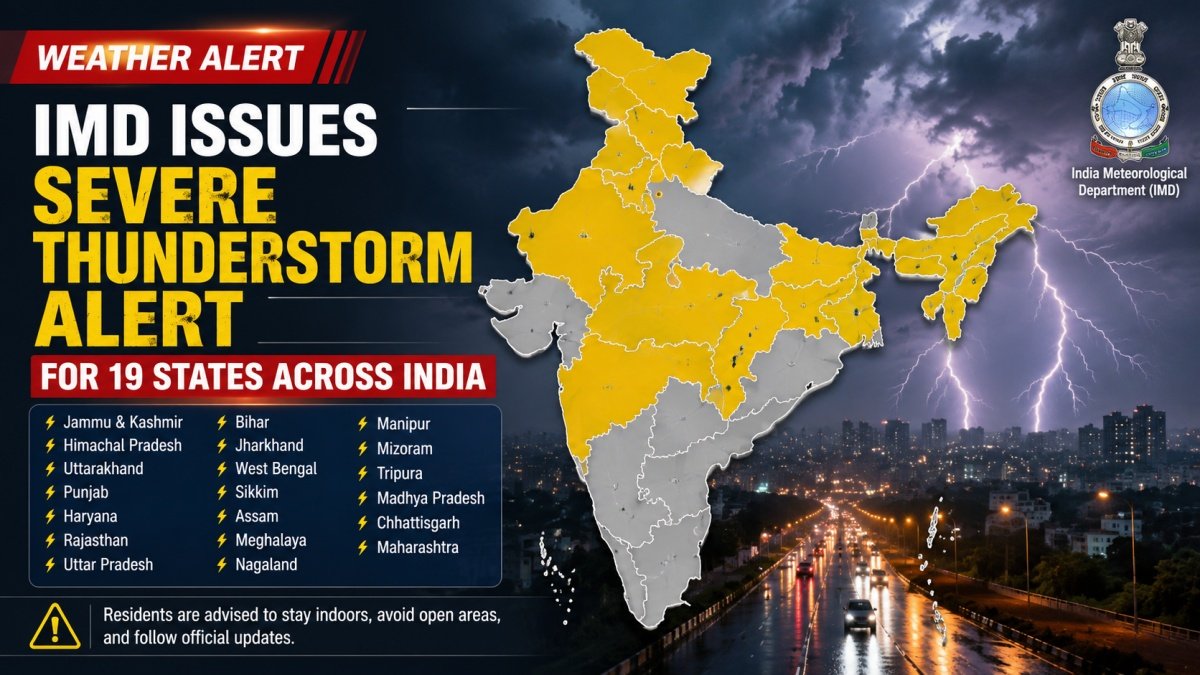
Key Highlights
- Severe Alerts: 19 states, including Uttar Pradesh and Bihar, are under high alert for extreme weather.
- Wind Velocity: Gusts are expected to reach between 80 and 85 km/h in several regions.
- Delhi Weather: Moderate rain and a maximum temperature of 39°C are forecast for the capital.
- Natural Risks: High probability of lightning strikes and hailstorms, particularly in Eastern India.
- Meteorological Cause: Twin cyclonic circulations over West Bengal and South Assam are driving the instability.
The Meteorological Department has raised a high-level alarm for a significant portion of the country, warning that the next 11 hours are critical. Residents in 19 states, including the densely populated regions of Uttar Pradesh and Bihar, have been advised to stay indoors as wind speeds are projected to hit 80 to 85 kilometers per hour. These conditions are expected to bring not only heavy downpours but also the dangerous threat of hailstorms and frequent lightning strikes, which have become a growing concern for rural safety in Eastern India.
National Capital and Uttar Pradesh on Alert
In Delhi, the weather is expected to take a dramatic turn today, May 12, 2026. While the maximum temperature is slated to hover around 39°C, moderate rain and thunderstorms are likely to provide a brief respite from the heat. However, the accompanying wind speeds of 40 to 50 kilometers per hour could disrupt local transit and power lines.
Nearby, in Uttar Pradesh, a ‘Yellow Alert’ has been activated for several key districts. Authorities in Saharanpur, Meerut, Muzaffarnagar, Aligarh, Mathura, Agra, Kanpur, Lucknow, and Jhansi are bracing for impact. In the state capital of Lucknow, temperatures are expected to remain slightly lower at 37°C due to the incoming cloud cover and precipitation.
The Lightning Threat in Bihar and Jharkhand
Bihar faces a particularly high risk, with the IMD highlighting the potential for lightning strikes, a recurring hazard in the region. Strong winds gusting up to 80 kilometers per hour are expected in districts such as West and East Champaran, Gaya, Muzaffarpur, and Bhagalpur.
Similarly, Jharkhand is under a ‘Yellow Alert’ as Ranchi, Hazaribagh, Sahebganj, and Gumla prepare for thunderstorms and winds reaching 60 kilometers per hour. In Ranchi, the mercury is expected to drop to a comfortable 32°C, providing a significant cooling effect compared to the previous week.
Snowfall in the North and Storms in the West
The weather shift is also impacting the Himalayan belt and the western plains. Tourists in Himachal Pradesh and Uttarakhand have been urged to exercise extreme caution. Shimla and Kangra are expecting winds up to 70 kilometers per hour, while Manali could see temperatures plummeting to a chilly 2°C.
In the west, Rajasthan is witnessing an unusual surge in moisture. Cities like Jaipur, Bikaner, and Jodhpur are expecting heavy rainfall accompanied by winds of 60 kilometers per hour. This system is also moving northward, with moderate to heavy rain forecast for the agricultural hubs of Punjab and Haryana.
Underlying Causes: Cyclonic Circulations
Meteorologists attribute this widespread atmospheric turbulence to a cyclonic circulation located in the lower tropospheric levels over West Bengal and its surrounding areas. This is being further intensified by a second cyclonic circulation active over South Assam.
Together, these systems have significantly increased moisture levels and altered atmospheric pressure across the northern plains and hilly regions. The IMD has issued a special advisory for farmers, urging them to secure harvested crops to prevent damage. The general public is encouraged to monitor real-time weather apps and local news before planning any travel or outdoor activities.