






























Key Points
- New Energy Framework: The alliance launched the “Quad Initiative on Indo-Pacific Energy Security” to ensure stable, transparent, and uninterrupted energy resources.
- Supply Chain Diversification: Member nations pledged to diversify oil and gas supply chains to reduce reliance on single sources and prevent future global energy crises.
- Maritime Trade Security: High priority was placed on safeguarding critical maritime choke points, including the Strait of Hormuz, to ensure unimpeded global trade.
- Financial & Regional Support: Australia announced a $2 billion investment scheme for Southeast Asia and the Pacific, while Japan and India pledged targeted energy infrastructure support for developing neighbors.
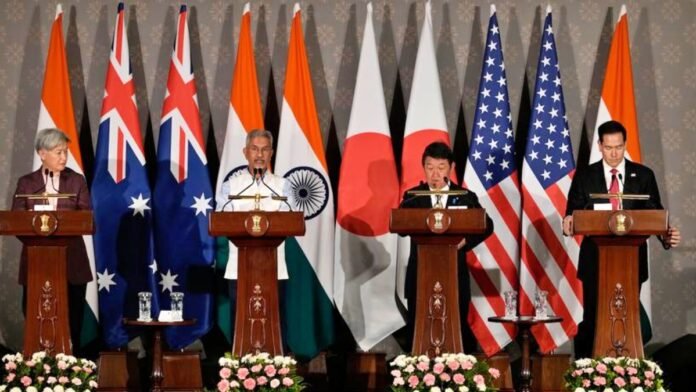
In a highly significant diplomatic gathering on Tuesday, the Foreign Ministers of the Quad nations convened in New Delhi, India, to address escalating vulnerabilities in the global energy market. Recognizing that the Indo-Pacific region bears the most direct brunt of global energy market disruptions, India, the United States, Australia, and Japan issued a major new joint statement aimed at reinforcing regional energy resilience and driving market stability.
The primary objective of the member nations is to build an energy ecosystem that remains completely secure, stable, and uninterrupted. To achieve this, the Quad will work collectively to foster transparency and reliability in international energy markets. A core pillar of this strategy involves strengthening and diversifying the entire supply chain for oil, gas, and other vital resources, a move designed to mitigate geopolitical vulnerabilities and safeguard the world against sudden energy shocks.
Securing Maritime Trade and Vulnerable Nations
Beyond resource diversification, the Quad group underscored the critical necessity of securing all maritime trade routes for the global community. Ministers emphasized that the movement of commercial vessels across the globe, including through critical choke points like the Strait of Hormuz, must continue without hindrance. Ensuring safe passage along these vital channels is deemed crucial for keeping global trade flowing unimpeded amidst rising maritime tensions.
The joint statement also highlighted a collaborative commitment to the energy requirements of small island nations and developing countries. Recognizing that these smaller states are disproportionately vulnerable to energy crises, the Quad nations pledged to extend full cooperation and emergency assistance to their regional partners during resource shortages.
New Regional Initiatives and Financial Backing
To transform these policies into actionable outcomes, the ministers highlighted several ongoing and newly launched regional initiatives that are already bolstering energy and resource security:
- Japan’s POWRR Initiative: This program aims to significantly enhance the security, resilience, and technological standards of resource management across partner countries.
- India’s South Asian Grid: India continues to provide substantial support to neighboring South Asian nations, strengthening cross-border electricity transmission and grid stability.
- Australia’s $2 Billion Investment: Focused on Southeast Asia and the Pacific region, Australia has officially launched a substantial $2 billion investment scheme to meet immediate energy needs and reinforce regional systems.
Furthermore, coordinated efforts are currently underway to reinforce the power grids and upgrade the critical infrastructure of all ASEAN nations.
The Road Ahead: Quad Energy Security Forum
Looking toward long-term systemic cooperation, the alliance announced the official launch of the “Quad Initiative on Indo-Pacific Energy Security.” Under this new framework, the four countries will foster deep cooperation across key domains such as clean technology, policy alignment, energy management, and joint emergency response exercises.
Additionally, the group will establish a permanent “Quad Fuel Security Forum.” This body will facilitate regular, high-level discussions on energy-related issues, ensuring that the alliance can rapidly adapt to shifting global dynamics and protect the economic interests of the Indo-Pacific.