



























Key Highlights
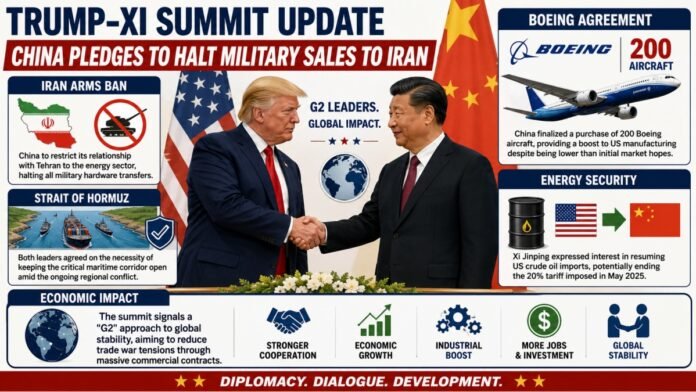
- Iran Arms Ban: China to restrict its relationship with Tehran to the energy sector, halting all military hardware transfers.
- Strait of Hormuz: Both leaders agreed on the necessity of keeping the critical maritime corridor open amid the ongoing regional conflict.
- Boeing Agreement: China finalized a purchase of 200 Boeing aircraft, providing a boost to US manufacturing despite being lower than initial market hopes.
- Energy Security: Xi Jinping expressed interest in resuming US crude oil imports, potentially ending the 20% tariff imposed in May 2025.
- Economic Impact: The summit signals a “G2” approach to global stability, aiming to reduce trade war tensions through massive commercial contracts.
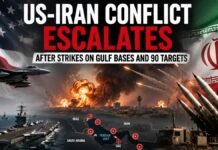
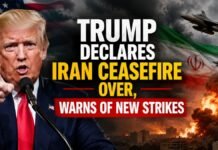
On the second day of his high-stakes visit to Beijing, the first by a US president in nearly a decade, President Donald Trump announced a significant breakthrough regarding Iranian military support. In an exclusive interview with Fox News, Trump revealed that President Xi Jinping has committed to a policy that prevents the sale of military equipment or weaponry to Iran. This decision marks a fundamental shift in the geopolitical landscape, particularly as the “Iran War” continues to destabilize global markets and threaten energy corridors.
Historically, China has been a key strategic partner for Tehran, providing not only diplomatic cover but also dual-use materials and clandestine military hardware. Under the new consensus, Trump stated that China will now restrict its bilateral relations with Iran solely to the oil sector. Currently, China remains the primary lifeline for the Iranian economy, purchasing approximately 1.4 million barrels of crude oil daily, which accounts for nearly 90% of Iran’s total exports and roughly 15% of China’s own energy imports.
The Boeing Deal: Growth Amidst Wall Street Volatility
A centerpiece of the 2026 summit was the formalization of a massive commercial agreement with Boeing. President Xi Jinping gave his assent for the purchase of 200 large American aircraft, a move Trump described as a “monumental step” for US employment and economic strength.
While the order is substantial, it met with mixed reactions from Wall Street. Boeing CEO Kelly Ortberg, who accompanied the President on Air Force One, had reportedly been advocating for an order closer to 500 jets to clear a decade-long backlog in the Chinese market. Following the announcement that the deal was limited to 200 units, Boeing stock saw a 4.7% decline as investors had priced in a larger “super-deal.” Nevertheless, the agreement remains the largest aircraft order for Boeing from China since 2017, signaling a cautious but clear thaw in trade relations.
Resolving the Crude Oil Standfall
The White House confirmed that a primary focus of the closed-door sessions was the resumption of US energy exports to China. The trade relationship between the two nations suffered a severe blow in May 2025, when China completely halted purchases of US crude oil in response to a 20% tariff imposed during a renewed flare-up of the trade war.
With the Strait of Hormuz currently facing disruptions, Beijing is reportedly eager to diversify its energy sources. Xi Jinping indicated a strong interest in purchasing US oil to mitigate the risks of Middle Eastern supply shocks. Analysts suggest that the removal of the 20% tariff is now a matter of “when, not if,” as both leaders seek to stabilize their respective economies. Trump characterized the meeting as the beginning of a “G2” era, where the world’s two largest economies work in tandem to manage global security and trade flows.
The summit concluded with both leaders emphasizing a “zero-tolerance” approach to nuclear proliferation in Iran, a rare moment of public alignment that has sent ripples through diplomatic circles worldwide.