































Key Highlights
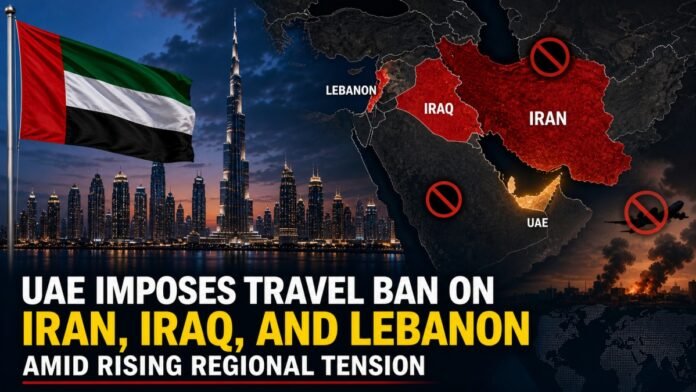
- Travel Prohibition: Citizens are strictly barred from entering Iran, Iraq, and Lebanon due to deteriorating security.
- Immediate Evacuation: All UAE nationals currently in these three nations have been ordered to return home at once.
- Historic OPEC Exit: The UAE officially terminated its membership in OPEC and OPEC+ today, May 1, 2026, ending a 60-year alliance.
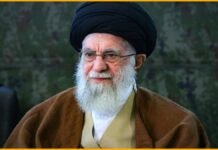
- Iranian Defiance: Supreme Leader Mojtaba Khamenei has vowed to maintain control of the Strait of Hormuz and protect Iran’s nuclear assets.
- Fragile Ceasefire: A tactical pause in the U.S., Iran conflict continues, while the Trump administration navigates domestic legal deadlines for the war.
The UAE Ministry of Foreign Affairs (MoFA) escalated its security posture today, May 1, 2026, by imposing a total travel ban on its nationals regarding Iran, Iraq, and Lebanon. In a series of urgent advisories, the Ministry emphasized that the safety of its citizens is the absolute priority given the “volatile regional developments.”
Beyond the travel restriction, the government has commanded all UAE citizens currently residing in or visiting these countries to evacuate immediately. Dedicated helplines have been established to facilitate the return of nationals, as the government fears a potential collapse of the current ceasefire could leave citizens stranded in hostile territory.
The OPEC Rupture and Economic Strategy
This diplomatic distancing occurs simultaneously with a massive shift in global energy politics. The UAE officially exited OPEC and the wider OPEC+ alliance today, a move that experts describe as a significant blow to Gulf unity and a direct challenge to Saudi Arabia’s leadership. By leaving the cartel, the UAE aims to ignore production quotas and maximize its crude output, targeting 5 million barrels per day by 2027.
While the UAE cited its “long-term strategic and economic vision,” analysts suggest the move is also a response to the regional war. The departure allows the UAE to align its energy policy more closely with the United States while insulating its economy from the production constraints that have hampered other Gulf nations during the ongoing shipping crisis in the Strait of Hormuz.
Iranian Defiance and the New Supreme Leadership
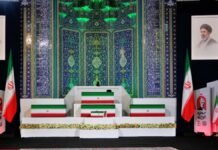
The atmosphere remains tense following a rare statement from Iran’s new Supreme Leader, Mojtaba Khamenei. In his first major address since assuming power after the February 28 airstrike that killed his predecessor, Khamenei adopted a hardline stance. He declared that Iran would guard its “nuclear and missile capacities” like its own “maritime and air borders,” signaling that Tehran has no intention of bowing to the U.S. blockade.
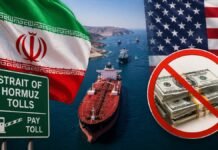
Khamenei also spoke of a “new chapter” for the Strait of Hormuz, implying that Iran intends to enforce a new management regime over the vital waterway. This rhetoric has further complicated the “verbal war” between Tehran and Washington, casting doubt on the likelihood of a successful second round of peace talks.
Military Buildup and the War Powers Deadline
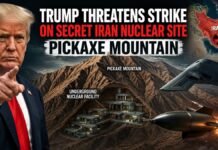
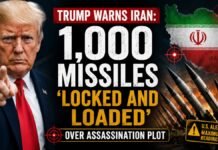
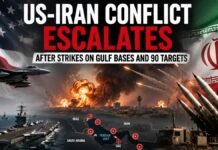
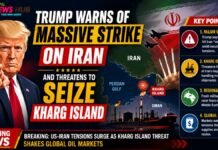
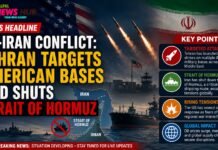
As the 61st day of the conflict begins, the U.S. and Iran remain in a state of “kinetic stalemate.” Although a ceasefire has been in place since early April, the U.S. military maintains a strict blockade of Iranian ports. In Washington, the Trump administration is navigating a critical May 1 deadline under the War Powers Resolution, which traditionally requires congressional approval for hostilities lasting longer than 60 days.
Secretary of Defense Pete Hegseth has argued that the current ceasefire “pauses” the legal clock, a position that has drawn sharp criticism from congressional Democrats. Meanwhile, the UAE continues to bolster its national defenses, having reportedly intercepted over 2,200 drones and missiles since the conflict began. The travel ban is seen as a final preparatory step by Abu Dhabi as it braces for the possibility that regional diplomacy may soon give way to renewed military escalation.