


































Key Highlights
- Interception Success: UAE air defenses neutralized 152 out of 165 ballistic missiles and 506 out of 541 drones launched since February 28th.
- Casualties Confirmed: Three foreign nationals from Pakistan, Nepal, and Bangladesh were killed, while 58 others sustained injuries.
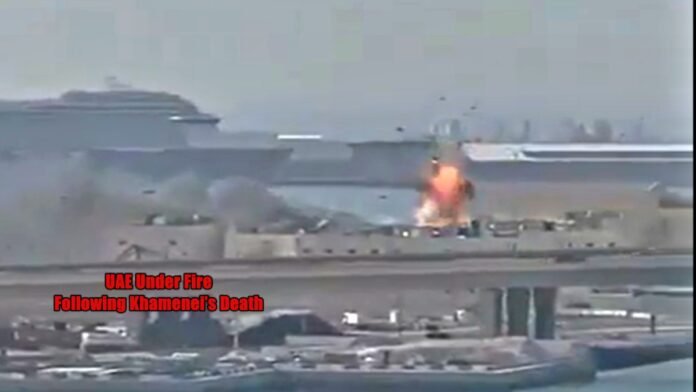
- Infrastructure Impact: Debris caused minor fires at the Burj Al Arab and Jebel Ali Port, while a drone strike targeted a warehouse at the Al Salam Naval Base.
- Emergency Measures: The government has mandated distance learning for all schools from March 2 to 4 and issued nationwide mobile alerts.
- Aviation Disruptions: Airspace closures at Dubai International (DXB) and Zayed International Airport have left over 20,000 travelers stranded.
The United Arab Emirates has disclosed the full scale of an intense military offensive launched by Iran, marking one of the most significant aerial challenges in the nation’s history. According to the Ministry of Defense, since the late hours of February 28th, Iran has deployed an arsenal consisting of 165 ballistic missiles, 541 drones, and two cruise missiles. The strikes are widely viewed as a direct retaliation for the joint US, Israeli “Operation Epic Fury,” which resulted in the death of Iran’s Supreme Leader.
The UAE’s multi,layered air defense network demonstrated exceptional efficiency during the barrage. Out of the 165 ballistic missiles detected, 152 were successfully destroyed in mid-air, while the remaining 13 fell harmlessly into the sea. Additionally, both cruise missiles were intercepted before reaching their targets. This defensive performance has been credited with preventing a much higher casualty count in the densely populated urban centers of Abu Dhabi and Dubai.
Casualties and Collateral Damage
Despite the high interception rate, the sheer volume of the attack led to tragic consequences. The Ministry of Defense confirmed that three individuals, citizens of Pakistan, Nepal, and Bangladesh, lost their lives due to falling shrapnel. Furthermore, 58 people representing various nationalities, including India, Sri Lanka, Egypt, and Ethiopia, were treated for injuries.
Several landmark locations reported minor to moderate damage. Shrapnel from an intercepted drone fell near the Etihad Towers complex in Abu Dhabi, which houses several international diplomatic missions. In Dubai, a minor fire broke out on the exterior facade of the iconic Burj Al Arab, and black smoke was seen rising from Jebel Ali Port after debris ignited a berth. At the Al Salam Naval Base, two Iranian drones managed to strike a warehouse, destroying two containers of civilian goods before the resulting fire was brought under control.
National Readiness and Public Safety
In response to the ongoing threat, the UAE government has activated comprehensive emergency protocols. On Sunday, March 1st, a nationwide emergency alert was broadcast to mobile phones in both Arabic and English, instructing residents to seek immediate shelter and stay away from windows. To ensure the safety of the younger population, all private and public schools have been transitioned to distance learning for the first half of the week.
The Ministry of Defense emphasized that the country remains on high alert and is fully prepared to handle any further external aggression. “The safety of our citizens, residents, and visitors is a top priority that will not be compromised,” the Ministry stated. National authorities have also moved to secure affected sites and provide support to the 20,200 travelers impacted by the temporary closure of UAE airspace.
Diplomatic and Economic Context
This escalation follows the chaotic aftermath of Saturday’s strikes on Tehran. As Iran attempts to project power through “Operation True Promise 4,” regional hubs like the UAE have found themselves on the frontline of a widening conflict. While the UAE has sought to maintain a policy of de-escalation in recent years, this blatant violation of sovereignty has led to a stern condemnation from the Ministry of Foreign Affairs, which asserted the nation’s “full right to respond” to such cowardly acts.
The global community continues to watch the Gulf region with concern, as the stability of these trade and aviation hubs is vital to international energy markets and logistics. For now, the UAE remains composed, with the Ministry urging the public to refrain from sharing unverified social media footage and to trust only official government communications.