


































Key Points
- Request Denied: The court rejected the plea for recusal, citing a lack of evidence regarding actual bias.
- Institutional Integrity: Justice Sharma argued that recusal based on political perception would set a dangerous precedent for the judiciary.
- Political Rhetoric: The court clarified that it has no authority over statements made by political leaders on public platforms.
- Legal Precedent: The judge noted that a higher court’s decision to refer a matter to a larger bench does not imply partiality by the original judge.
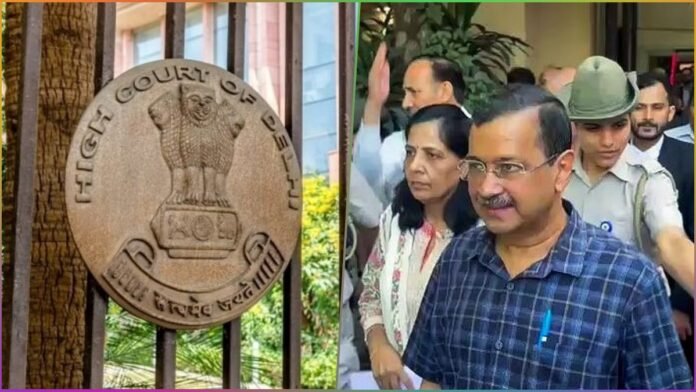
In a significant ruling, Justice Swarna Kanta Sharma of the Delhi High Court has formally dismissed the petition filed by Arvind Kejriwal, which sought her recusal from proceedings related to the alleged excise policy scam. Justice Sharma emphasized that acceding to such a request could inadvertently foster a public perception that the judiciary is influenced by political parties or specific ideologies. She stated firmly that the court cannot allow such a perception to take root, ensuring that the hearing of the case will proceed under her jurisdiction.
The request for recusal was largely based on an “apprehension” of potential bias rather than concrete proof of partiality. Justice Sharma remarked that these types of arguments, which suggest a judge cannot be fair due to the high-profile nature of the litigants, essentially constitute a challenge against the institution of the judiciary itself.
Addressing the Supreme Court’s Interim Orders
Justice Sharma addressed the defense’s argument regarding previous rulings in the case. She clarified that while the Supreme Court had referred specific questions regarding the necessity of Kejriwal’s arrest to a larger bench and granted interim bail, the orders issued by her court were never set aside.
She further observed that even in instances where a higher court overturns a judge’s order, it does not provide a legal basis for a litigant to question that judge’s impartiality. The judge noted that the right to seek a different bench is not a tool to be used simply because a prior ruling was unfavorable.
Control Over Political Statements
A major point of contention in the recusal plea involved statements made by Union Home Minister Amit Shah. The defense suggested that such external political commentary could impact the fairness of the trial. Justice Sharma dismissed this ground as entirely speculative, clarifying that the judiciary exercises no control over the rhetoric used by political leaders on public platforms. She emphasized that the court’s duty is to the law, not to the regulation of political discourse.
A Commitment to Impartiality
Drawing on 34 years of judicial experience, Justice Sharma stated that she felt it was essential to adjudicate this specific application because it touched upon the integrity of the judicial system as a whole. She affirmed her commitment to delivering an impartial verdict, unswayed by allegations or external pressures.
The judge also noted that the petitioner did not raise a direct question regarding his own integrity in this specific application, but rather focused on the procedural demand to have the case transferred. With the dismissal of this plea, the Delhi High Court continues its examination of the complex legalities surrounding the now-scrapped 2021-22 excise policy.