
































Key Highlights
- Official Indian Presence: Minister of State for External Affairs Pabitra Margherita and Bihar Governor Lieutenant General Syed Ata Hasnain will represent New Delhi.
- PM Modi Preoccupied: Prime Minister Narendra Modi declined the personal invitation from Iranian President Masoud Pezeshkian due to finalized diplomatic tours in the Asia-Pacific region.
- Delayed Rites: The state funeral occurs nearly four months after the Supreme Leader’s death on February 28, following a recent diplomatic breakthrough and ceasefire.
- Massive Procession: The multi-day event will include public processions in Tehran followed by religious prayers in the holy cities of Karbala and Najaf.
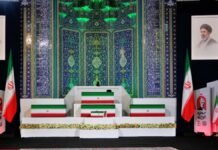
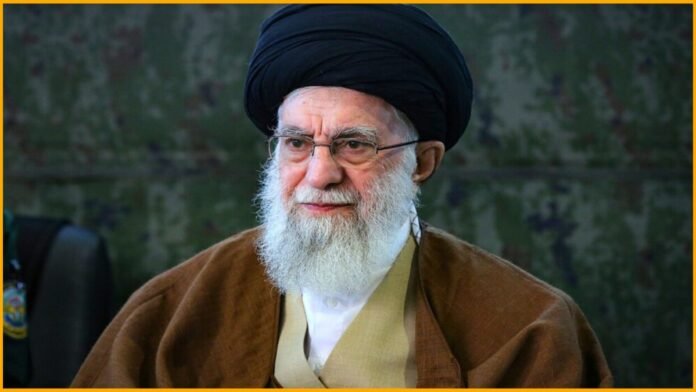
The Government of India has finalized its official representation for the upcoming state funeral of Iran’s late Supreme Leader, Ayatollah Seyyed Ali Khamenei. Following an official invitation extended by Iranian President Masoud Pezeshkian to Prime Minister Narendra Modi, New Delhi has designated a high-level diplomatic and administrative delegation to attend the proceedings, scheduled for July 4 and 5 in Tehran.
The Indian delegation will be led jointly by Minister of State for External Affairs Pabitra Margherita and the Governor of Bihar, Lieutenant General Syed Ata Hasnain. The selection of a senior minister alongside a prominent military-background statesman reflects New Delhi’s intent to maintain balanced, historic diplomatic ties with Tehran during a period of profound regional transition.
Speculation had initially circulated regarding whether Prime Minister Modi would personally travel to the Iranian capital. Diplomatic sources have clarified that the Prime Minister is unable to attend due to long-standing, unalterable international commitments. Next month, Prime Minister Modi is scheduled to embark on a vital multi-nation diplomatic tour covering Indonesia, Australia, and New Zealand, a schedule that has already been finalized.
Funeral Scheduled Following Fragile Ceasefire
The state funeral is taking place after an unprecedented four-month delay. Ayatollah Ali Khamenei died on February 28, 2026, following targeted Israeli and United States military strikes during the height of the West Asian conflict. Because of the intensive kinetic warfare, continuous airspace closures, and immediate security threats, the complex funeral arrangements had to be indefinitely postponed by the Iranian government.
The breakthrough enabling the finalization of the funeral dates came via recent diplomatic backchannels, which successfully established a temporary ceasefire between Washington and Tehran. With military strikes paused and commercial airspace stabilizing, Iran has moved forward with organizing what is expected to be a massive international gathering, drawing dignitaries, state heads, and religious leaders from dozens of countries across the globe.
A Historic Transition for Iran
The scheduled events mark the formal end of an era for the Islamic Republic. Ayatollah Khamenei assumed the ultimate authority of Supreme Leader in 1989, succeeding the founder of the Islamic Republic, Ayatollah Ruhollah Khomeini. He remained at the absolute helm of Iran’s geopolitical and spiritual power for nearly 37 years, making his passing the most significant leadership transition the nation has faced in decades.
According to the official itinerary released by Tehran, the ceremonies will begin with an extensive public viewing of the late leader’s remains, followed by a massive public procession through the streets of Tehran. To accommodate millions of mourners and international delegations, the administrative rites will extend across two days before the remains are transported across the border to Iraq, where final significant prayers will be offered in the holy Shia sanctuary cities of Karbala and Najaf.