































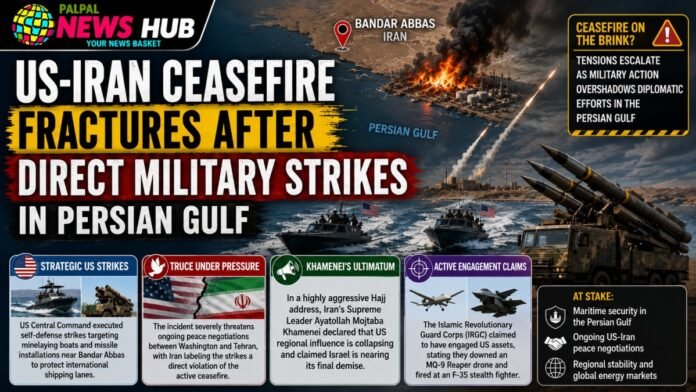
Key Points
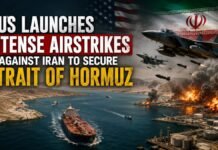
- Strategic US Strikes: US Central Command executed self-defense strikes targeting minelaying boats and missile installations near Bandar Abbas to protect international shipping lanes.
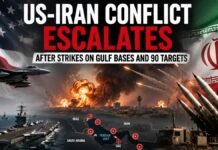
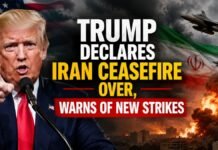
- Truce Under Pressure: The incident severely threatens ongoing peace negotiations between Washington and Tehran, with Iran labeling the strikes a direct violation of the active ceasefire.
- Khamenei,s Ultimatum: In a highly aggressive Hajj address, Iran’s Supreme Leader Ayatollah Mojtaba Khamenei declared that US regional influence is collapsing and claimed Israel is nearing its final demise.
- Active Engagement Claims: The Islamic Revolutionary Guard Corps (IRGC) claimed to have engaged US assets, stating they downed an MQ,9 Reaper drone and fired at an F,35 stealth fighter.
The delicate geopolitical balance in West Asia has shifted toward open volatility following targeted overnight military actions by the United States in southern Iran. According to statements released by US Central Command (CENTCOM), American naval and air forces conducted precise defensive strikes in the strategic Bandar Abbas region. The operation specifically neutralized specialized vessels attempting to lay naval mines in Gulf waters, alongside several coastal missile launch installations posing a direct threat to international shipping grids.
US military officials clarified that the tactical measures were executed under a strict self-defense mandate to safeguard American personnel stationed throughout the region.
“US forces conducted self-defense strikes in southern Iran to protect our troops from imminent threats,” stated CENTCOM spokesperson Tim Hawkins, emphasizing that Washington had acted with deliberate restraint to maintain the core parameters of the current ceasefire.
Supreme Leader Mojtaba Khamenei Warns of Absolute Demise
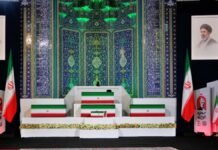
The American strikes drew immediate, high-level condemnation from Tehran, where leadership recently shifted to Ayatollah Mojtaba Khamenei following the assassination of his father, Ali Khamenei. In a written statement, the new Supreme Leader used the annual Hajj platform to issue a stern geopolitical warning, asserting that Washington no longer commands a secure footprint in the Middle East.
Khamenei went on to forcefully attack Israel, calling it a “cancerous tumor” and declaring that its ultimate erasure from the global map is now an absolute certainty. He noted that the state has drawn near to the final stages of its cursed demise, referencing historical projections while celebrating regional proxy maneuvers.
Escalating Rhetoric and Fears of Total Blockade
On the ground, Iranian military leadership has amplified its combat readiness protocols. The IRGC announced that its integrated air defense systems successfully engaged and shot down an advanced US MQ,9 Reaper drone that had allegedly crossed into Persian Gulf airspace. Furthermore, Brigadier General Abolfazl Shekarchi asserted that coastal defense units engaged in sustained firing against US surveillance assets and stealth fighters, forcing them into a tactical retreat.
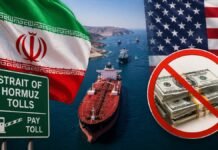
The economic implications of a prolonged escalation continue to rattle global commodities markets, driving Brent crude prices up by nearly 3% within hours of the strikes. Iranian officials have reiterated their absolute leverage over transit infrastructure. General Shekarchi warned that if the international community attempts to legally block or squeeze Iran,s sovereign oil exports, the regime is prepared to enforce a total and permanent shutdown of all energy shipments traversing the Strait of Hormuz.
Despite the severe friction, US Secretary of State Marco Rubio indicated that a diplomatic breakthrough is not entirely out of reach. He noted that detailed textual negotiations regarding an extended truce and the unconditional, toll-free reopening of the Strait of Hormuz will continue over the coming days, even as President Donald Trump prepares to hold a high-level cabinet review at Camp David.