



























Key Highlights
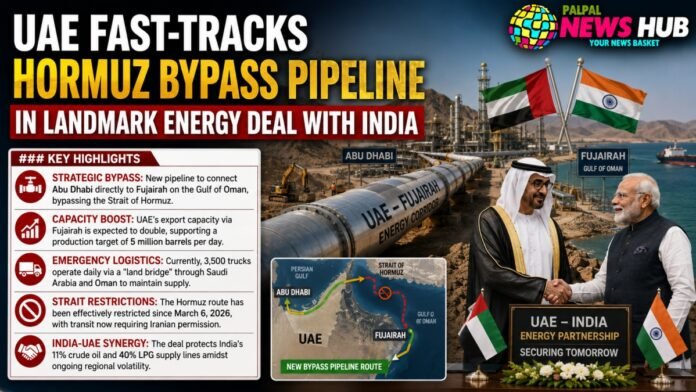
- Strategic Bypass: New pipeline to connect Abu Dhabi directly to Fujairah on the Gulf of Oman, bypassing the Strait of Hormuz.
- Capacity Boost: UAE’s export capacity via Fujairah is expected to double, supporting a production target of 5 million barrels per day.
- Emergency Logistics: Currently, 3,500 trucks operate daily via a “land bridge” through Saudi Arabia and Oman to maintain supply.
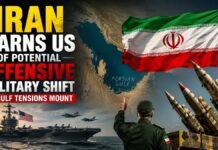
- Strait Restrictions: The Hormuz route has been effectively restricted since March 6, 2026, with transit now requiring Iranian permission.
- India-UAE Synergy: The deal protects India’s 11% crude oil and 40% LPG supply lines amidst ongoing regional volatility.
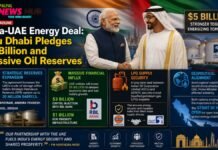
During a pivotal state visit by Prime Minister Narendra Modi to the United Arab Emirates on May 15, 2026, a major strategic breakthrough in energy security was finalized. The UAE has committed to accelerating the construction of a second major oil pipeline, a “mega plan” designed to neutralize the geopolitical risks associated with the Strait of Hormuz. This strategic infrastructure project is intended to ensure that global oil and gas supplies remain insulated from the regional conflicts that have recently throttled maritime trade.
The new pipeline will connect Abu Dhabi’s production hubs to the port of Fujairah on the Gulf of Oman. Targeted for completion by 2027, the project is being executed on a “war footing” following direct orders from Crown Prince Khaled bin Mohamed bin Zayed Al Nahyan. Once finished, it will double the UAE’s bypass capacity, allowing the nation to export its target of 5 million barrels per day without entering the Persian Gulf’s narrowest chokepoint.
Navigating the Hormuz Crisis
The urgency of this project is underscored by the current paralysis of the Strait of Hormuz. Since March 6, 2026, the waterway, which typically carries 20% of the world’s oil, has been restricted. Commercial vessels now face a complex administrative regime, often requiring specific permission from Iranian naval forces to pass.
In the interim, the UAE has resorted to an unprecedented logistical effort to maintain its export commitments. A massive “road bridge” has been established, involving at least 3,500 trucks traveling daily through Saudi Arabia and Oman to deliver goods to alternative ports. This stopgap measure highlights the critical need for the permanent pipeline solution currently under construction.
India’s Strategic Stake in the Gulf
For India, the world’s third-largest oil importer, the completion of this pipeline is a matter of national economic security. Prime Minister Modi and UAE President Mohammed bin Zayed (MBZ) held extensive talks on ensuring the continuity of supply chains. The UAE currently meets nearly 11% of India’s crude requirements and a staggering 40% of its LPG needs.
During their discussions, PM Modi emphasized that a “safe and open” Strait of Hormuz is vital for the global community, urging adherence to international maritime laws. Despite the tensions, 15 Indian vessels have successfully navigated the Gulf in recent days through close diplomatic coordination. The new pipeline project is viewed as a long-term insurance policy for Indian refineries, providing a direct, reliable link to Gulf energy that avoids disputed waters entirely.
A New Era Post-OPEC+
The UAE’s move to fast-track the pipeline follows its landmark decision last month to separate from the OPEC+ alliance. This exit has allowed the UAE to aggressively expand its production footprint and pursue independent energy infrastructure. By bypassing the Strait of Hormuz, Abu Dhabi is positioning itself as a more resilient and dominant player in the global market, capable of meeting the rising energy demands of Asian economies like India without being subject to the localized blockades or naval tolls that have come to define the region in early 2026.
As the construction continues, Fujairah is set to emerge as one of the most critical energy hubs in the world, serving as the gateway for a new, secure chapter in global energy logistics.