































Key Developments in the Peace Accord
- Nuclear Moratorium: Iran to pause uranium enrichment and potentially transfer its 440-kilogram stockpile to the U.S.
- Sanctions Relief: Washington to unfreeze billions in Iranian assets and lift stringent economic restrictions.
- Maritime Stability: Full reopening of the Strait of Hormuz to ensure unobstructed global oil transit.
- Military Cessation: Official conclusion of the U.S.-led “Operation Epic Fury” as a gesture of de-escalation.
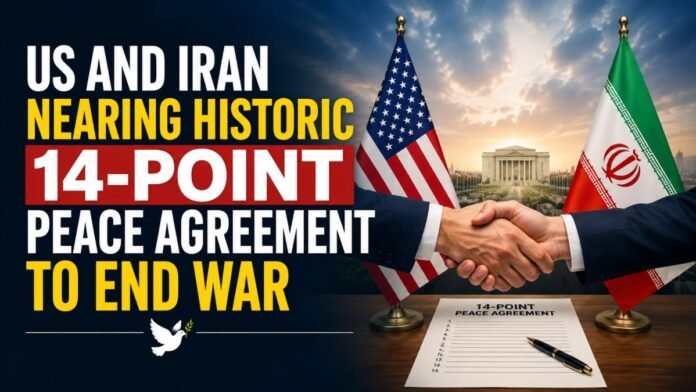
Recent reports from high-level sources within the White House and international intermediaries indicate that a consensus has been reached on the fundamental framework of a peace agreement. The proposed one-page memorandum of understanding aims to halt the hostilities that have defined the early months of 2026. This breakthrough follows an intense series of meetings held in both Geneva, Switzerland, and Islamabad, Pakistan, involving key negotiators from both administrations.
The agreement comes as the White House signals a shift from military pressure to diplomatic resolution. U.S. Secretary of State Marco Rubio confirmed on Thursday that “Operation Epic Fury,” the large-scale military campaign launched on February 28 to dismantle Iran’s offensive capabilities, has officially achieved its objectives and concluded. This cessation is seen as the primary catalyst for the current 48-hour window for a formal peace declaration.
The Three Pillars of the Consensus
Negotiators have reportedly found common ground on three critical issues that have historically fueled the standoff:
1. Nuclear Weapons and Uranium Management
Under the preliminary terms, Iran will formally declare a moratorium on the development of nuclear weapons. A central point of the agreement involves Iran’s existing stockpile of 440 kilograms of enriched uranium. President Donald Trump has specifically demanded that this material be transferred to the United States or a neutral third party for dilution. Reports suggest a compromise is being reached on a 12 to 15-year moratorium on high-level enrichment, though Iran had initially pushed for a shorter five-year window.
2. Lifting of Economic Sanctions and Asset Repatriation
In a significant concession, the United States will begin the process of lifting economic sanctions that have crippled the Iranian economy. This includes the unfreezing of Iranian funds held in foreign accounts, estimated to be upwards of $150 billion, funds that the Iranian government claims are essential for domestic relief and infrastructure development following the recent conflict.
3. Restoration of the Strait of Hormuz
Both nations have agreed to a total lift of the blockade on the Strait of Hormuz. This vital maritime artery, which carries a significant portion of the world’s oil supply, will return to its status as a free-transit zone. Iran has pledged to permit the passage of all merchant vessels without obstruction, while the U.S. has committed to withdrawing its naval interference in the immediate corridor.
Unresolved Challenges and the 30-Day Window
Despite the progress on major pillars, 11 of the 14 proposed points remain in a state of negotiation. U.S. envoys Steve Witkoff and Jared Kushner are maintaining constant communication with Iranian Foreign Minister Abbas Araqchi to bridge these gaps. The remaining points largely concern the technicalities of “snap-back” inspections by UN monitors and the permanent closure of specific underground nuclear facilities.
The current objective is to finalize these 11 points within a 30-day “negotiation window” following the initial announcement. While Vice President J.D. Vance and Iranian official M.B. Ghalibaf are expected to attend upcoming summits to finalize the deal, internal skepticism remains.
Reactions and Internal Pushback
The path to peace is not without domestic hurdles in Tehran. Mohammad Marandi, a prominent member of the Iranian negotiating team, recently dismissed the flurry of optimistic reports as “White House propaganda.” Marandi alleged that the reports were strategically leaked to stabilize the U.S. stock market. However, international observers note that the official conclusion of “Operation Epic Fury” provides the most concrete evidence to date that both nations are moving away from the brink of total war.