

































Key Highlights
- “Project Deadlock”: Iranian Foreign Minister Abbas Araghchi dismissed the U.S. naval escort plan as a failed military approach to a political crisis.
- Warning to Allies: Tehran urged the United States and the United Arab Emirates to avoid “malign actors” who seek to derail ongoing diplomatic efforts.
- Pakistan Mediation: Iran emphasized that peace talks facilitated by Pakistan are advancing and must not be undermined by naval maneuvers.
- Denial of Aggression: Iranian military officials rejected claims of pre-planned strikes on Fujairah, instead blaming “U.S. military adventurism.”
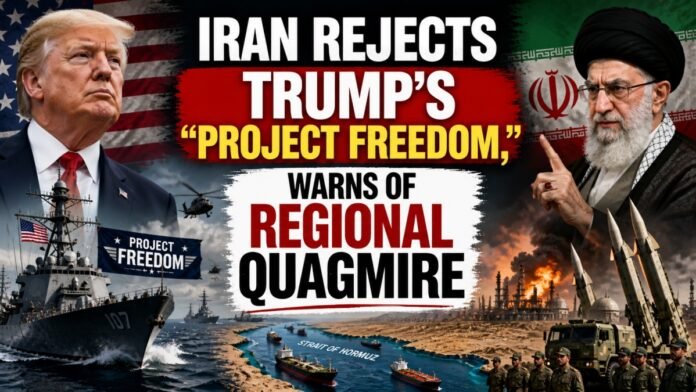
The Iranian government has launched a sharp diplomatic counter-offensive following President Donald Trump’s announcement of “Project Freedom.” Leading the response, Deputy Foreign Minister Seyyed Abbas Araghchi took to social media to warn that the U.S. strategy, which involves naval escorts through the Strait of Hormuz, is fundamentally flawed. Araghchi pointedly renamed the initiative “Project Deadlock,” characterizing it as an impasse that ignores the complex political realities of the region.
According to Tehran, the path of military action in the Strait of Hormuz has already proven ineffective. Araghchi argued that recent skirmishes in the waterway demonstrate the limits of force, stressing that no political dispute can be truly resolved through the barrel of a gun. He urged Washington to recognize that the only sustainable way forward is through the diplomatic channel currently being brokered by Pakistan, which he described as making “gracious progress.”
Escalation in Fujairah and the Blame Game
The tension has translated into real-world violence, with missile and drone strikes reported near the UAE’s Fujairah oil facilities. While UAE authorities have reported numerous interceptions and injuries, including to three Indian nationals, Iran has categorically denied that these attacks were premeditated or planned by its central command.
An Iranian military spokesperson suggested that the chaos in the Gulf of Oman is a direct byproduct of “U.S. military adventurism” and the attempt to create what Tehran calls an “illegal passage” through restricted maritime zones. By reframing the conflict as a defensive response to U.S. encroachment, Iran is signaling that it will not easily cede control over the strategic waterway, which remains its primary point of leverage against international sanctions.
The “Quagmire” Warning
Beyond the immediate maritime dispute, Araghchi issued a broader warning to regional players. He cautioned both the United States and the United Arab Emirates to be wary of being dragged into a “quagmire” by individuals who benefit from instability. This rhetoric appears aimed at domestic hawks in Washington and regional rivals who support a more aggressive posture against the Islamic Republic.
As the 2026 conflict enters its 67th day, the Iranian leadership remains steadfast in its demand for a complete withdrawal of foreign forces from the vicinity of its borders and the release of frozen assets. For now, Tehran’s message is clear: while it is willing to talk via Pakistani mediators, any attempt to force a naval solution will be met with persistent resistance, turning Trump’s “Project Freedom” into a strategic stalemate.
Key Highlights
- “Project Deadlock”: Iranian Foreign Minister Abbas Araghchi dismissed the U.S. naval escort plan as a failed military approach to a political crisis.
- Warning to Allies: Tehran urged the United States and the United Arab Emirates to avoid “malign actors” who seek to derail ongoing diplomatic efforts.
- Pakistan Mediation: Iran emphasized that peace talks facilitated by Pakistan are advancing and must not be undermined by naval maneuvers.
- Denial of Aggression: Iranian military officials rejected claims of pre-planned strikes on Fujairah, instead blaming “U.S. military adventurism.”
The Iranian government has launched a sharp diplomatic counter-offensive following President Donald Trump’s announcement of “Project Freedom.” Leading the response, Deputy Foreign Minister Seyyed Abbas Araghchi took to social media to warn that the U.S. strategy, which involves naval escorts through the Strait of Hormuz, is fundamentally flawed. Araghchi pointedly renamed the initiative “Project Deadlock,” characterizing it as an impasse that ignores the complex political realities of the region.
According to Tehran, the path of military action in the Strait of Hormuz has already proven ineffective. Araghchi argued that recent skirmishes in the waterway demonstrate the limits of force, stressing that no political dispute can be truly resolved through the barrel of a gun. He urged Washington to recognize that the only sustainable way forward is through the diplomatic channel currently being brokered by Pakistan, which he described as making “gracious progress.”
Escalation in Fujairah and the Blame Game
The tension has translated into real-world violence, with missile and drone strikes reported near the UAE’s Fujairah oil facilities. While UAE authorities have reported numerous interceptions and injuries, including to three Indian nationals, Iran has categorically denied that these attacks were premeditated or planned by its central command.
An Iranian military spokesperson suggested that the chaos in the Gulf of Oman is a direct byproduct of “U.S. military adventurism” and the attempt to create what Tehran calls an “illegal passage” through restricted maritime zones. By reframing the conflict as a defensive response to U.S. encroachment, Iran is signaling that it will not easily cede control over the strategic waterway, which remains its primary point of leverage against international sanctions.
The “Quagmire” Warning
Beyond the immediate maritime dispute, Araghchi issued a broader warning to regional players. He cautioned both the United States and the United Arab Emirates to be wary of being dragged into a “quagmire” by individuals who benefit from instability. This rhetoric appears aimed at domestic hawks in Washington and regional rivals who support a more aggressive posture against the Islamic Republic.
As the 2026 conflict enters its 67th day, the Iranian leadership remains steadfast in its demand for a complete withdrawal of foreign forces from the vicinity of its borders and the release of frozen assets. For now, Tehran’s message is clear: while it is willing to talk via Pakistani mediators, any attempt to force a naval solution will be met with persistent resistance, turning Trump’s “Project Freedom” into a strategic stalemate.