






























Key Highlights
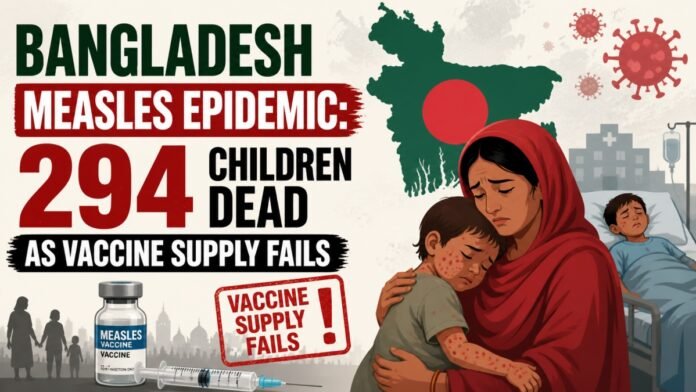
- Rising Mortality: The death toll has reached 294, including a staggering 50 deaths recorded in a single 24-hour period.
- Systemic Failure: Experts trace the crisis to a September 2025 decision to abandon UNICEF vaccine procurement for an “Open Tender System.”
- Widespread Infection: Over 40,491 suspected cases have been reported across major divisions, including Dhaka, Chittagong, and Khulna.
- Rural Crisis: Remote areas like Alikadam in Bandarban face a total lack of facilities, forcing parents to rely on herbal remedies.
- Emergency Calls: The WHO and local health experts are urging the government to officially declare a national health emergency.
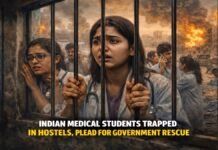
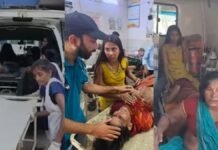
Bangladesh is currently grappling with its most severe measles outbreak in decades, with the Directorate General of Health Services (DGHS) reporting a rapid escalation in child mortality. In the most recent 24-hour reporting window between Saturday and Sunday morning, 50 children succumbed to the virus or related symptoms. This surge has brought the total confirmed death toll to 294, though health officials fear the actual number may be higher due to underreporting in remote regions.
The current crisis is not merely a biological outbreak but is being characterized by health analysts as a failure of the state’s healthcare infrastructure. Total confirmed cases have climbed to 5,313, while suspected cases have surpassed the 40,000 mark, stretching hospital capacities to their breaking point in urban centers like Dhaka and Chittagong.
The Root Cause: Procurement Delays and Policy Shifts
The origin of this epidemic is deeply rooted in the political and administrative instability that followed the protests of July 2024. During the 18-month tenure of the interim government led by Muhammad Yunus, the national immunization framework faced significant disruptions.
The most critical blow occurred in September 2025, when the administration shifted away from a long-standing, reliable vaccine procurement agreement with UNICEF. In its place, an “Open Tender System” was introduced. This transition led to massive bureaucratic delays, logistical bottlenecks, and a significant shortfall in the national vaccine stockpile. Consequently, vaccination coverage, which had historically been a point of pride for Bangladesh, plummeted, leaving millions of children vulnerable to preventable diseases.
Desperation in Remote Districts
While the infection is prevalent in major divisions such as Barishal, Sylhet, and Khulna, the situation in the Chittagong Hill Tracts is particularly dire. In districts like Bandarban, specifically the Alikadam region, the lack of basic healthcare facilities has reached a breaking point. With no vaccines available at local clinics, rural families have been forced to turn to traditional local remedies and herbal medicines to treat high fevers and rashes.
Health Minister Sardar Mohammed Sakhawat Husain recently addressed Parliament, acknowledging that mismanagement and failures in maintaining vaccine stockpiles under previous administrative arrangements contributed to the current shortage. This admission comes as the World Health Organization (WHO) warns that without a massive, immediate ramp-up in vaccination coverage, the virus will continue its rapid transmission through high-density settlements and rural pockets alike.
Demands for a Health Emergency
The WHO has issued an urgent advisory to the Bangladesh government, emphasizing that the window to contain the epidemic is closing. Prominent health experts and civil society groups are now calling for the official declaration of a “National Health Emergency.” Such a move would allow for the expedited procurement of vaccines and the mobilization of international aid to restore the country’s immunization coverage. For many families in the hardest-hit regions, however, the response may already be too late as they continue to wait for life-saving medical intervention.