































Key Highlights
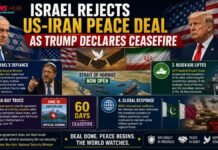
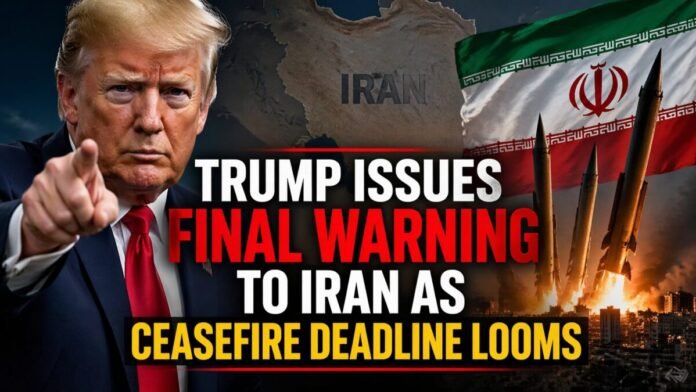
- Deadline Ultimatum: The two-week temporary truce is set to expire this Wednesday, April 22, 2026, with no plans for an extension.
- Military Readiness: Trump warned that the U.S. is prepared to resume bombing campaigns immediately if negotiations fail to produce a breakthrough.
- Economic Leverage: The U.S. naval blockade of Iranian ports remains in force, a move Washington deems a success but Tehran labels an act of maritime hostility.
- Diplomatic Brinkmanship: While Vice President J.D. Vance is slated for talks in Islamabad, Pakistan, Iran remains undecided on participation, citing American “bad faith.”
The Middle East stands on the precipice of renewed large-scale conflict as the administration of President Donald Trump hardens its stance against Tehran. In an exclusive Tuesday interview with CNBC’s “Squawk Box,” Trump made it clear that the United States has no intention of prolonging the current 14-day ceasefire, which is scheduled to lapse on Wednesday.
The President’s rhetoric reflects a high-stakes “maximum pressure” strategy, combining explicit military threats with the promise of a “great deal” that would fundamentally reshape regional security. Trump asserted that Iran has “no choice” but to negotiate, citing the significant degradation of Iranian naval and air capabilities over the past seven weeks of conflict. He characterized the current pause as a final window for Tehran to accept U.S. terms or face the resumption of a sustained aerial campaign.
The Naval Blockade and Economic Stranglehold
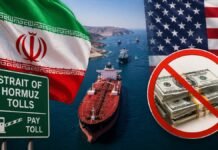
A central pillar of the U.S. strategy has been the implementation of a rigorous naval blockade on Iranian ports. The Pentagon reports that the U.S. Navy has successfully intercepted or redirected dozens of vessels attempting to transit the Strait of Hormuz, effectively choking off Iran’s maritime trade. President Trump hailed the blockade as a major success, arguing it has provided Washington with unprecedented leverage at the bargaining table.
Tehran, however, has reacted with intense fury. Iranian officials have condemned the blockade as a violation of international maritime law and a “prelude to violating the ceasefire.” They have demanded the immediate lifting of these sanctions as a prerequisite for meaningful dialogue. This maritime standoff has sent shockwaves through global energy markets, particularly as Iran has threatened to completely halt all Gulf trade if its own ports remain inaccessible.
Islamabad Talks and the Path Forward
Despite the aggressive posturing, the door to diplomacy remains narrowly ajar. A U.S. delegation, led by Vice President J.D. Vance and Special Envoy Steve Witkoff, is expected to arrive in Islamabad for a second round of face-to-face negotiations. President Trump has expressed a degree of optimism, suggesting that a “magnificent agreement” could still be reached if Iran chooses a rational path.
As a gesture of potential de-escalation, Trump also used social media to urge the release of eight women currently facing execution in Iran, suggesting that such a move would be a “great start” to the negotiations. However, the Iranian Foreign Ministry has remained non-committal, citing the ongoing U.S. military presence and the port blockade as evidence of a lack of sincerity from Washington.
Risks of Renewed Conflict
The global community is now focused on the Wednesday deadline. If the ceasefire expires without a formal agreement or a last-minute extension, the regional lull in hostilities is expected to end abruptly. Military analysts warn that a resumption of strikes could lead to a significant escalation, potentially involving broader regional actors and further destabilizing the world’s most critical oil transit routes. For now, the world waits to see if the “magnificent deal” envisioned by the White House can be realized before the clocks run out.