





























Key Points
- Drug traffickers face immediate revocation of Aadhaar cards, passports, and driving licenses.
- Properties will be confiscated and bank accounts frozen under a new, strict Standard Operating Procedure (SOP).
- Key offenders to be publicly identified at local police stations to ensure community accountability.
- Implementation of the “Jammu & Kashmir Substance Use Disorder Rules, 2026” to regulate rehabilitation centers.
- Strategic focus on “Narco-Terrorism,” identifying narcotics as a weapon used by neighboring countries to destabilize the region.
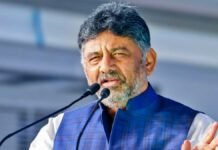
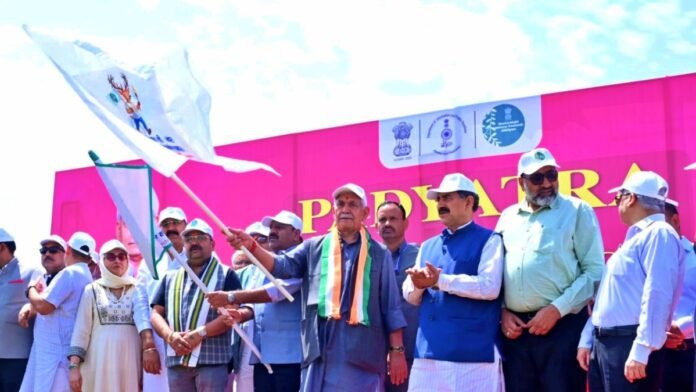
In a decisive move to secure the future of the region’s youth, Jammu and Kashmir Lieutenant Governor Manoj Sinha launched the “Nasha Mukt Jammu Kashmir Abhiyan” on Saturday. Addressing a massive assembly at the Maulana Azad Stadium, the LG outlined a multi-front offensive designed to cripple the financial and legal standing of those involved in the drug trade.
The administration’s strategy shifts from simple arrests to total systemic exclusion. LG Sinha announced that drug traffickers will see their essential government-issued documents, including passports, Aadhaar cards, and driving licenses, revoked. By targeting these identifiers, the government aims to restrict the mobility and financial access of criminals, making it impossible for them to operate within the legitimate economy.
Financial and Legal Warfare
Central to this 100-day campaign is a new Standard Operating Procedure (SOP) that mandates the freezing of bank accounts and the confiscation of immovable properties belonging to known traffickers. LG Sinha emphasized that drug trafficking is no longer just a social issue, but a national security threat.
“Our neighboring country is attempting to hollow out our youth through narcotics,” the LG stated. He characterized the influx of drugs as a “weapon” rather than a mere poison, noting that the proceeds from these illicit sales are directly used to finance terrorism and destabilize the social fabric of Jammu and Kashmir. To increase the social cost of these crimes, key traffickers will be publicly named and shamed at the police station level.
Regulation and Rehabilitation: The 2026 Rules
While the policy toward traffickers is punitive, the approach toward victims of addiction is rooted in support and medical care. The government has officially notified the Jammu & Kashmir Substance Use Disorder Treatment, Counseling, and Rehabilitation Centre Rules, 2026.
These rules are designed to professionalize the de-addiction sector, ensuring that only facilities with verified staff and adequate infrastructure are permitted to operate. LG Sinha warned that “fly-by-night” centers luring vulnerable individuals into further traps will face immediate closure and prosecution.
A Collective Social Responsibility
The LG stressed that the next 100 days are pivotal for the success of the mission. He issued a dual directive to enforcement agencies, “Do not harass the innocent, but ensure that the guilty are not spared.”
The campaign will rely heavily on grassroots mobilization, including “Pad Yatras” (foot marches) and intensive counseling sessions in educational institutions. LG Sinha made a specific appeal to the women of Jammu and Kashmir, identifying mothers and sisters as the front-line defense in identifying early signs of substance abuse and leading the cultural shift toward a drug-free society.