Key Points
- Absolute Exit: Macron told students in Nicosia that he will not return to active politics after leaving the Élysée Palace.
- Historic Legacy: Elected in 2017 at age 39, he was the youngest president in the history of the Fifth Republic.
- Political Deadlock: His second term has been defined by a hung parliament following the high-stakes snap elections of 2024.
- Current Focus: The President is currently in Cyprus for an EU summit, prioritizing diplomatic stability in West Asia.
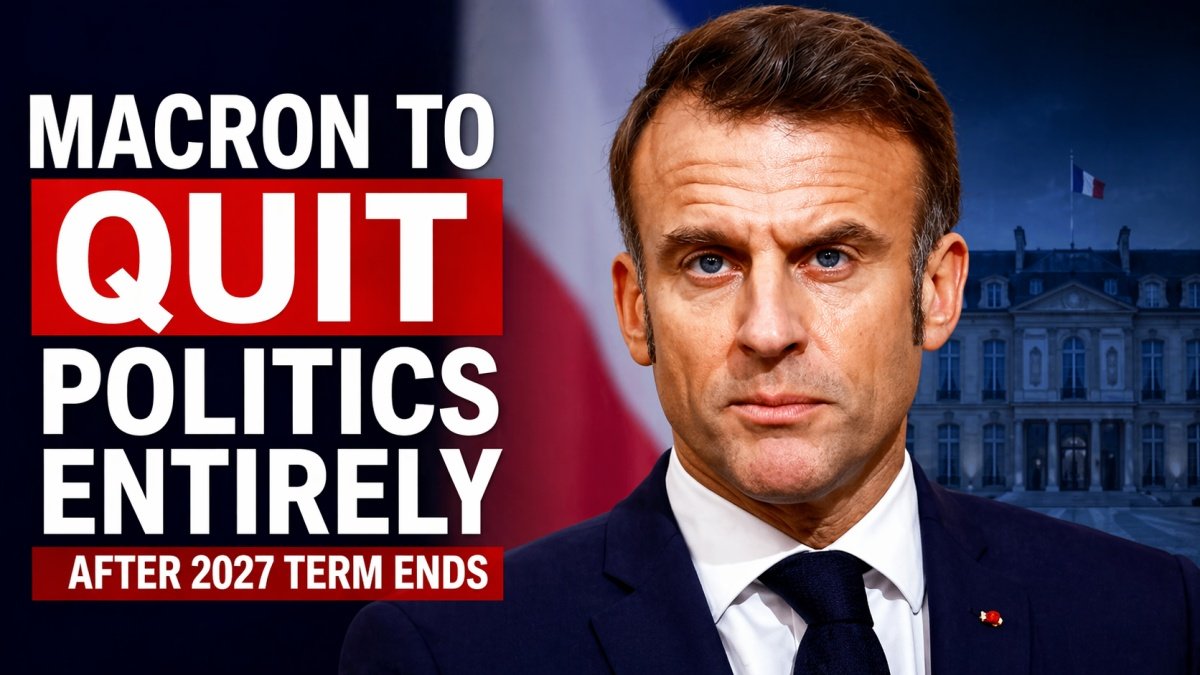
While engaging with students in Nicosia, Cyprus, French President Emmanuel Macron made a major revelation regarding his future, declaring that his journey in active politics will end with his presidency in 2027. Macron emphasized that because he was not a career politician before his 2017 victory, he feels no obligation to remain in the political sphere once his democratic mandate is fulfilled. “I did not do politics before, and I will not do it after,” he remarked, signaling a clean break from the public life that has defined the last decade of French history.
From Political Outsider to National Leader
Macron’s ascent remains one of the most remarkable chapters in modern French politics. In 2017, he shattered the traditional two-party system by winning the presidency at just 39 years old, making him the youngest leader since the establishment of the Fifth Republic in 1958. Before his presidency, he served as the Minister of Economy from 2014 to 2016, but his “En Marche!” movement was built on the premise of being neither left nor right, an ideological gamble that initially consolidated centrist power across France.
Challenges and the 2024 “Own-Goal”
The President’s tenure has been marked by bold reforms that frequently invited intense public backlash. His most controversial move, the 2023 pension reform that raised the retirement age from 62 to 64, sparked months of nationwide strikes. However, the most significant shift occurred in June 2024. Following a surge in right-wing support during European Parliament elections, Macron took the controversial risk of dissolving the National Assembly. The resulting snap elections led to a deeply divided parliament with no single party holding a majority, a situation that has largely paralyzed his domestic legislative agenda through 2025 and into 2026.
The 2026 Context: Diplomacy and Stability
Currently attending an EU summit in Cyprus (April 23,24, 2026), Macron has shifted his focus toward international mediation. He has spent the final years of his presidency advocating for a “systematic” diplomatic approach to West Asian tensions, specifically rejecting coercive measures against Iran while seeking to reopen the Strait of Hormuz.
Macron acknowledged that the hardest part of a second term is balancing past achievements with the weight of unfinished business. By reaffirming his 2027 departure, he appears to be framing his final year in office as a period of legacy building rather than a platform for future campaigns. While he has not disclosed his post-presidential plans, his comments suggest a return to the private sector or a total withdrawal into personal life, leaving the French centrist movement to find a new successor for the 2027 elections.