Key Points
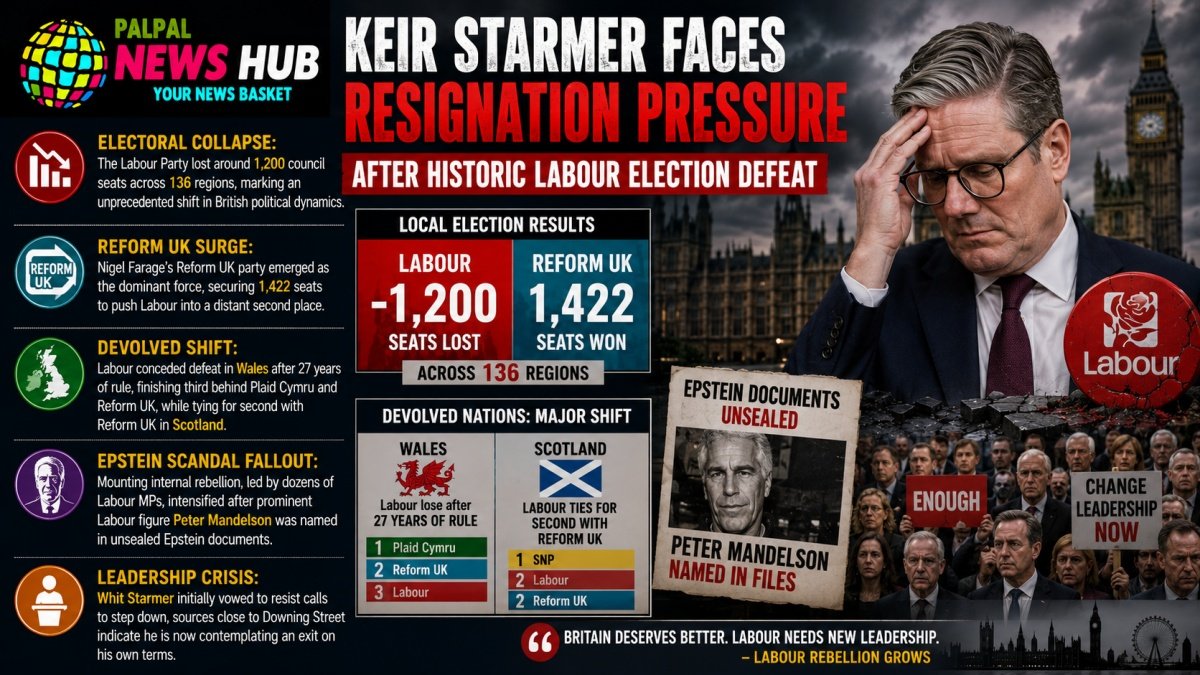
- Electoral Collapse: The Labour Party lost around 1,200 council seats across 136 regions, marking an unprecedented shift in British political dynamics.
- Reform UK Surge: Nigel Farage’s Reform UK party emerged as the dominant force, securing 1,422 seats to push Labour into a distant second place.
- Devolved Shift: Labour conceded defeat in Wales after 27 years of rule, finishing third behind Plaid Cymru and Reform UK, while tying for second with Reform UK in Scotland.
- Epstein Scandal Fallout: Mounting internal rebellion, led by dozens of Labour MPs, intensified after prominent Labour figure Peter Mandelson was named in unsealed Epstein documents.
- Leadership Crisis: Whit Starmer initially vowed to resist calls to step down, sources close to Downing Street indicate he is now contemplating an exit on his own terms.
The British political landscape has been plunged into an unprecedented state of instability as Prime Minister Keir Starmer fights for his political survival. Following a devastating set of election results and a compounding ethics scandal, reports suggest that Starmer has privately confided in close political allies that he is prepared to step down from his post. The internal revolt is expanding rapidly, with more than 80 Labour members of parliament openly calling for a leadership change, alongside the high-profile resignations of three government ministers.
The Local Election Bloodbath
The immediate catalyst for the crisis is the catastrophic collapse of the Labour vote in the local and regional elections held across 136 regions of Great Britain. Out of more than 2,200 council seats contested, the ruling Labour Party lost approximately 1,200, a devastating rebuke from an electorate increasingly alienated by the government’s performance.
The undisputed winner of the night was the right-wing populist party, Reform UK, led by Nigel Farage. In what is being described as a historic realignment of British politics, Reform UK captured 1,422 seats, leaving Labour far behind in second place with just 980 seats. The Liberal Democrats clinched third place with 834 seats, while the heavily diminished Conservative Party fell to fourth place with 754 seats.
Red Walls Crumble in Wales and Scotland
The scale of Labour’s defeat was felt most acutely in the devolved nations, where decades of political dominance evaporated in a single night. In the Welsh Senedd, Plaid Cymru emerged as the largest single party with 43 seats. Shockingly, Reform UK swept into second place with 34 seats, leaving Labour floundering in third place with a mere nine seats. This catastrophic result forced Labour to officially concede defeat, ending 27 consecutive years of governance in Wales.
In Scotland, the Scottish National Party (SNP) maintained its status as the largest political entity by winning 58 seats, although it fell short of the 65 seats required to secure an absolute majority in Holyrood. Proving that its appeal is truly nationwide, Reform UK tied with the Labour Party for second place in Scotland, with both securing 17 seats, while the Scottish Conservatives plummeted to just 12 seats.
The Mandelson-Epstein Connection
While the election results shattered the party’s confidence, it was an unfolding scandal in Washington and London that truly broke Starmer’s grip on power. Public distrust in the government has skyrocketed following new revelations in unsealed documents regarding the relationship between prominent Labour figure Peter Mandelson and the convicted American sex offender Jeffrey Epstein.
Mandelson, whose recent diplomatic appointment by the Starmer administration had already drawn scrutiny, became a massive political liability when files revealed the true depth of his past communications and financial ties to Epstein. The fallout immediately triggered accusations of a Downing Street cover-up regarding the vetting process, making Starmer’s position increasingly untenable.
Starmer’s Path Forward
Initially, Prime Minister Starmer took a defiant stance, flatly refusing to step down and arguing that a sudden leadership transition would plunge the United Kingdom into a dangerous state of governance chaos. However, the combined weight of a historic electoral wipeout, a mutating cabinet mutiny, and severe public backlash over the Epstein files has forced a shift in strategy.
Downing Street insiders indicate that while Starmer recognizes his departure is now a matter of “when” rather than “if,” he remains determined to resist a chaotic ouster. Instead, the Prime Minister intends to manage the transition on his own terms, setting a strict timetable to hand over power to a successor who can attempt to rebuild a fractured Labour Party before the next general election.