



































Key Points
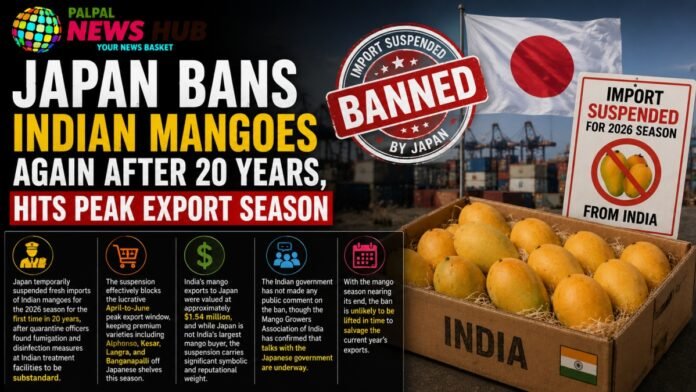
- Japan temporarily suspended fresh imports of Indian mangoes for the 2026 season for the first time in 20 years, after quarantine officers found fumigation and disinfection measures at Indian treatment facilities to be substandard.
- The suspension effectively blocks the lucrative April-to-June peak export window, keeping premium varieties including Alphonso, Kesar, Langra, and Banganapalli off Japanese shelves this season.
- India’s mango exports to Japan were valued at approximately $1.54 million. While Japan is not India’s largest mango buyer, the suspension carries significant symbolic and reputational weight.
- The Indian government has not made any public comment on the ban, though the Mango Growers Association of India has confirmed that talks with the Japanese government are underway.
- With the mango season nearing its end, the ban is unlikely to be lifted in time to salvage the current year’s exports.
Japanese quarantine officers visited the Vapour Heat Treatment (VHT) facility at Rehmanpur in Uttar Pradesh in March 2026 to inspect procedures used for mango exports. The inspectors found deficiencies in fumigation and disinfection measures, prompting the suspension.
VHT is a mandatory non-chemical quarantine process in which mangoes are subjected to controlled heat and humidity to eliminate fruit flies and other pests before export. Japan sends inspectors every year before the mango season to supervise and verify the treatment process.
Because Japan enforces zero-tolerance biosecurity laws, it requires these procedures to be conducted under the direct physical supervision of Japanese inspectors. This season, quarantine teams reported severe operational deviations in the fumigation protocols at the inspected facility.
The Official Notice
The Yokohama Plant Protection Association, a public-interest organisation supporting Japan’s plant quarantine operations, issued a formal notice on March 31, 2026, stating that Indian mango shipments carrying inspection certificates issued on or after March 25, 2026, would not be accepted. The suspension will remain in place until Japanese authorities are satisfied that operational standards have been substantially improved.
A History of Bans and Breakthroughs
Japan first imposed restrictions on Indian mangoes in 1986 over fears of fruit fly infestation. The ban remained in place until 2006, despite years of scientific studies, pest surveys, and diplomatic negotiations. The breakthrough came after repeated interventions by then Commerce Minister Kamal Nath, who raised the issue directly with Japanese authorities and invited quarantine teams to India for on-site inspections and testing.
Twenty years of resumed trade now hang in the balance, with India’s export compliance systems once again under the scanner.
Double Blow for Farmers and Exporters
India is the world’s largest mango producer, yielding approximately 28 million metric tons annually. While most consumption is domestic, premium export markets like Japan offer significantly higher profit margins.
The suspension derails the April-to-June peak export window entirely, with no realistic prospect of a resolution before the season ends. Maharashtra’s Alphonso-growing belt, already battling crop losses of 85% to 90% in parts of the state due to severe heat and unseasonal weather linked to the El Niño climate pattern, faces a compounded crisis.
Some exporters have gone further, alleging that Japan’s repeated use of phytosanitary restrictions amounts to a deliberate attempt to limit competition and protect its domestic fruit industry. The Indian government, however, has yet to make any official statement, leaving growers and exporters waiting for clarity on when, or whether, the current season’s trade can be partially salvaged.